
On July 12, Lam Dong Hospital II (B'Lao ward, Lam Dong province) said that the Department of Traumatology and Orthopedics of the hospital had just successfully operated on a rare case of toe adhesion malformation for patient K.L.H (15 years old, residing in Bao Lam 3 commune, Lam Dong province).
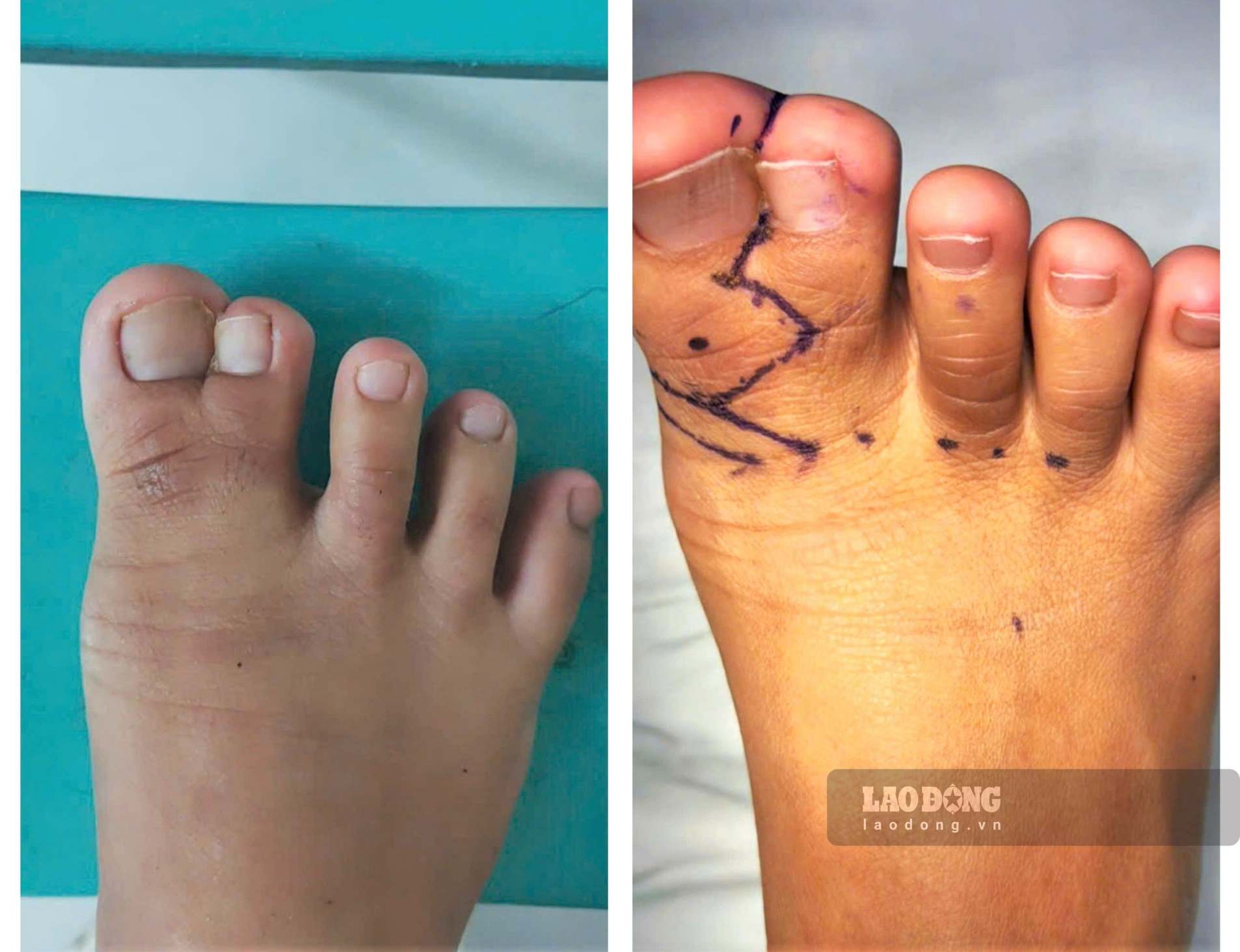
The patient was completely stuck to the big toe and second toe of the right foot with common nail anomaly (synonychia).
The defect causes the interdigital space to be completely removed, affecting the function and aesthetics of the feet.
The surgical team performed by Specialist Doctor II Phi Dang Canh and Doctor Tran Minh Quang applied the technique of shaping with interwoven Z-plasty skin patches, combined with shaping the interdigital floor with horizontal skin patches from the sole of the foot.
At the same time, doctors handled the separation of the common nail complex and autologous skin grafting to regenerate the natural morphology of the interdigital space.
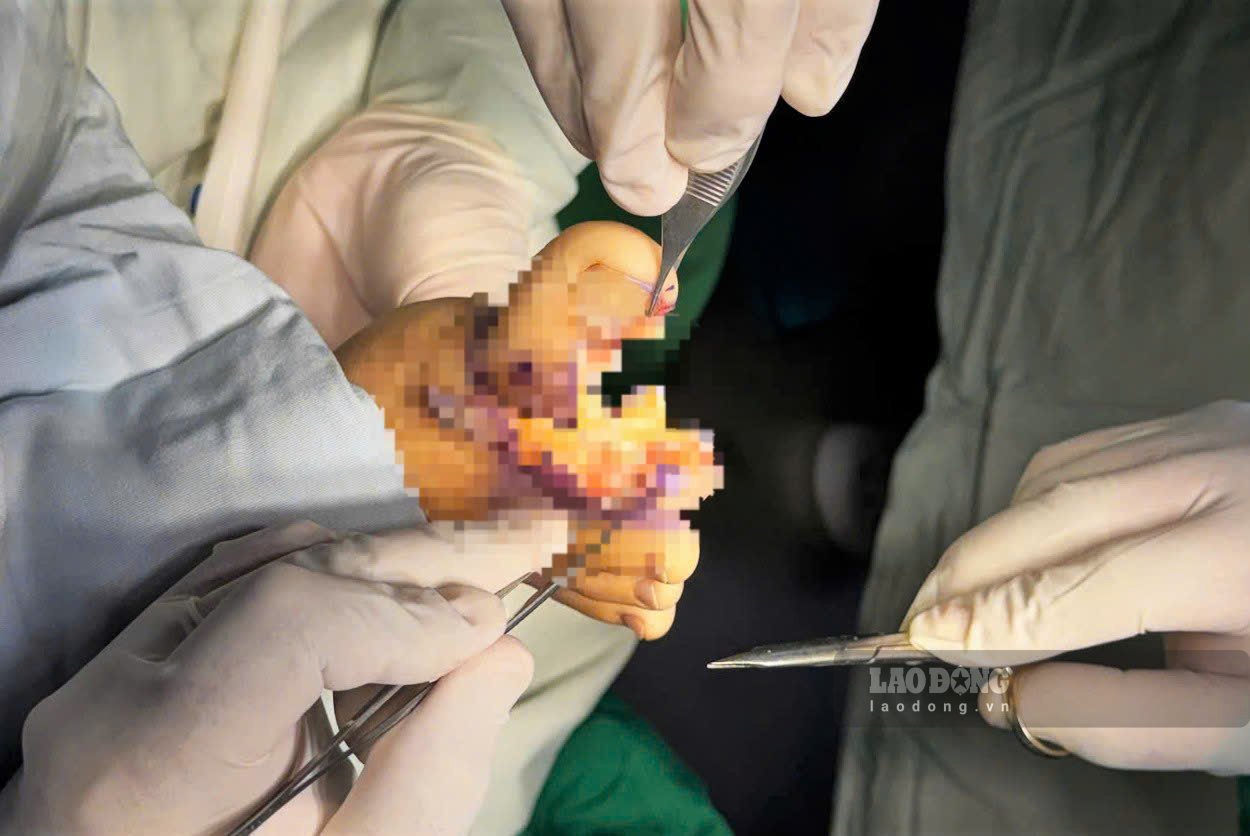
According to doctors, compared to traditional techniques, this method helps limit postoperative scar contractions, reduce the risk of finger reattachment; and improves aesthetics by bringing scar lines to a more discreet location.
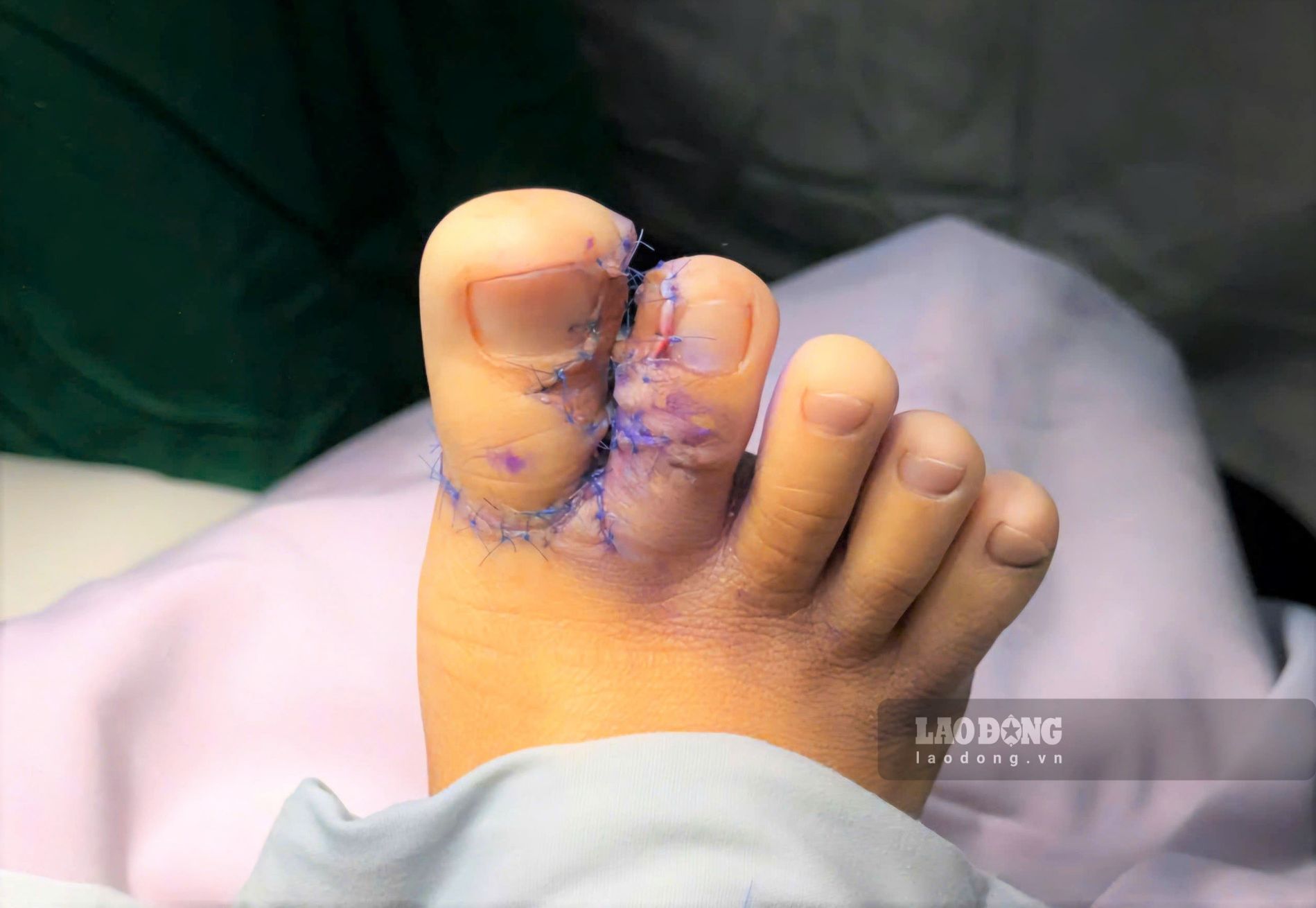
After nearly 3 hours of surgery, the surgery took place smoothly. The skin patches were well nourished, circulation was stable, the toes recovered to independent mobility, the interdigital space was naturally regenerated and no necrotic complications or scar contractions were recorded.
Specialist Doctor II Phi Dang Canh said that toe adhesions are one of the congenital defects of the limb, but cases of adhesions between the big toe and the second toe are very rare.
According to documents, in most cases of toe adhesions with a rate of 1 in 2,000 to 2,500 newborns, injuries usually occur in the interdigital fingers II - III accounting for about 80%. Adhesions in the interdigital finger I account for a very small proportion in medical literature.
According to Dr. Phi Dang Canh, the treatment of this malformation is not only aimed at separating the two toes, but also to regenerate the interdigital space deep enough, limit stretch marks and preserve motor function.
The application of Z-plasty technique combined with toescaps of the sole of the foot helps to simultaneously meet functional and aesthetic requirements, opening up another option in the treatment of complex toe adhesions.


