
The Ministry of Health identifies Group B as including dangerous infectious diseases that can be transmitted rapidly and can cause death.
9 infectious diseases have just been added to this list including: HPV virus disease (Human Papilloma virus), Haemophilus influenzae type b ( Hib), plaque disease, respiratory tract infection caused by human papilloma virus (RSV), pneumonia caused by Legionella pneumophila bacteria, Whitmore disease, Chikungunya virus disease, meat poisoning caused by Clostridium botulinum bacteria, disease caused by Listeria monocytogenes bacteria.
According to epidemiologists, raising awareness of infectious diseases and proactive vaccination plays an important preventive role, helping to reduce the health burden on individuals and communities from risk factors. Currently, HPV, RSV, whooping cough, Hib have vaccines to prevent them in Vietnam.
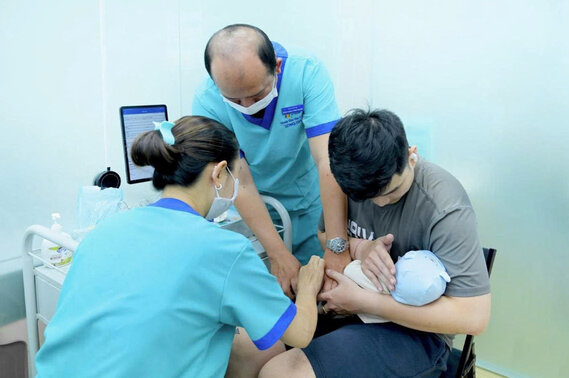
The Hanoi CDC said that RSV virus causes upper and lower respiratory infections such as bronchitis and pneumonia, which are especially dangerous for infants and the elderly. In Vietnam, RSV virus disease is recognized as the leading cause of acute respiratory infections in young children, especially children under 1 year old, for every 100 children under 6 months, 2 - 3 children have to be hospitalized for RSV.
Meanwhile, the straw bacteria reside in the throat and nose, spreading from person to person through direct contact with respiratory excretions such as saliva or fluid. This is the cause of middle ear inflammation, sinusitis, and serious and life-threatening infections such as: Pneumonia, sepsis, meningitis, etc.
These diseases can have serious consequences for the nervous system and respiratory system, with a mortality rate of 10 - 20%, especially in young children and the elderly, the mortality rate can be up to 50%). Epidemiologists say that anyone should be vaccinated against whooping cough to proactively protect the safety of themselves and those around them, minimizing the spread of this bacteria in the community.
According to the World Health Organization (WHO), 90% of cases of Hib bacteria occur in children under 5 years old, causing meningitis, pneumonia, and sepsis. The mortality rate of Hib meningitis is 15 - 20%, higher in children under 2 months old and in people with weakened immune systems. Specialists recommend that vaccination is the most effective way to prevent Hibs encephalitis in infants and adolescents. Parents need to proactively get their children vaccinated according to the schedule.
Especially in group B, HPV is known as a virus that causes human papilloma, transmitted mainly through sex, skin contact or mucous membranes... anyone, age, or gender can be infected with HPV. It is estimated that up to 80% of people have been infected with HPV at least once in their life.
Notably, HPV virus is a factor related to more than 95% of cervical cancer cases. A positive signal is that Vietnam and countries around the world are facing the opportunity to eliminate HPV cervical cancer thanks to vaccines. Medical experts say that vaccination is one of the three "pillars" of preventing HPV virus with top efficiency, creating a solid health shield to get closer to the goal of "erasing the books" of cervical cancer in Vietnam by 2030.

MSc. Dr. Le Thanh Khoi - Head of the Medical Professional Council, Long Chau Pharmacy and Vaccination Center System shared: Currently, there are 2 types of HPV vaccines: 4 types and 9 types of HPV vaccines.
4-pronged vaccine protects against 4 types of HPV. Of which, types 16 and 18 cause about 70% of cervical cancer cases and 90% of anorectal cancer cases. Types 6 and 11 cause 90% of chickenpox cases.
The 9- strain vaccine provides broader protection, can be injected to both men and women, preventing 9 dangerous viruses: HPV 6, 11, 16, 18, 31, 33, 45, 52, 58. In which, additional types 31, 33, 45, 52, 58 fight against about 20% of the remaining cervical cancer cases.

In addition to HPV and RSV vaccines, vaccines and Hibs should proactively take care of their health and choose reputable facilities that provide adequate vaccines to prevent diseases to protect family health at the end of the year.


