On December 31st, Tu Du Hospital informed that the unit coordinated with Children's Hospital 1 to successfully perform a fetal cardiology intervention for a fetus with severe pulmonary artery valve stenosis accompanied by progressive pituitary insufficiency - one of the complex congenital heart forms, with a high risk of developing into a one-sided heart after birth.
This fetal heart-passing intervention is the first case to be deployed after the Ministry of Health officially approved and issued a technical list for the field of fetal heart-passing intervention. This marks an important step forward in the deployment of advanced technology in the healthcare industry.

The pregnant woman is Ms. N.T.T.T (26 years old, Ho Chi Minh City), pregnant for the second time, natural pregnancy. The pregnant woman was monitored for pregnancy periodically, the first trimester prenatal check-up did not record any abnormalities, NIPT prenatal screening test with low risk.
By the 22-24th week of pregnancy, doctors discovered congenital heart abnormalities, diagnosed severe pulmonary artery valve stenosis with 3-blade valve opening. The pregnant woman was transferred to Tu Du Hospital and Children's Hospital 1. The results of amniocentesis and chromosome analysis showed normality, creating an important basis for considering intervention.
After that, fetal heart disease tends to progress with manifestations of reduced right ventricles gradually increasing in both form and function, with a high risk of developing into a single ventricle if not intervened. Doctors have agreed to indicate fetal heart ventilation intervention to create opportunities for the right ventricle to continue to develop in the uterus.
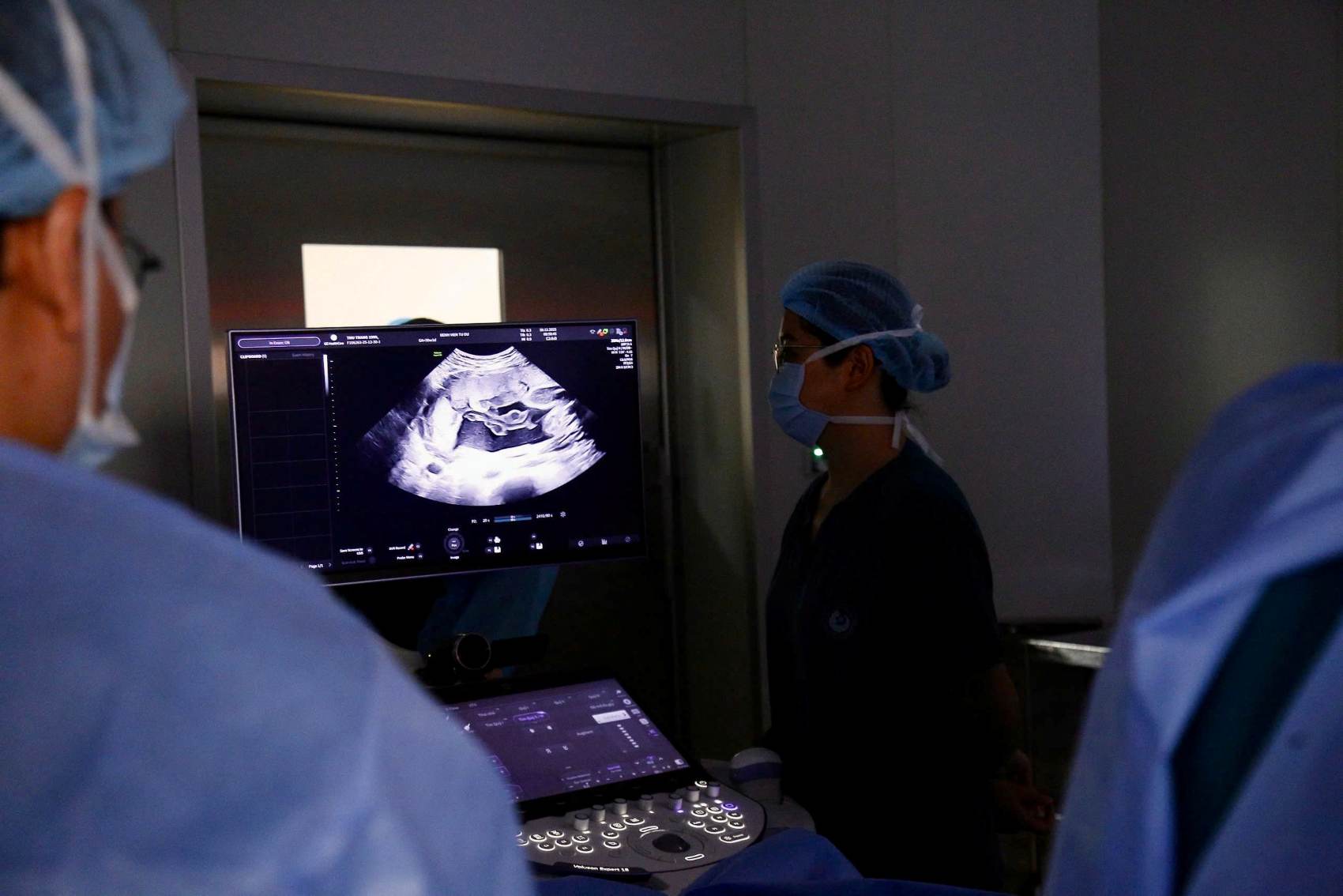
At the time of intervention, the fetus is in the position of head, tilted left, placenta in front, increasing the difficulty of the procedure. In particular, during the process of approaching the fetal heart, the fetal arm is crossed in front of the chest, obscuring the path to the heart chamber.
Faced with this situation, the team performed a small support procedure to move the fetal limb. After optimizing the posture, the needle penetration process through the mother's abdominal wall - uterus - fetal chest and pneumothoracic valve inflation was carried out smoothly. The intervention was successful immediately after the first needle penetration, ensuring technical accuracy, minimizing time and risk for both mother and fetus.
Tu Du Hospital emphasizes that fetal heart ventilation intervention in this case is of great significance, aiming to improve blood flow through the pulmonary artery valve, creating conditions for the right ventricle to continue to develop during the remaining period of pregnancy. Thereby, increasing opportunities to preserve the 2-ventricle or 1.5-ventricle heart strategy after birth, avoiding children having to follow a complex and prolonged one-ventricle heart treatment route.
The success of this intervention contributes to standardizing and developing specialized fetal medicine in Vietnam, towards regional and international integration.