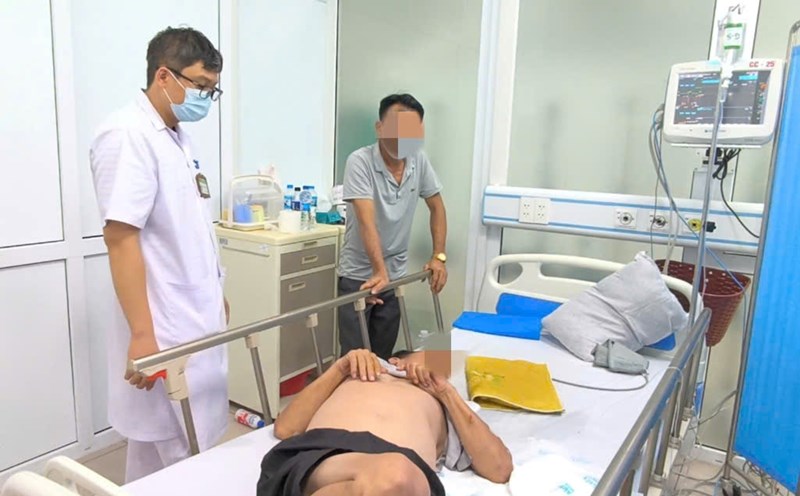
On January 5, the National Hospital of Pediatrics received and rescued a case of a 3-year-old boy (residing in Hai Phong) who was attacked by a pet dog in the family, causing a serious chest-penetrating wound, accompanied by hemorrhage and pneumothorax in the right plexus. The incident sounded a warning bell about the risk of unsafety from pets in the family, especially for young children.
According to the patient's family, at about 4:30 pm on January 4, while playing at home, the child used a stick to hit the pet dog in the family (hybrid dog, weighing about 30kg). Excited, the animal rushed in to attack and continuously bit the child's right chest area.
Immediately after the accident, the family quickly took the child to a local hospital for emergency treatment. Doctors determined that the child had a wound penetrating the right chest, causing hemorrhage and pneumothorax, requiring emergency surgery and pleural drainage. Due to the seriousness and high risk of complications, the patient was transferred to the National Hospital of Pediatrics for intensive treatment.
According to MSc.BS Bui Duc Vu - Department of Emergency and Poison Control, National Children's Hospital, the child was admitted to the hospital at 11:30 am on January 5 in a state of severe respiratory failure, requiring tracheostomy.
“Through examination, we recorded that the child had penetrating chest wounds, pleural pneumothorax, crushed pleural tissue damage and fractured intercostal bones. This is a very serious injury for young children,” MSc.BS Bui Duc Vu said.
Immediately after receiving them, doctors held inter-departmental consultations with Thoracic Surgery, Orthopedics, Intensive Care and Vaccination Counseling Clinic. The child was transferred to the Department of Intensive Care Surgery for resuscitation and close monitoring.
Notably, both the patient and the dog causing the accident have not been vaccinated against rabies, increasing the risk of rabies - a dangerous infectious disease, almost certainly fatal if it develops.
Doctors urgently vaccinated children against rabies and rabies-resistant serum according to the protocol, and at the same time strictly controlled hemolysis, pneumothorax, infection risk and respiratory failure.
MSc.BS Nguyen Duc Thuong - Deputy Head of the Department of Intensive Care Surgery said: "Fortunately, the child was rescued in time from the lower level and there was close coordination between specialties. After 2 days of intensive treatment, the child's condition progressed well, and the indicators gradually stabilized.
Currently, the patient has been discharged from the ventilator, is awake, exercises normally and is expected to be discharged from the hospital in the next few days.
It's a bit of a bit of a bit of a bit of a bit of a bit.