
Finding a face for a patient after tumor surgery
At the age of 17, Khanh Trang (character name has been changed, residing in Ho Chi Minh City) did not expect the simmering pain under her jaw to be a sign of a jaw tumor. Initially, Trang thought she only had tooth pain or wisdom teeth, so she went to the dentist. However, only when taking a X-ray did she discover a tumor under her jaw and had to be hospitalized for treatment.
Receiving the diagnosis, the female student could not help but be confused, especially when she was indicated for surgery to regenerate her jawbone with bone taken from her calf. What worried her the most was that her face would change after surgery. "As a girl and still in school, I am very afraid of my appearance being affected, afraid to meet friends," Khanh Trang shared.
However, after more than a year of treatment, Khanh Trang's face has recovered almost normally. "Until now, I am satisfied with the results. My face is much more beautiful and balanced than I used to worry about," she said.
Not only regaining her appearance, Khanh Trang is now eating, communicating normally and almost no obstacles in daily life.
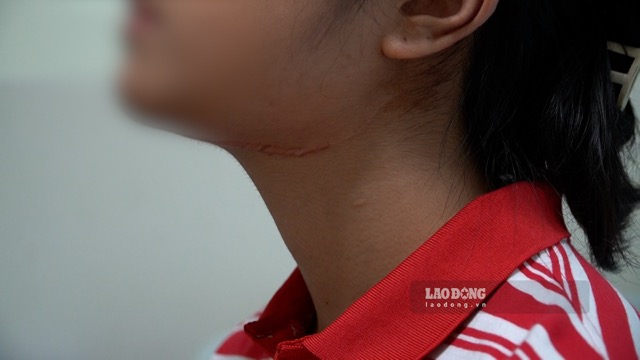
Patient Khanh Trang is just one of many patients who have undergone surgery on the head, face, and neck area. Assoc. Prof. Dr. Nguyen Anh Khoi - Head of Head, Neck - Maxillofacial Surgery Department, Ho Chi Minh City Oncology Hospital - said that in cases where a part of the face must be removed, the most are patients with cancer of the upper jawbone, lower jawbone or tumors in the head and neck that have invaded the jawbone. After removing the tumor, the patient not only has facial deformities but also risks losing important functions such as speaking, swallowing and chewing.
As a final-line specialized hospital, about 60-70% of patients come to Ho Chi Minh City Oncology Hospital in stages III-IV. Most of these cases are reconstructed immediately during surgery to maximize function and appearance recovery. According to Assoc. Prof. Khoi, what patients are most worried about is not only cancer but also the fear of losing their face and communication skills after surgery.
3D technology has reshaped faces for cancer patients
In recent years, shaping techniques have made many advances in applying 3D shaping technology and computer planning. Doctors can use images of healthy faces to design reconstructive structures for the injured side, helping to restore about 90% of facial shape in many cases.
After 16 years of development, from only performing 1-2 reconstruction cases per week due to lack of equipment, the Department of Head, Neck and Face Surgery, Ho Chi Minh City Oncology Hospital has performed about 20 cases per week with a success rate of 99% right from the first surgery.
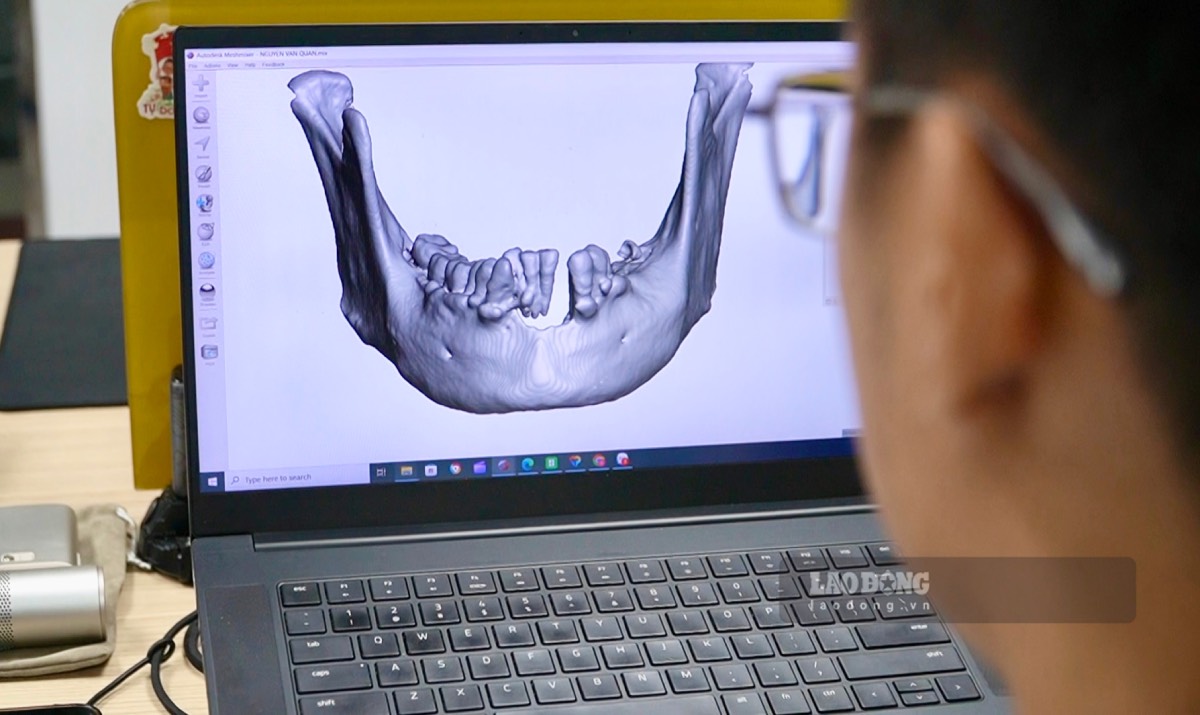
Ms. Trinh Phuong Anh - Director of 3D Vision Technology Co., Ltd. (3D Tech Vision) - said that the company supports doctors in planning surgery and designing reconstructive models using 3D technology for cancer patients in the head and neck area. From CT scan data, the team of engineers builds 3D models, designs cutting tools and individualized titanium splints as directed by doctors.
According to Ms. Anh, 3D technology helps personalize treatment, using images of the healthy face to regenerate the damaged area, contributing to restoring a more harmonious appearance after surgery and improving treatment effectiveness.


