
Rhabdovirus rabies is transmitted from animal to humans and is a serious threat with about 59,000 deaths each year in more than 150 countries. According to the Department of Disease Prevention (Ministry of Health), Southeast Asia is a hot spot for epidemics due to low animal vaccination rates and the common situation of free-range dogs. In Vietnam, in the first 9 months of 2025, 58 deaths were recorded in 18 provinces and cities.
Recorded at the VNVC system, the number of visitors vaccinated against rabies increased during the hot season with hundreds of visits per day. The vaccinated subjects include both adults and children being attacked by dogs, cats, monkeys, mice... Many cases of hand and heel injuries have been prescribed vaccination with anti-rabies serum by doctors.
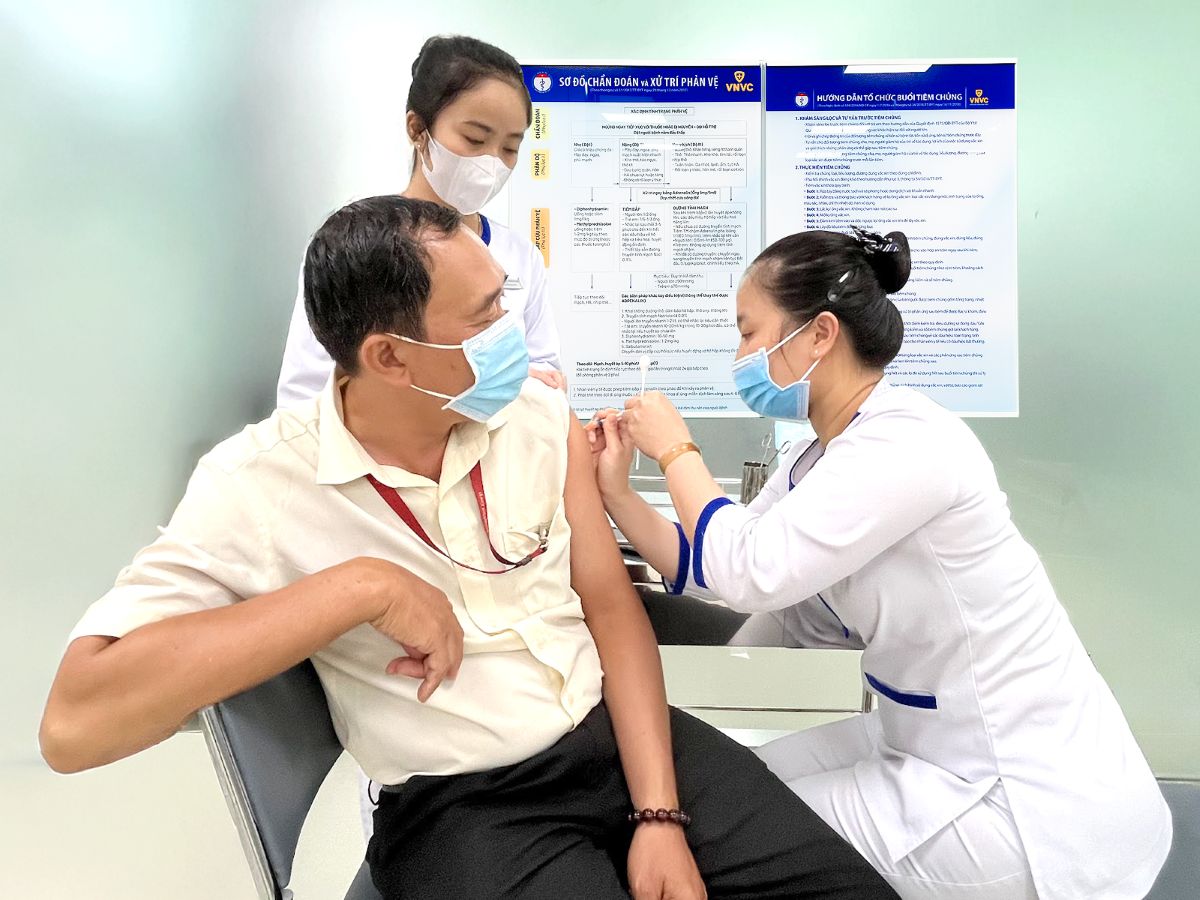
A typical example is Ms. Thuy, (51 years old, living in Cho Quan ward) whose dog bit her left hand, the deep bite bleeding at around 10 am at night. Ms. Thuy molded the bleeding, disinfected and bandaged the wound herself. The next morning, she went to the VNVC Vaccination Center, was instructed by the doctor on how to treat the wound properly, should not clotting the blood herself and advised to get a rabies serum injection at the hospital. At this time, the wound had signs of redness and swelling due to infection and was treated at the hospital. Ms. Thuy then continued to be vaccinated according to the 5-dose regimen.
Mr. Hung, 69 years old, recently went to VNVC Hoang Van Thu Vaccination Center (HCMC) to get rabies vaccine when his neighbor's dog bit him in the head of two blood- bleeding right toes. He said that this was the 13th time he had been bitten by a dog and bleeding. Every time he was bitten by a dog, he washed the wound under clean water and soap to remove the rabies virus, then got vaccinated immediately. Due to a history of rabies vaccination at previous bites, this time the doctor prescribed him to get 2 rabies doses on day 0. 3.
Doctor Bach Thi Chinh, Medical Director of the VNVC Vaccination Center, emphasized that there is no specific treatment for rabies, and the mortality rate from the outbreak is nearly 100%. Vaccination and serum are the only preventive and treatment measures. The rabies virus moves along nerves to the brain at a speed of 12-24 mm/day. The average incubation period is 2-8 weeks, which can be shorter (10 days) if the bite is near the head, face, or neck. Doctors recommend not waiting for dead animals to be vaccinated because the vaccine may lose its effectiveness.

According to Dr. Chinh, when an animal bites, scratches, or licks an open wound, people need to treat the wound properly with clean water and soap continuously for 15 minutes, then continue to wash with 45 70%, iodine or povidone to minimize the amount of rabies virus in the bite. After that, it is necessary to go to a medical facility immediately to have a doctor treat the wound, prescribe vaccination, anti-rabies serum depending on the condition of the wound, as soon as possible.
The health sector especially warns people not to use folk methods such as bloodcasting, peeling, leaf filling or taking medicine. These methods do not help eliminate viruses but also increase the risk of infection, causing viruses to penetrate the nervous system faster, leading to death.
According to statistics from the Ministry of Health, in Vietnam, the main source of rabies is dogs and cats (accounting for 98% of the total number of people vaccinated and accounting for 100% of cases of death from rabies).
In 2024, there will be 89 deaths from rabies nationwide (an increase of 7 cases compared to 2023, an increase of 17 cases compared to 2022).
According to the World Veterinary Organization (WOAH/OIE), 99% of rabies cases are caused by rabies bites, more than 95% of deaths occur in Asia and Africa, more than 80% of rabies cases occur in rural areas and 4 cases of each 10 deaths are in children.


