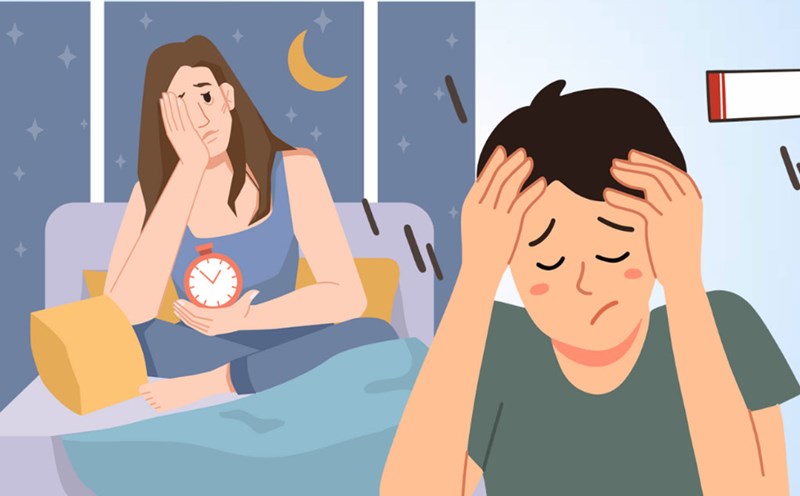
Sleep is often considered a simple period of rest after a tiring day of work. However, in fact, getting enough sleep and good sleep is one of the most important pillars of both physical and mental health.
When sleep is interrupted, especially tormentation and prolonged sleep difficulty at night, it may not only be a problem of living habits but also a warning sign of potential psychological disorders.
Many people tend to underestimate difficulty sleeping, thinking that the cause is only due to work stress, using the phone before bed or changing the living environment.
However, according to mental health experts, manifestations such as difficulty falling asleep, frequent midnight naps or not sleeping deeply can be closely related to problems such as anxiety, prolonged stress, or depression.
Dr. Samant Darshi, an interventional psychiatrist at Yatharth Hospital and Director of Psymate Healthcare (India), said that sleep and mental health are two-way relationships, meaning that psychological disorders can worsen sleep, and poor sleep also makes mental problems worse.
According to Dr. Darshi, each mental disorder affects sleep in different ways. For people with depression, the common condition is late-stage insomnia, which means they are prone to waking up in the middle of the night and very difficult to fall asleep.
Meanwhile, people with anxiety disorders often experience early-stage insomnia, difficulty falling asleep because the mind is always dominated by anxiety and lingering thoughts.
Not only that, depression can also affect the sleep cycle in many different ways. In unipolar depression patients, sleep duration often decreases, causing the body to always be tired and sluggish.
Conversely, in the stage of depression of bipolar disorder, patients may sleep too much but still not feel energy recovery.
Poor sleep not only affects mental health but also clearly affects daily life.
According to Dr. Darshi, insomnia impairs cognitive function, affecting concentration, memory and decision-making ability. People who lack sleep are also easily irritable, lack energy, reduce learning and working efficiency, thereby creating more psychological pressure.
More worryingly, when poor sleep lasts, it can create a vicious cycle: anxiety and depression disrupt sleep, while insomnia makes psychological symptoms worse. If not identified and intervened early, this vortex can have a long-term impact on quality of life.
Experts recommend that if tormentation, difficulty sleeping or night awakening occurs frequently, patients should not be subjective.
Monitoring sleep habits and seeking advice from medical experts can help detect mental health problems early, thereby having timely adjustments to protect both mentally and physically.
(The article is for reference only, not for professional advice. Always consult a doctor or medical expert if you have questions).