
Fresh potatoes contain significantly fewer calories than white rice of the same weight, while providing fiber and resistant starch, helping to increase feelings of fullness. When replacing a portion of rice with steamed or boiled potatoes, many people can reduce feelings of hunger between meals and limit snacking.
Resistant starch is digested and absorbed slower than regular starch, while fiber slows down the process of carbohydrate digestion. Thanks to that, blood sugar after eating can increase more stably, instead of increasing quickly and then decreasing sharply.
However, whether potatoes really support weight and blood sugar control depends on the processing and portion size. Eating fried potatoes, stir-fried with a lot of oil, or eating potatoes while eating a full serving of rice can increase total calories and carbohydrates. A simpler way is to reduce a serving of rice and replace it with a hand-sized steamed or boiled potato. Thus, the total amount of food is still relatively stable, but the feeling of fullness can be improved.
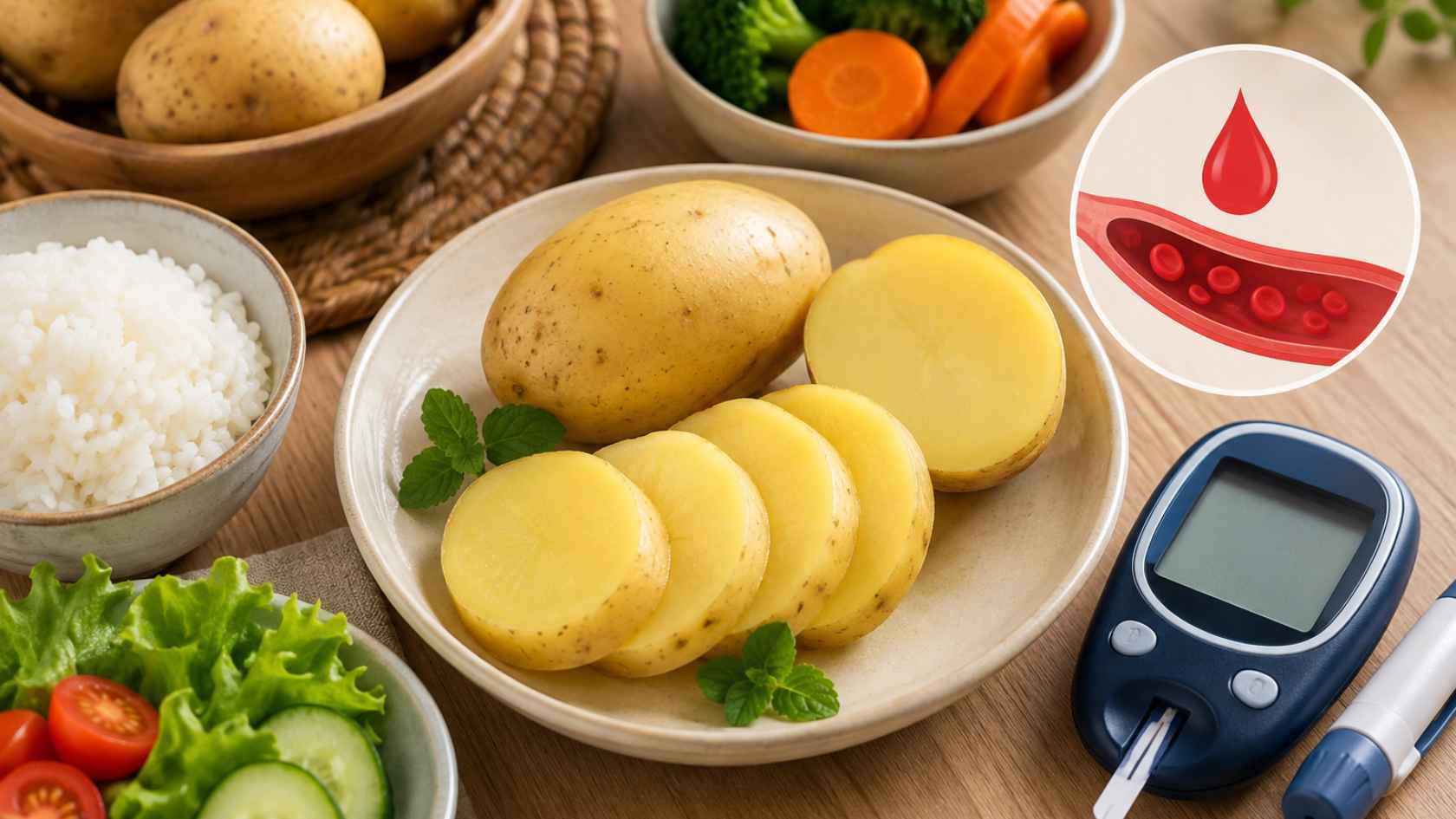
Potatoes are also a source of potassium and vitamin C. Potassium plays an important role in maintaining electrolyte balance and supporting cardiovascular health. To limit potassium loss, potatoes can be steamed or grilled with the skin, avoiding slicing too small or boiling for too long. Because potassium is easily soluble in water, slicing and cooking for a long time can lose more nutrients.
However, not everyone should increase their potassium intake in their diet. People with kidney failure or at risk of hyperkalemia need to control their potassium levels according to doctor's instructions, instead of arbitrarily supplementing with potassium-rich foods.
Another benefit of potatoes comes from resistant starch. This is a form of carbohydrate that can act as a prebiotic, becoming a food source for some beneficial bacteria in the gut. Fiber in potatoes also contributes to promoting bowel movements, supporting the improvement of functional constipation.
Notably, when potatoes are cooked and then cooled, a portion of starch can turn into resistant starch. However, this does not mean that everyone should eat cold potatoes. People with sensitive digestive systems or those prone to diarrhea may have difficulty to tolerate them. In this case, you should prioritize steamed or boiled potatoes that are still warm and use them in moderate portions.
In general, potatoes can be an alternative to a serving of rice in a meal, especially when simply cooked such as steamed or boiled. It is important to control portion sizes and cooking methods, instead of seeing potatoes as a food that can be eaten unlimitedly.


