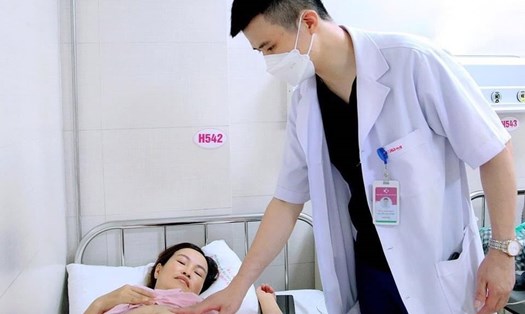
Conceiving her first pregnancy thanks to in vitro fertilization (IVF) after many years of treating polycystic ovaries, pregnant woman N.T. L (32 years old, Bac Ninh) once considered her twins as the most precious gift her family expected. A baby boy, a baby girl - two small beings have ignited great hope after a long and arduous journey to find their child.
However, that joy soon faced challenges. Right from the 20th week of pregnancy, the pregnant woman was warned of the risk of premature birth when the cervix began to abnormally shorten. In the 22-23 weeks, the condition worsened with signs of increasing abdominal pain, vaginal discharge, uterine contractions, and the cervix was dilated.
On December 30, 2025, the pregnant woman was admitted to the Department of Obstetrics and Gynecology A4, Hanoi Obstetrics and Gynecology Hospital in a condition where the cervix was dilated 2-3cm. In particular, the first fetus was already low, the baby's leg was protruding out of the vagina in the amniotic sac, a sign that the lower fetus could be pushed out at any time.
Immediately after receiving the case, Dr. BSCKII Mai Trong Hung - Director of the Hospital - directly directed professional work and assigned M.Sc.BSCKII Truong Minh Phuong - Deputy Head of Obstetrics and Gynecology Department A4 - to directly receive, monitor and treat it.
According to professional assessment, this is a very special case, the ability to keep the pregnancy is extremely difficult. Not only facing the risk of premature birth, the pregnant woman may also encounter infection complications, directly threatening the health of the mother and the remaining fetus. However, with the experience of successfully treating some cases of keeping the second pregnancy after the first pregnancy was born, the doctors explained in detail, and at the same time encouraged the pregnant woman and her family to be determined to pursue active treatment with advanced methods being applied at the hospital. After receiving the consensus from the family, the team began a stressful race to prolong the pregnancy as long as possible.
By the 26th week of pregnancy, the pregnant woman fell into a state of real labor. Recognizing the very high risk of premature birth, doctors proactively used prenatal lung maturation drugs to support respiratory function and protect the brain for the fetus.
On January 20, the first fetus was forced to be born, a baby girl weighing 650g. Immediately after birth, the baby was transferred to the National Children's Hospital for continued treatment. Because she had been in the vagina for a long time, the baby suffered from complications of cerebral hemorrhage and severe infection. However, thanks to intensive care and necessary surgical interventions, to date, the baby has reached a weight of 1.8kg, has good reflexes, can breathe and eat on her own.
Usually, after the first fetus is born, the second fetus will also be born immediately afterwards. But in this case, after careful consideration between the risk to the mother, the remaining fetus and the baby's chance of survival if it continues to be nurtured in the womb, doctors made a pivotal decision: Cutting labor to keep the second fetus.
The pregnant woman was treated according to a strict obstetric regimen, and was continuously clinically evaluated to adjust the appropriate treatment direction according to each stage. Every day that passed, the fetus had another chance of survival. After a period of intensive treatment, the second fetus continued to develop stably in the mother's womb, gaining weight steadily, although slower than other fetuses of the same gestational age.
After 13 weeks of fighting for life, the miracle finally came.
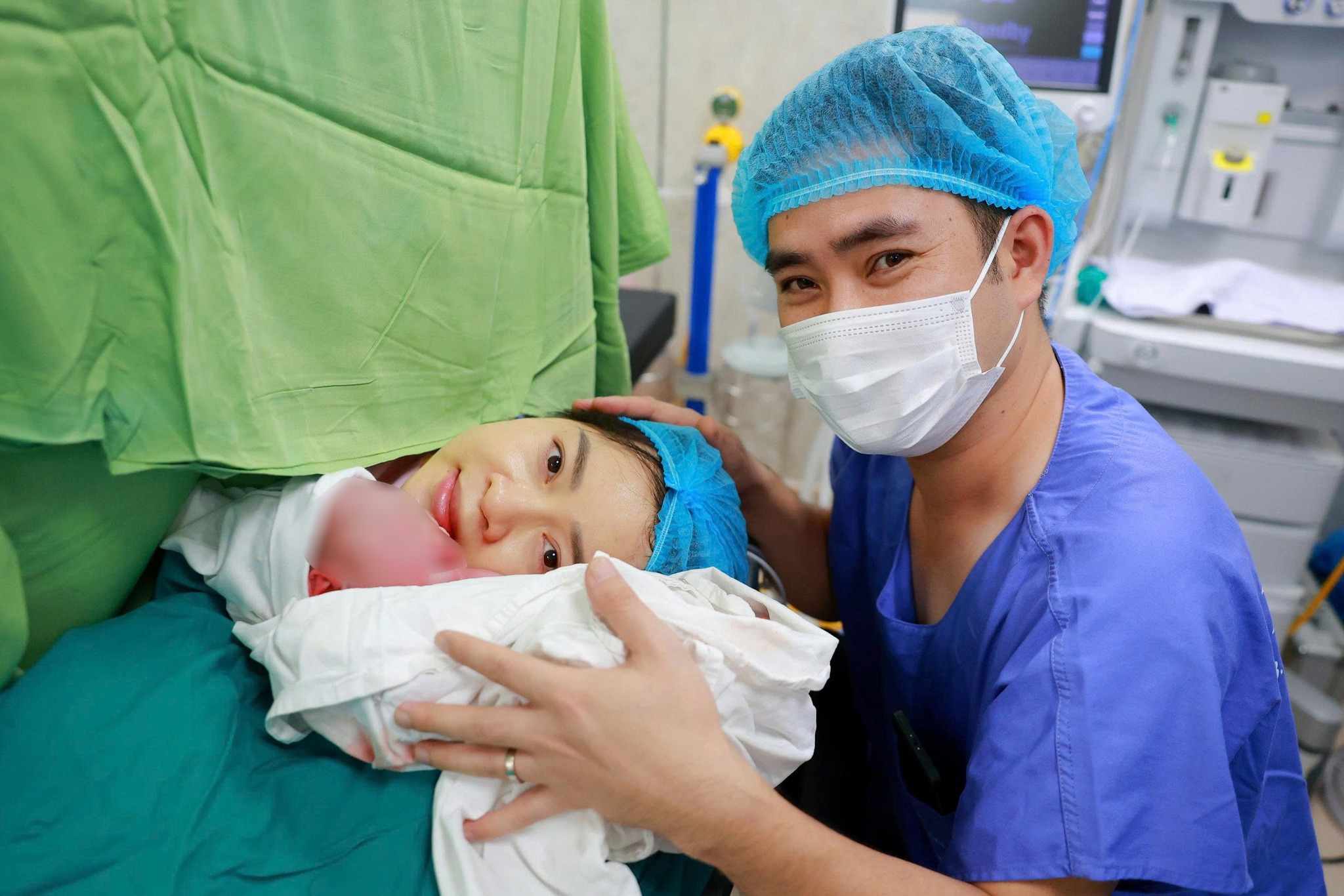
On the morning of April 15, 2026, at the time of 38 weeks of pregnancy, after consultation with Department of Obstetrics and Gynecology A4 and determining that this was the most suitable time to end pregnancy with an estimated fetal weight of about 2,450 grams, Dr. BSCKII Mai Trong Hung made a decision to have a cesarean section.
At 10:30 am on the same day, the surgery was successfully performed. The baby boy was born weighing 2,400g, with stable health.
Thus, the second fetus was kept in the mother's womb for another 13 weeks after the first fetus was born. This is a particularly long period, rare in obstetrics and never before recorded.