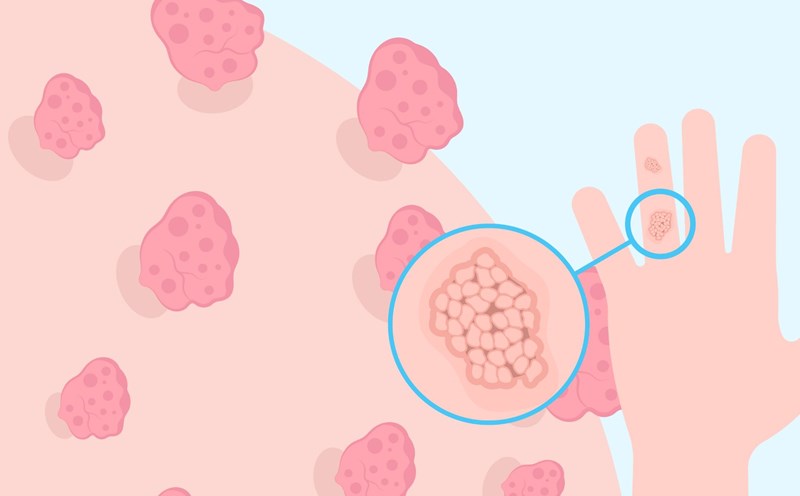
Like the case of a male patient, nearly 18 years old, with a history of sexual intercourse – anal sex. The patient came for examination at the Sex-Transmitted Diseases (STIs) Specialized Clinic after papillomas appeared around the anus for about 1 month now.
Through examination, doctors recorded many genital wart lesions densely distributed around the anus and spreading into the anal canal. This is a difficult disease type, with many potential risks of complications if not treated properly. The patient was then transferred to the Laser and Skin Care Department for intensive treatment.
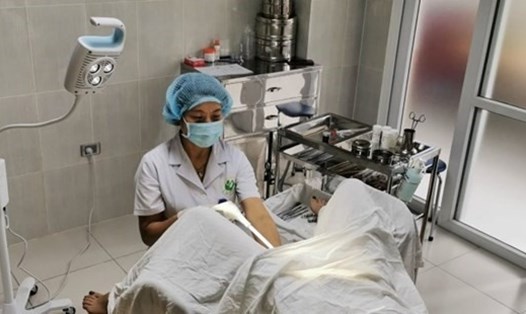
MSc.BSNT Nguyen Mau Trang, Department of Laser and Skin Care (National Hospital of Dermatology) said that after professional consultation, the patient was prescribed to burn and remove the lesions with CO2 laser under anesthesia.
This method helps eliminate maximum damage, while reducing pain and limiting psychological trauma for patients. After treatment, patients are actively cared for in the wound, the current condition is stable, and the wound is progressing to heal well.
According to Dr. Vu Huy Luong, Head of Laser and Skin Care Department, the anal canal area does not have a natural lubrication mechanism like the vagina. Therefore, during sexual intercourse, friction is usually greater, easily causing abrasions and minor injuries, thereby increasing the risk of infection with sexually transmitted diseases, especially genital warts. Genital warts in the anal and anal canal areas are one of the most difficult treatment locations.
The intervention process may encounter complications such as bleeding, infection, and at the same time, the risk of recurrence is relatively high. Therefore, treatment requires experienced doctors with high skills and appropriate equipment.
The Laser and Skin Care Department - Central Dermatology Hospital applies many specialized techniques such as plasma knives, CO2 lasers, cryotherapy, combined with drug treatment and wound care, to ensure effective damage removal, limit recurrence and minimize the risk of scarring.
Dr. Pham Thi Minh Phuong, Deputy Director of the Central Dermatology Hospital, in charge of the thematic clinic for sexually transmitted diseases, added that genital warts are a common sexually transmitted disease caused by the HPV virus and tend to increase in the past 10 years.
The group of men who have same-sex sex (MSM) is considered a high-risk group, with a noteworthy rate of co-incidence of other STIs such as syphilis, gonorrhea, and even HIV. Therefore, communication, health education, and safe sex practice play a particularly important role.
Assoc. Prof. Dr. Le Huu Doanh, Director of the Central Dermatology Hospital, emphasized that diagnosis and treatment of sexually transmitted diseases is one of the three key tasks of the Hospital. The specialized clinic for sexually transmitted diseases has been built to ensure that patients are examined comprehensively, discreetly, in the spirit of respect, empathy and information security.
In the coming time, the Hospital will continue to promote communication activities to raise public awareness about the prevention and treatment of sexually transmitted diseases.
People, especially teenagers, need to proactively equip themselves with knowledge about reproductive health, practice safe sex, and go to the doctor early when there are abnormal signs to limit complications and the risk of infection to the community.