
When grassroots healthcare is not strong enough to retain patients
Ms. Nguyen Thi An took her child to An Hoi Tay Ward Health Station for free vaccination. After vaccinating her child, she took the opportunity to ask the doctor to check the tumor on her back. The doctor determined that it could be a boiler tumor, treated with minor surgery. However, because the station did not have enough facilities, she was advised to go to the hospital.
The health station doctor said he was capable of doing it, but the facilities were not guaranteed, so he advised me to go to the hospital," Ms. An shared.
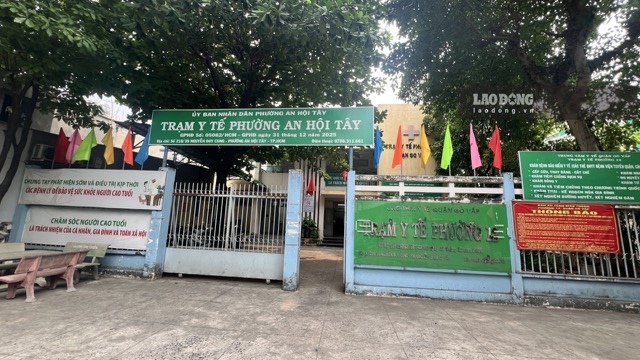
Ms. An's case shows a reality that in grassroots healthcare, the professional capacity of medical staff has been improved, but facilities are not always adequate.
Ho Chi Minh City is gradually consolidating the grassroots health network, including investing in facilities, supplementing human resources and increasing doctors from special-class, I, II, III, IV hospitals to health stations. However, if human resources are capable of medical examination and treatment but equipment is not synchronized, in the long term, this may affect the ability to attract people to come for examination and treatment at grassroots health facilities.
While some special-class hospitals are often overloaded, grassroots levels in some places have not fully exploited their capacity. This is a problem that needs to be solved synchronously to effectively use health resources and reduce pressure on special levels.
For example, Go Vap General Hospital, on average, receives more than 2,500 patients per day, both inpatients and outpatients, this number is still not commensurate with the population managed by the locality, many patients still go directly to higher-ranked hospitals even though the health insurance level due to over-level examination is higher, people still accept it.
Assoc. Prof. Dr. Tran Phu Manh Sieu - Director of Go Vap General Hospital said: "We are trying very hard to build a better hospital, with more full specialties to serve patients well, this not only fills the gap in specialties that are not available, but also helps reduce the overload of upper-level hospitals, and people in the area do not have to travel far to see patients.
Thousands of people jostle for examination at the final line
In contrast to the absence of people at some lower-level hospitals and health stations, final-level hospitals such as Ho Chi Minh City Oncology Hospital and Cho Ray Hospital have been frequently overloaded for many years.
At Ho Chi Minh City Oncology Hospital, at about 9:15 am on September 17th, the ultrasound order number for the day under HI has expired. Patients who want to have an ultrasound must wait until the next day. In case they need to perform it immediately, they can register for the service at a public hospital fee, 100,000 VND/turn.
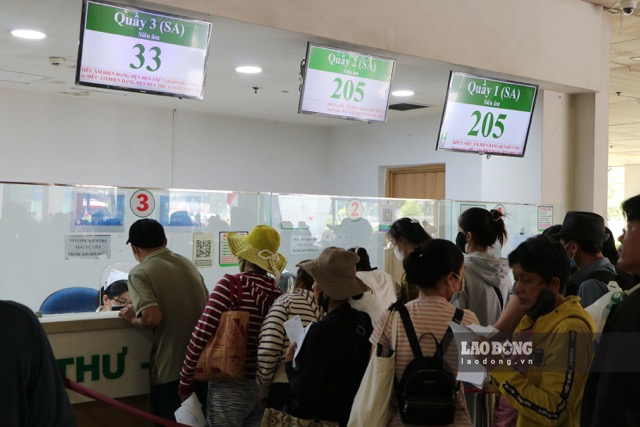
BS.CKII Vo Hong Minh Phuoc - Deputy Director of Ho Chi Minh City Oncology Hospital, said that the ultrasound area alone receives more than 1,000 visits per day. Medical staff work continuously, including break time, but due to the large number of registered patients, some cases have to be transferred to the next day.
Currently, 75% of patients coming for examination at the Oncology Hospital are people at lower levels, if lower levels improve capacity and facilities, the pressure on upper levels will be reduced," Dr. Minh Phuoc added.
Recorded at the Outpatient Department, Cho Ray Hospital, about 8,000 people come for examination every day, at times up to 10,000 people.
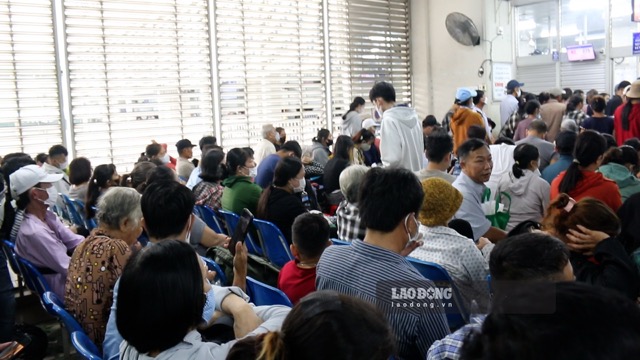
BS.CKII Le Trung Nhan - Head of the Outpatient Department, said that because it is a special general hospital, Cho Ray receives a large number of patients from southern provinces. The hospital applies technology to shorten the time of reception, and at the same time mobilizes doctors from other departments to support when the number of patients increases.
However, limitations in facilities make the situation of crowded people in the medical examination and treatment space still put pressure on both patients and medical staff.


