
Vietnamese salt consumption has decreased from 9.4g/day in 2015 to 8.1g/day in 2023, but is still about 1.6 times higher than the recommended level below 5g/day of the World Health Organization (WHO). Notably, high-risk groups such as people with high blood pressure and diabetes still tend to eat saltier than the general level.
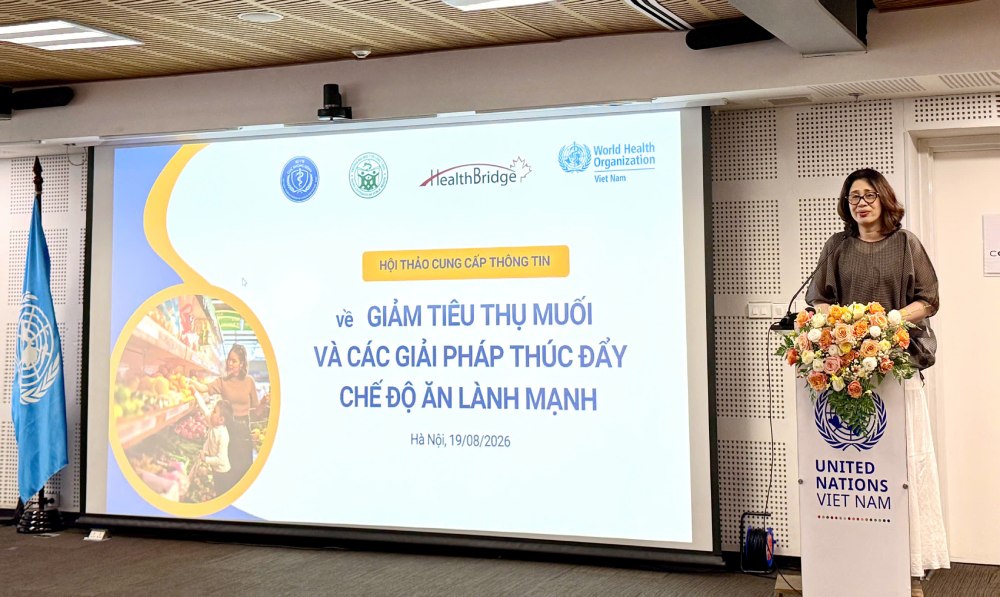
The above information was given by Assoc. Prof. Dr. Truong Tuyet Mai - Deputy Director of the National Institute of Nutrition at a seminar providing information on reducing salt consumption and solutions to promote a healthy diet, organized by the Department of Disease Prevention (Ministry of Health) in coordination with the World Health Organization (WHO) in Vietnam, Public Health University and HealthBridge on August 19 in Hanoi.
Eating a lot of salt and processed foods increases the risk of disease
Dr. Le Thai Ha - Deputy Director of the Department of Disease Prevention (Ministry of Health) said that Vietnam is facing an increasing burden from non-communicable diseases such as cardiovascular disease, high blood pressure, diabetes and stroke. Besides lifestyle risk factors, unreasonable diet is considered one of the issues that needs to be concerned about.
Notably, the habit of using a lot of salt in meals is still common. Along with that, the consumption of processed foods, fast food and sugary drinks is increasing, creating more risks to health.
Reducing salt is not only about changing the habit of seasoning in each family, but it needs to be implemented synchronously from food production and processing to providing information to consumers," Assoc. Prof. Dr. Truong Tuyet Mai emphasized.
Assoc. Prof. Dr. Truong Tuyet Mai said that salt is an essential mineral but consuming too much can increase blood pressure, the risk of cardiovascular disease and stroke. In Vietnam, most sodium comes from salt, fish sauce, seasoning powder, seasoning granules, MSG used when processing and eating. The habit of dipping and sipping fish sauce and broth also increases the amount of sodium intake into the body.
Notably, the amount of sodium from processed foods, instant noodles, snacks and snacks is increasing rapidly, especially in urban areas and young people. Therefore, the sodium reduction strategy needs to simultaneously aim at both traditional eating habits and the trend of consuming processed foods.
It is necessary to create an environment for people to easily choose healthy food
Dr. Angela Pratt, WHO Representative in Vietnam, said that unhealthy foods are contributing to increasing the burden of non-communicable diseases in Vietnam. This group of diseases, including cardiovascular disease, diabetes, cancer and chronic respiratory diseases, currently accounts for about 80% of deaths. One of the causes is unhealthy diet, especially consuming a lot of salt, processed foods, fast food and sugary drinks.
According to Ms. Angela Pratt, WHO agrees with Vietnam's orientation in shifting from medical examination and treatment thinking to health management and proactive disease prevention, and recommends comprehensive policies based on scientific evidence to build a healthy food environment. This needs to be a coordinated effort of many sectors and stakeholders.
WHO recommends implementing comprehensive policies based on scientific evidence to promote a healthy diet, helping people choose healthy foods and reduce the risk of non-communicable diseases.


