
Mr. Luis Caballero (Philippines nationality) has had high blood pressure for more than 30 years, hypokalemia lasting for more than 20 years for unknown reasons. In Vietnam, he was diagnosed by a team of endocrinologists, Hong Ngoc General Hospital (BVĐK) with a complex endocrine disease and successfully treated.
More than 30 years of treating high blood pressure but the disease still recurs
Mr. Luis Caballero came for examination at Hong Ngoc General Hospital in a state of uncontrollable high blood pressure. Despite using many types of medication, his blood pressure still reached 160/100 mmHg at times.
Medical history investigation shows that the patient has had hypertension for more than 30 years and has been treated for a long time in his hometown. However, treatment mainly focused on controlling symptoms without identifying the cause of the disease. In addition, he also developed hypokalemia for more than 20 years.
Although I take medicine regularly every day, my blood pressure still sometimes rises very high, my body is often tired, my limbs are weak. At times, I suffered from cerebral infarction due to hypertension complications," Mr. Caballero shared.
According to MSc.BSNT Kieu Hong Nhung - Department of Endocrinology, Hong Ngoc General Hospital: "Many cases of prolonged high blood pressure have not been screened in-depth to find the cause. Just treating symptoms can cause the disease to progress silently, increasing the risk of stroke, cerebral infarction and cardiovascular complications.
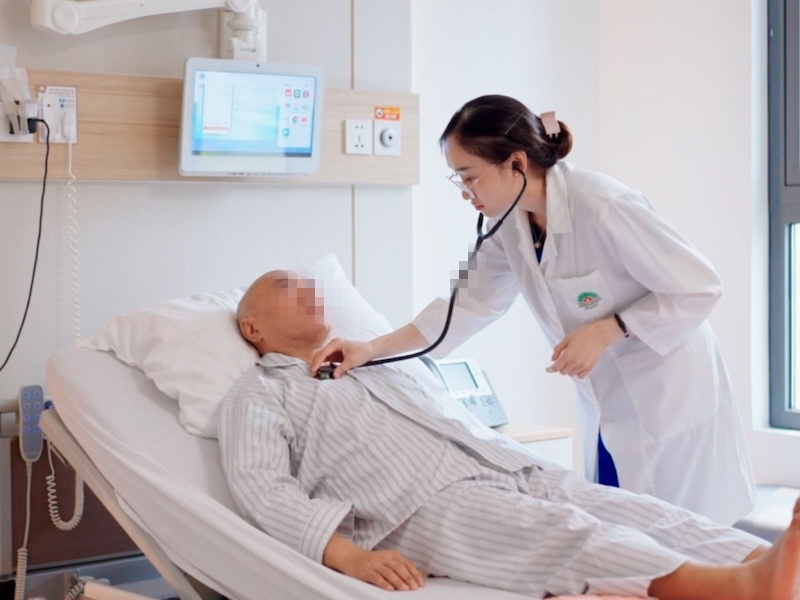
Detecting dangerous endocrine diseases thanks to specialized diagnostic techniques
From the condition of difficult-to-control hypertension accompanied by prolonged hypokalemia, doctors suspected that the patient had endocrine disorders and prescribed in-depth tests.
The results showed that the hormone Aldosterone increased abnormally, while Renin decreased deeply. At the same time, blood potassium decreased below the safe threshold. These data are aimed at diagnosing primary Aldosterone hypertension, which is one of the common causes of secondary hypertension but is easily overlooked.
For a more in-depth assessment, the patient continued to have a CT scan. The results recorded that both adrenal glands appeared with small tumors, of which the left gland was 8x11mm and the right gland was about 14mm.
Due to the appearance of lesions in both adrenal glands, accurately identifying the source of abnormal hormone secretion is decisive for the treatment direction. The patient underwent a multi-specialized consultation between endocrinology, diagnostic imaging and interventional electrosurgery.
Doctors prescribed adrenal venous salivation (AVS) technique - a method considered the "gold standard" in identifying the source of Aldosterone secretion.
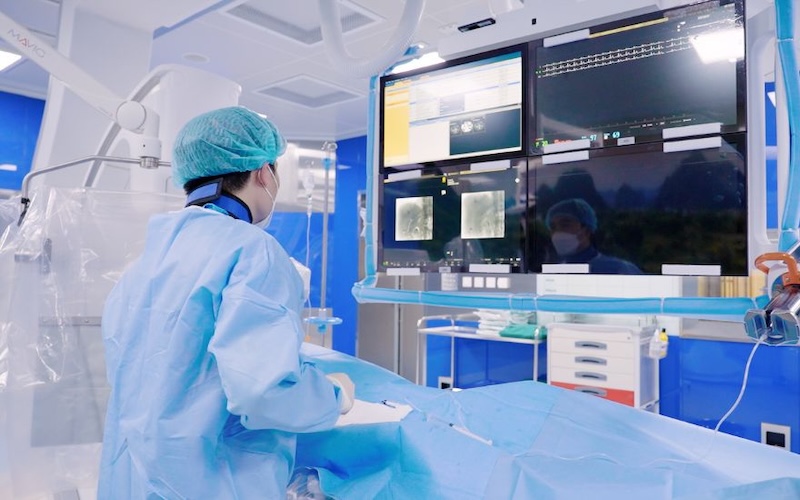
According to MSc.BS Do Huy Hoang - Department of Diagnostic Imaging and Interventional Electrosurgery, Hong Ngoc General Hospital, the doctor directly performing the procedure, AVS is a highly difficult technique because the adrenal veins are very small and have a complex anatomical structure. The procedure is performed under the guidance of the DSA system with a needle puncture line of only a few millimeters, helping to ensure accuracy and safety for patients.
AVS results showed that both adrenal glands increased Aldosterone secretion. From there, doctors determined that patients with primary bilateral hyperaldosterone were the cause of prolonged and difficult-to-controlly high blood pressure for many years.
After correctly identifying the cause, the patient was treated with anti-Aldosterone drugs according to a specialized protocol. After treatment, blood pressure improved significantly despite a significant reduction in the amount of drugs used, blood potassium levels returned to the safe threshold and health quickly stabilized.
MSc.BSNT Kieu Hong Nhung recommends that people with prolonged high blood pressure who have to use many types of drugs but blood pressure is still difficult to control, especially when accompanied by hypokalemia or have had cardiovascular complications, stroke, should have their endocrine causes screened to avoid missing out on the disease and have appropriate treatment directions.


