Bringing healthcare services closer to every citizen
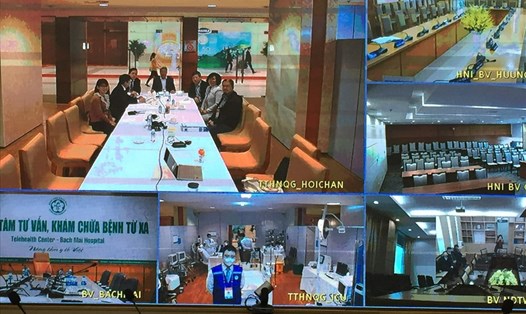
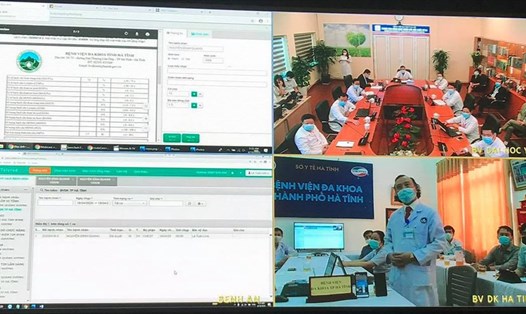
A patient in Bac Quang (Tuyen Quang) was admitted to the hospital in a state of chest pain, shortness of breath, and had a history of brain-metastatic lung cancer. Immediately after admission, medical records, tests and diagnostic images were immediately transferred to Hanoi Medical University Hospital through the PACS/Tele-radiology system (video storage and communication system) for remote consultation. Central-level experts assessed the disease at a late stage, proposing many treatment directions such as epidermal ganglion biopsy, considering a lung or brain tumor biopsy, checking spinal cord metastasis and searching for gene mutations to choose the optimal regimen. Thanks to Telehealth, patients do not have to be transferred, but still enjoy the treatment regimen of the central level.
Not only in this case, many elderly patients with complex diseases such as acute kidney failure, femur fracture, pneumonia, severe gout... are also consulted online, given appropriate treatment instructions, reduced costs and limited referrals.
About 7-8 years ago, Assoc. Prof. Dr. Nguyen Lan Hieu - Director of Hanoi Medical University Hospital - began applying a digital platform in remote medical examination and treatment, gradually shifting from Telemedicine to Telehealth (multi-hospital online consultation), deploying remote clinics and moving towards medical examination at patients' homes.
In 2018, University Medical Hospital implemented a heart disease screening program for 3,000 children in An Giang. With devices such as electronic stethoscopes, electrocardiograms, wifi ultrasounds... children's data was transmitted to Hanoi. Results: 2,910 children were excluded, 106 cases were suspected and 5 children were diagnosed with heart disease on the spot, accurately determining the congenital heart rate of about 0.5%.
Remote consultations between many hospitals not only help handle difficult cases but also improve the professional capacity of the lower level, increase people's trust, and create a practical training channel for young doctors, especially in remote areas. The electronic medical record data warehouse helps the medical industry monitor patients after treatment, assess effectiveness, limit side effects and optimize protocols. Data is collected and analyzed more and more accurately, nurses or technicians can undertake basic examinations, and doctors focus on remote diagnosis.
Right from the initial stage, Assoc. Prof. Dr. Nguyen Lan Hieu assessed that Telehealth will blur the boundary of qualifications between units with limited expertise, contributing to bringing district and commune levels closer to provincial and central levels. He emphasized that traditional medical examination and treatment is still a pillar, Telehealth is just a "third hand" to support doctors, cannot be completely replaced, but helps the health system operate more effectively.
The most noticeable effect of Telehealth is the period when the COVID-19 epidemic broke out on a large scale. This model helps significantly reduce the number of patients having to move from home to the hospital, limiting the rate of transfer to higher levels. Remote monitoring and treatment consultation also reduce the rate of direct re-examination, bringing many advantages to patients.
According to Assoc. Prof. Dr. Hieu, most non-communicable pathologies can be consulted and monitored through Telehealth if they meet the conditions: The patient has been clearly diagnosed, treated stably and has reliable remote health indicators. Conversely, cases with complex diagnosis, unclear symptoms or requiring paraclinical intervention still have to go to the hospital for direct examination to ensure safety.
Assigned by the Ministry of Health to participate in the Project "Remote Medical Examination and Treatment" in the role of a terminal hospital, from 2020, Hanoi Oncology Hospital regularly organizes online consultations, shares expertise and supports people at lower levels to access high-quality services.
Dr. Bui Vinh Quang - Director of Hanoi Oncology Hospital - said that the hospital has connected consultations for many complex cancer cases, supporting lower-level doctors to determine the stage of the disease through anatomy images, diagnostic imaging and treatment ability assessment at the grassroots level. The hospital coordinates with units to organize consultations with many topics. Recently, there was an exchange on the benefits of Ribociclib in the treatment of advanced/metastatic breast cancer and the role of drugs in supportive treatment, discussing 3 cases from Ninh Binh General Hospital, Tuyen Quang General Hospital and Ba Vi General Hospital.
Great opportunity for lower levels, practical benefits for patients
Telehealth helps people in all regions access high-quality health services, while creating a practical training environment for grassroots-level doctors, contributing to standardizing and improving the quality of medical examination and treatment nationwide. This is a direction that needs to be invested in for a long time to modernize the Vietnamese health system.
Remote medical examination and treatment is becoming a solution to help patients access services faster, more effectively and safely, while improving the professional quality of lower-level facilities, transparency of procedures, and reducing paperwork and costs.
The Law on Medical Examination and Treatment (amended) effective from January 1, 2024 has added Article 80, specifically regulating medical examination and treatment activities and remote professional support. On that basis, the Ministry of Health issued Circular 30/2023/TT-BYT, announcing the list of 50 diseases and conditions of diseases allowed for remote medical examination and treatment. These services range from health consultation, chronic disease monitoring between family doctors and patients according to the principle of family medicine to remote consultation and treatment between upper and lower-level hospitals.
The Ministry of Health also issued a digital transformation strategy for the period 2025-2030, setting a target of 100% of medical facilities having remote medical examination and treatment departments. People in remote, isolated, and island areas... can be consulted and advised by upper-level doctors through a digital platform instead of having to travel long distances in a costly way.
Deputy Minister of Health Tran Van Thuan affirmed that remote healthcare is not just a technical solution but a service organization model with patients as the center, helping to shorten geographical distance, share expertise and increase grassroots capacity.
In Vietnam, remote healthcare has transcended the role of a temporary solution in the COVID-19 pandemic to become a strategic component of the modern healthcare system. From more than 1,000 bridge points in the epidemic, the model is still maintained and expanded, serving tens of thousands of people each year, especially in difficult areas and vulnerable groups.
In parallel with practice, Vietnam has completed the legal framework with the 2023 Law on Medical Examination and Treatment and guiding documents, creating a clear legal corridor for remote medical examination and treatment activities. According to Deputy Minister Tran Van Thuan, Vietnam is promoting three major processes: National digital transformation, in which healthcare is a priority area; perfecting institutions for new healthcare service models based on data and artificial intelligence and deep international integration. Resolutions of the Politburo such as 57-NQ/TW, 59-NQ/TW, 72-NQ/TW create a political foundation for digital healthcare development, strengthening grassroots healthcare and promoting technology application.
In that context, remote healthcare is considered a method of reorganizing healthcare services in a modern direction, increasing accessibility, improving treatment quality and effective grassroots support, contributing to bringing healthcare services closer to all people.