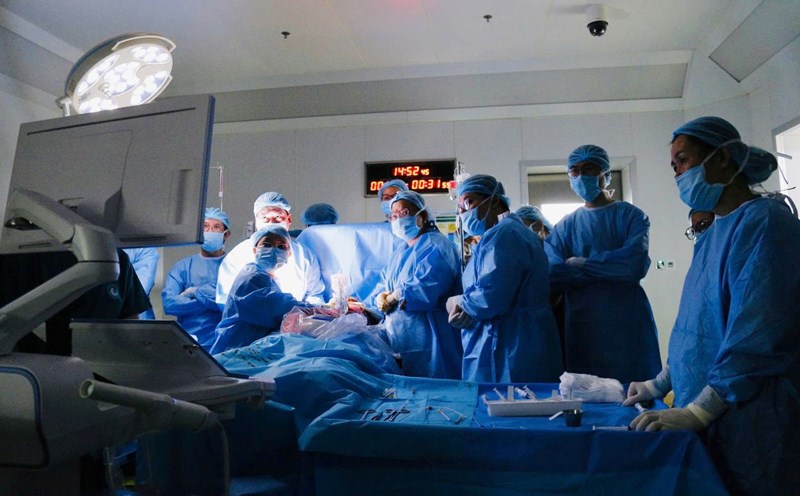
Pregnant woman N.T. N. H (28 years old), pregnant for the second time at week 36, came to the Central Obstetrics and Gynecology Hospital - Facility 2 due to abdominal pain. The patient had a cesarean section in 2023 and had a history of interstitial pregnancy surgery on the right side.
At the time of admission, the pregnant woman was conscious, blood circulation was stable, no vaginal bleeding, no water discharge. Monitoring recorded about 2 uterine contractions, but the cervix was still closed. Initial ultrasound showed that the fetus was stable, no blood in the abdominal cavity was recorded.
The pregnant woman was transferred to the delivery room to continue monitoring. About 30-40 minutes later, the pain still did not subside even though the vital signs and fetal heart rate were still stable. Doctors conducted examinations, consultations and in-depth ultrasounds.
The results showed abnormalities at the right corner of the uterus, images of amniotic fluid and amniotic membrane escaping through this position, forming a sac of fluid under the liver angle. Based on the history of cesarean section and previous interstitial pregnancy surgeries, doctors determined that this was a dangerous sign, suspected of ruptured right corner of the uterus.
The team agreed to indicate emergency cesarean section. The surgery was performed by BSCKII Pham Van Chung, Deputy Head of the Department of Lineal Direction, Central Obstetrics and Gynecology Hospital, as the main surgeon.
During the surgery, the baby boy weighing 3.1kg was safely delivered. Uterine examination, doctors discovered a jagged rupture about 3cm long at the right angle of the uterus. Part of the amniotic sac had overflowed through the crack. Meanwhile, the old cesarean section wound remained intact.
Doctors quickly controlled the injury, peeled the placenta, stitched the ruptured site and stopped the bleeding, preserving the uterus for the mother.
According to doctors, uterine rupture is a particularly dangerous obstetric complication, often related to pregnant women who have had surgery on the uterus. However, this condition is not always manifested by severe pain, heavy blood loss or shock.
The above case shows that even if the pregnant woman is awake, hemodynamically stable, fetal heartbeat is good and there is no bleeding or watering, the risk of uterine rupture can still occur. Close monitoring of the pain progression, re-evaluation when symptoms last and timely consultation play an important role in detecting complications.
Doctors recommend that pregnant women who have had cesarean sections or uterine surgery should be closely monitored during pregnancy, especially when abdominal pain or abnormal signs appear in the last weeks.