
Breast cancer is not over yet
Late-stage breast cancer is still a difficult problem of modern medicine, the successful treatment case at K Hospital has shown the clear potential of the personalized treatment strategy, bringing positive effects in long-term disease control and improving the quality of life for patients.
The 41-year-old female patient with stage IV breast cancer with bone metastases has responded well to treatment and maintained stable disease thanks to a personalized regimen according to the different biological characteristics of the two tumors.
This is a complex case when two tumors on both breasts have different natures: the right breast belongs to the trichomonas group, the left breast belongs to the lumen group. After being comprehensively evaluated, the patient was prescribed prolonged whole-body treatment, balancing effectiveness, safety and cost.
As a result, the lesions were significantly reduced, the patient tolerated the drug well, did not experience serious side effects, and the quality of life was maintained. This case shows that individualized treatment plays an important role in controlling late-stage breast cancer.
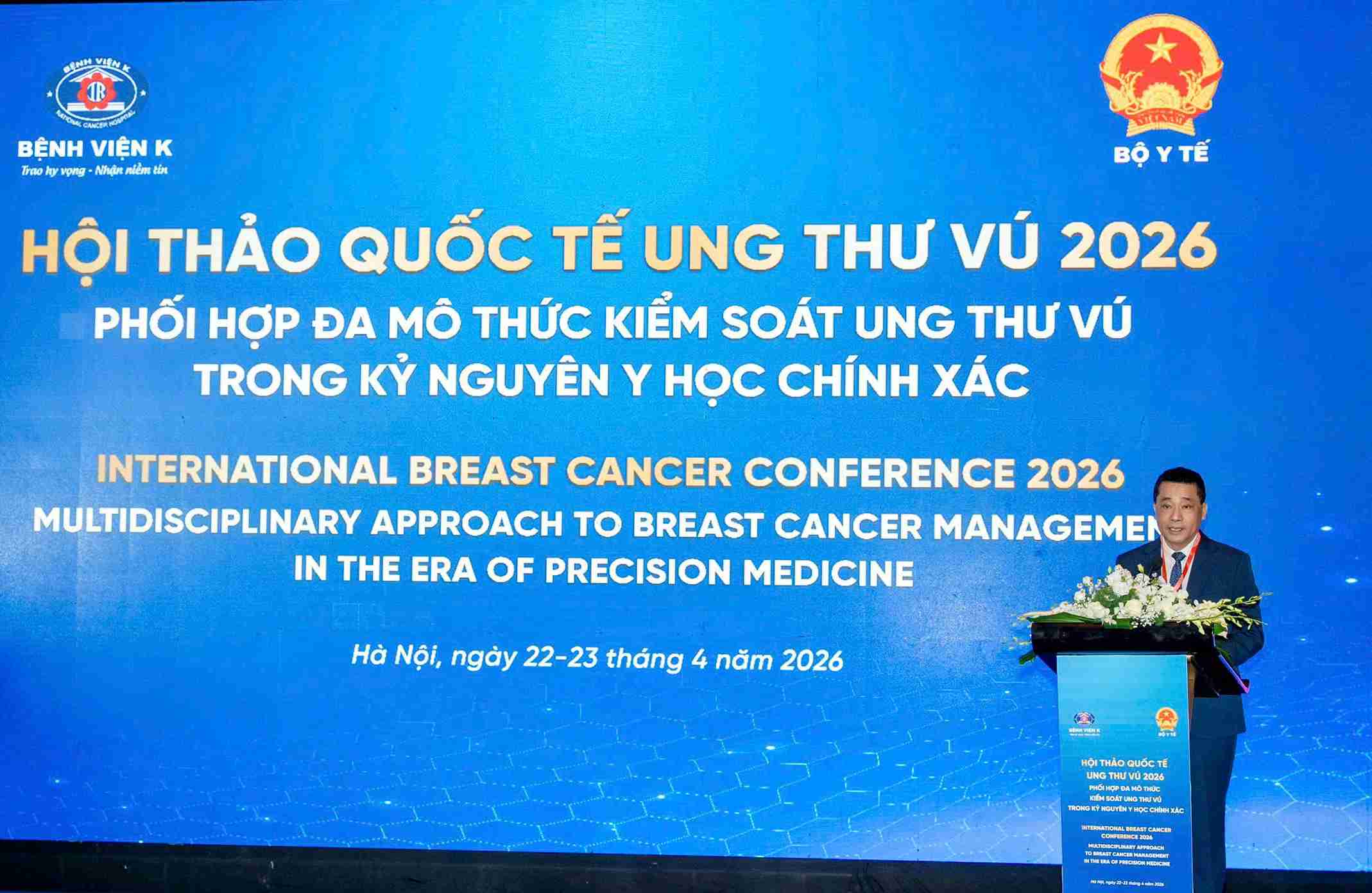
At the International Breast Cancer Conference 2026 with the theme "Multi-model combination to control breast cancer in the era of precision medicine" on April 22, Prof. Dr. Le Van Quang, Director of K Hospital, said that breast cancer is one of the common diseases and the cause of high mortality from cancers.
According to GLOBOCAN, in 2022, breast cancer had a new incidence of nearly 2.3 million people, accounting for 23.8% of common cancers in women. In Vietnam, in 2022, breast cancer had a new incidence of 24,563 people, the disease with the highest incidence among female cancers.
In cancer treatment in general and breast cancer in particular, the role of multimodal coordination is increasingly affirmed. The combination of surgery, radiation therapy, whole-body treatment, diagnostic imaging, pathology, molecular biology, palliative care and psychological support not only improves treatment effectiveness but also significantly improves the quality of life for patients.
The highlight of the program is the multi-modal consultation (MDT) session, where difficult and typical cases are analyzed from the perspective of many different specialties. Through this, experts agree on optimal treatment strategies and personalization for each patient.
Multidisciplinary approach in the era of precision medicine
Prof. Dr. Le Van Quang - Director of K Hospital emphasized: the conference is an important opportunity for domestic and foreign experts to update medical advances, share clinical experiences and promote multi-specialized coordination models in cancer treatment. At the same time, this is also an opportunity to exchange more deeply about new trends such as the application of AI in medicine and building a clinical quality system according to international standards.
Cancer is becoming a major health burden globally, especially in developing countries. Therefore, proactive health check-ups, periodic screenings and early detection play a key role in breast cancer control. Treatment effectiveness depends greatly on the stage of disease detection. Women aged 40 and over or with abnormal signs should have periodic screenings annually to protect their health.


