1. Có trên 80 loài nấm phát quang sinh học được tìm thấy trên trái đất, theo Plantsnap. Nấm mật ong, tên khoa học là Armillaria mellea, là loài nấm phát quang sinh học phổ biến nhất và sinh sống trong các khu rừng trên khắp Bắc Mỹ và Châu Á. Ngược lại, nấm Mycena luxaeterna chỉ được tìm thấy ở Brazil.
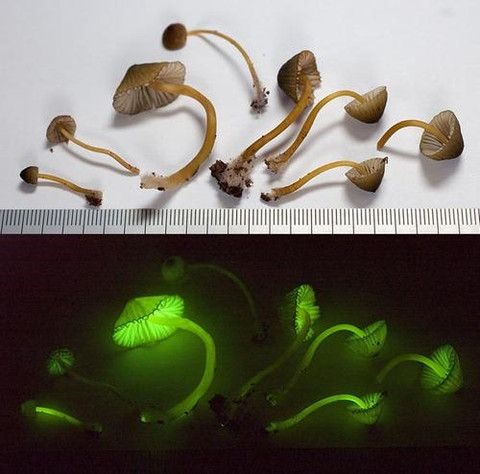
2. Oxyluciferin là hợp chất kỳ diệu được tìm thấy trong nấm phát quang sinh học và mang lại cho nấm sự rạng rỡ. Các phân tử phát quang luciferin có trong nấm phát sáng là hợp chất tương tự được tìm thấy trong đom đóm và các sinh vật phát quang dưới nước.
3. Hơn 100 năm trước, nhà tự nhiên học George Gardner đã nhìn thấy những đứa trẻ chơi đùa trên đường phố ở Brazil với thứ mà ông cho là những con đom đóm khổng lồ, nhưng thực chất chúng là những cây nấm phát sáng khổng lồ. Ngày nay, nó được gọi là Neonothopanus gardenneri, và mọc ở khắp Brazil.
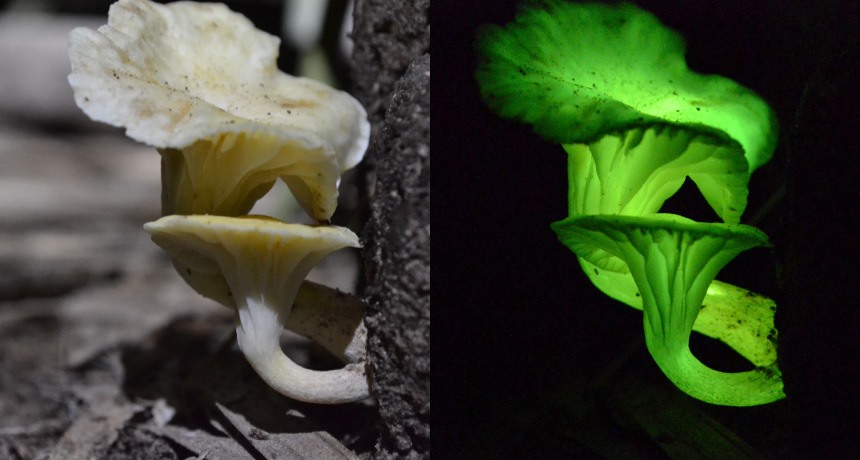
4. Sự phát quang sinh học ở các loài nấm như Neonothopanus gardneri tuân theo đồng hồ sinh học do luciferin, reductase và luciferase (cùng tạo ra sự phát quang). Cả ba đều đạt đỉnh vào ban đêm do nhiệt độ thay đổi.
5. Một số loài nấm phát sáng để thu hút các loài động vật hoạt động ban đêm giúp phát tán giao tử. Điều này cực kỳ phù hợp với các cánh rừng nhiều tán cây rậm rạp không thể phát tán giao tử nhờ gió.
Một số loài khác lại phát sáng để thu hút kẻ thù là các con côn trùng đến ăn nấm, đây là kế sách làm bạn với kẻ thù của nấm. Một số loài lại phát sáng vì những lý do mà chúng ta chưa thể lý giải được và đang được các nhà khoa học tìm hiểu.