
Dữ liệu cập nhật ngày 12.5 của New York Times lấy từ các nguồn chính phủ do dự án Our World in Data tại Đại học Oxford tập hợp.
Dữ liệu cho thấy, hơn 1,34 tỉ liều vaccine COVID-19 đã được tiêm trên toàn thế giới tính đến 11.5, tương đương với 17 liều/100 người.
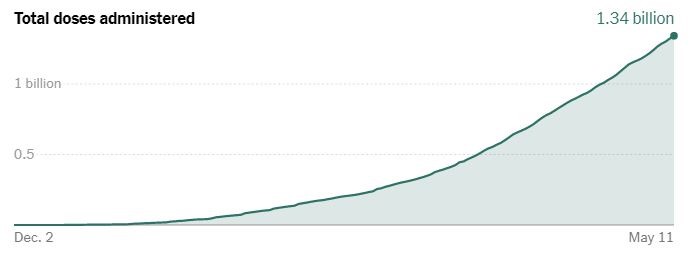
Theo New York Times, có khoảng cách rõ rệt giữa chương trình tiêm chủng ở các quốc gia và vùng lãnh thổ trên thế giới khi một số quốc gia và vùng lãnh thổ vẫn chưa bắt đầu tiêm chủng.
Trong khi vaccine COVID-19 vẫn còn tương đối khan hiếm trên toàn cầu, hầu hết các quốc gia đã tập trung nỗ lực tiêm chủng sớm vào các nhóm ưu tiên cho những người dễ bị tổn thương về mặt lâm sàng; những người ở độ tuổi 60, 70 trở lên; nhân viên tuyến đầu như bác sĩ và y tá,...
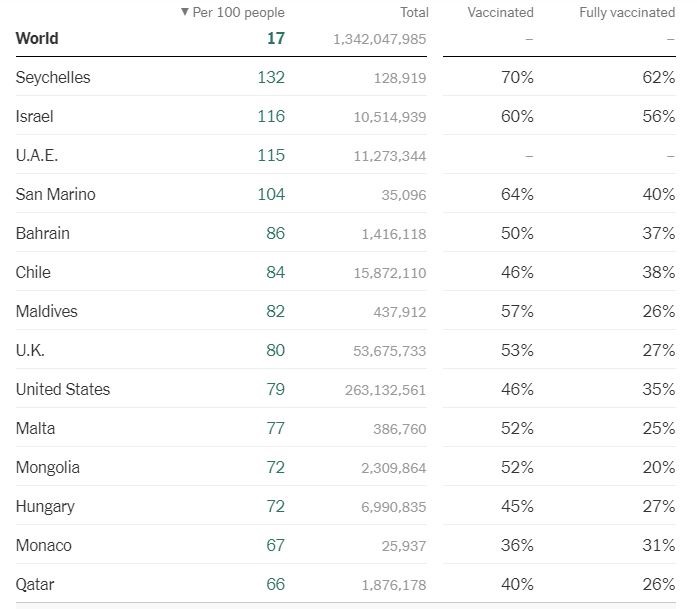
Theo bảng thống kê của New York Times, Seychelles - quốc gia Đông Phi - có tỉ lệ tiêm chủng trong dân số cao nhất thế giới với 70% dân số đã tiêm mũi 1 và 62% tiêm cả 2 mũi, với tổng số liều tiêm là 128.919. Tiếp theo là Israel với 60% dân số đã tiêm mũi 1 và 56% tiêm cả 2 mũi. Mỹ cũng ở trong top đầu về tiêm chủng với tỉ lệ liều tiêm vaccine trên 100 người dân là 79, với tổng số 263.132.561 liều vaccine đã tiêm.
Có một sự khác biệt rõ rệt giữa các châu lục trong tỉ lệ tiêm chủng. Châu Phi có tỉ lệ tiêm chủng chậm nhất so với bất kỳ châu lục nào, với một số quốc gia vẫn chưa bắt đầu các chiến dịch tiêm chủng hàng loạt.
Khoảng 83% liều vaccine đã tiêm trên toàn thế giới là ở các quốc gia có thu nhập cao và trung bình cao. Chỉ 0,2% liều được sử dụng ở các nước thu nhập thấp.
Người được tiêm chủng là người đã tiêm ít nhất một liều vaccine và người được tiêm chủng đầy đủ là đã tiêm tất cả các liều vaccine cần thiết.
Hầu hết các loại vaccine đang được sử dụng hiện nay đều yêu cầu bệnh nhân phải tiêm đủ hai liều. Vào tháng 2, Cơ quan Quản lý Thực phẩm và Dược phẩm Mỹ đã cho phép sử dụng vaccine 1 liều của Johnson & Johnson tại Mỹ.


