
President Donald Trump has repeatedly publicly stated his intention to bring Greenland under US control. He affirmed that he will pursue this goal at all costs, even declaring that he does not rule out military intervention options. The US considers this an urgent national security issue in the face of the rise of Russia and China in the North Pole region.
Although this island possesses huge oil and gas reserves and rare earth minerals, the real driving force for the US ambition lies in its prime geographical location.
In the context of global climate change, Greenland is becoming the most valuable "real estate" on the world maritime map.
The melting of the permafrost surrounding the island is gradually forming a northern sea route. This is considered a new economic corridor, helping to connect the oceans faster than ever.
According to analysis by economic and maritime experts, ships moving through this new route will save about 50% of fuel and operating costs compared to the traditional route through the Suez Canal.
The difference is very large when comparing the two routes. If traveling around the Suez Canal, cargo ships have to travel about 4,800km further. Meanwhile, the Northern route helps shorten transportation time from production centers in East Asia to the European market by about 10 days. In the logistics industry, this period is synonymous with huge profits.
That economic advantage turns Greenland into a strategic checkpoint that every superpower wants to hold.
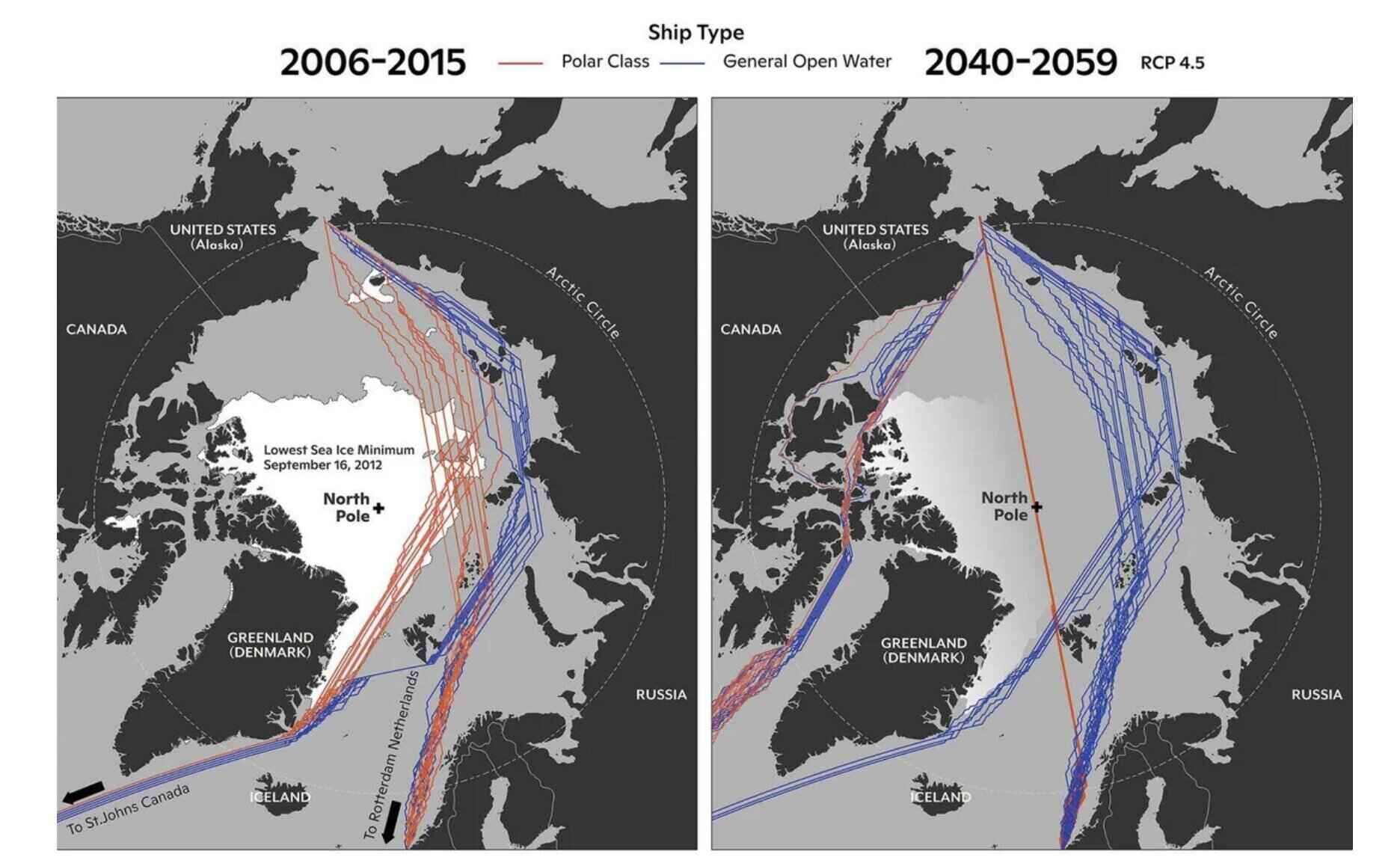
The US National Oceanic and Atmospheric Administration (NOAA) forecasts that traffic density in this area will explode in the coming decades. As sea temperatures continue to warm up, new routes will open up for both conventional cargo ships and not just specialized icebreakers.
Even forecast models show that by 2059, ice melting may allow ships to cross the North Pole in the straightest way. At that time, the country that controls Greenland's long coastline will take control of the most important trade flow on the planet.


