According to a statement from the Libyan Maritime Administration, the Russian Arctic Metagaz ship carrying 61,000 tons of liquefied natural gas (LNG) suddenly shook by loud explosions on March 3.
The incident occurred in international waters between Libya and Malta, about 240km from the city of Sirte. Fierce fire engulfed the entire hull, causing the vehicle to sink immediately afterwards. Fortunately, all 30 Russian crew members were rescued by nearby ships and brought to the Libyan coast safely.
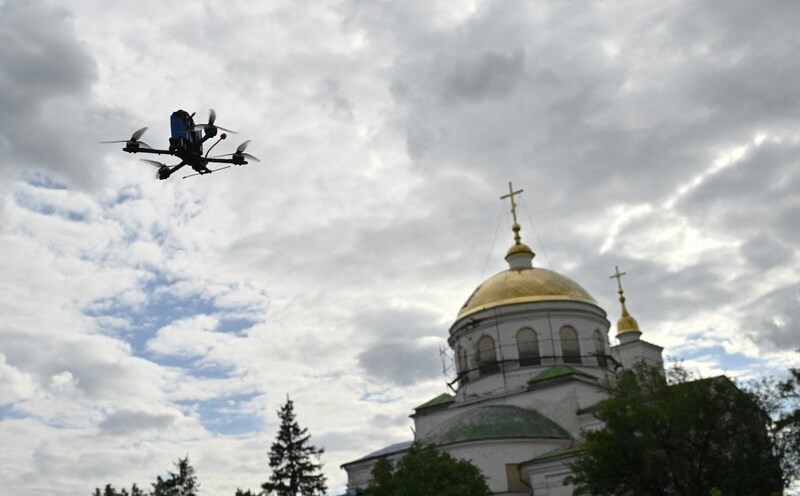
The Russian Ministry of Transport immediately accused Ukrainian unmanned devices (surface drones) of being responsible. Moscow believes that these drones were launched from the North African coast to sabotage energy transport routes.
Russian President Vladimir Putin called this a "terrorist act" causing instability in the global gas market. Although the Ukrainian side has not yet confirmed it, the country's military previously launched the "Sea Baby" drone generation with an operating range of up to 1,500km, fully capable of reaching this area.
Notably, the Arctic Metagaz is believed to belong to the "dark fleet" - a group of ships specializing in helping Russia evade Western sanctions to export energy. The ship departed from the port of Murmansk (Arctic) and was en route to Egypt when it sank.
The attack on a ship of this fleet shows that Russia's energy transport routes are no longer safe, even if they are outside the traditional battlefields in the Black Sea or the Baltic region.
Experts believe that the incident marks a dangerous turning point when the fighting spreads to key international waters. If Ukraine is really behind the attack from the Libyan coast, this shows that Kiev's intelligence network and long-range combat capabilities have reached a new level.
The shipwreck not only caused millions of USD in economic damage but also directly threatened maritime security in the Mediterranean region, which is an important energy gateway of the world.