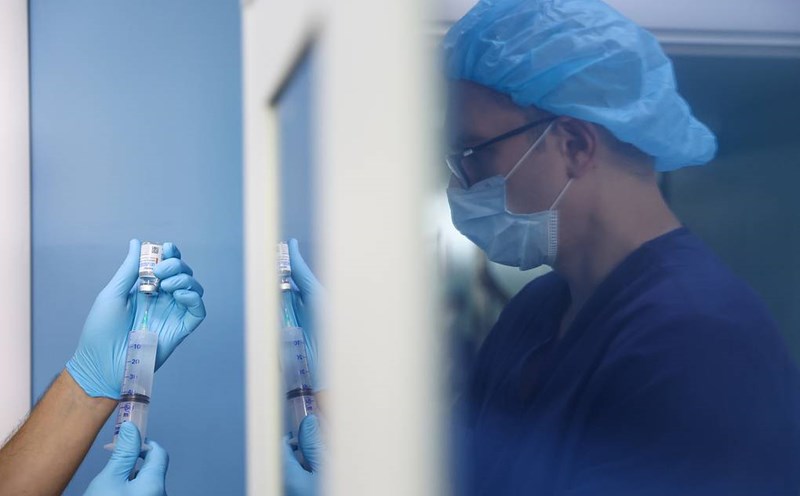
This step is expected to open up a more accurate treatment for malignant tumors.
RT reported on December 11 that Russia officially introduced the first 3 batches of cancer vaccines tested at the Gamaleya Institute in Moscow - where the COVID-19 Sputnik V vaccine was invented.
According to Director Alexander Gintsburg, this is a cancer vaccine developed based on the mRNA platform and supported by artificial intelligence (AI), aiming to attack malignant tumors using the genetic data of each patient.
Information about the readiness of this vaccine began to appear from September. Preclinical studies show that the new drug has the ability to reduce tumors and slow down the growth rate by 60-80%, depending on the characteristics of each patient. In the initial phase, the vaccine is expected to be tested on a group of patients with colorectal cancer.
Mr. Gintsburg said that the Herzen Cardiovascular - Cancer Institute, the leading cancer treatment unit in Russia led by Director Andrey Kaprin, has received all the necessary approvals to implement the treatment process, from testing, mRNA production to clinical injection for patients. However, he emphasized that the vaccine lots, although they have passed quality control, are still only in the testing phase and have not been widely used.
Unlike traditional disease prevention vaccines, mRNA cancer vaccines are not intended to prevent infection but are designed as a treatment therapy in the advanced stage. They are still called vaccines because of their mechanism of action on the immune system - training the body to identify and destroy cancer cells.
The breakthrough of the new vaccine lies in its personalization. mRNA technology combined with AI allows the creation of a "unique, endless" drug pose for each patient, based on tumor gene analysis and their biological imprint. This opens up opportunities to improve treatment effectiveness, reduce side effects and shorten the response time to drugs.
Gamaleya is not the only unit in Russia researching advanced cancer therapies. Russia has previously launched a trial of a drug using a genetically modified bean sprout virus to attack brain cancer cells, expected to last for 2 years.
At the same time, the Russian Ministry of Health also licensed two other cancer vaccines: NeoOncoVak, an mRNA-based treatment vaccine for melanoma patients. Oncopept is a peptides vaccine targeting certain malignant tumors.
Both types are developed specifically for each patient, using tumor genetic data and related biological materials. They have a limited treatment range but aim for very high accuracy.