
In an effort to find a solution to the Russia-Ukraine conflict, President Donald Trump's administration is said to be considering economic "incentives" enough to persuade Russia to sit down at the negotiating table. Among them, restoring gas exports to Europe through Nord Stream has emerged as a strategic card.
The Nord Stream system includes Nord Stream 1 and Nord Stream 2 pipelines, leading Russian gas to Germany through the Baltic Sea.
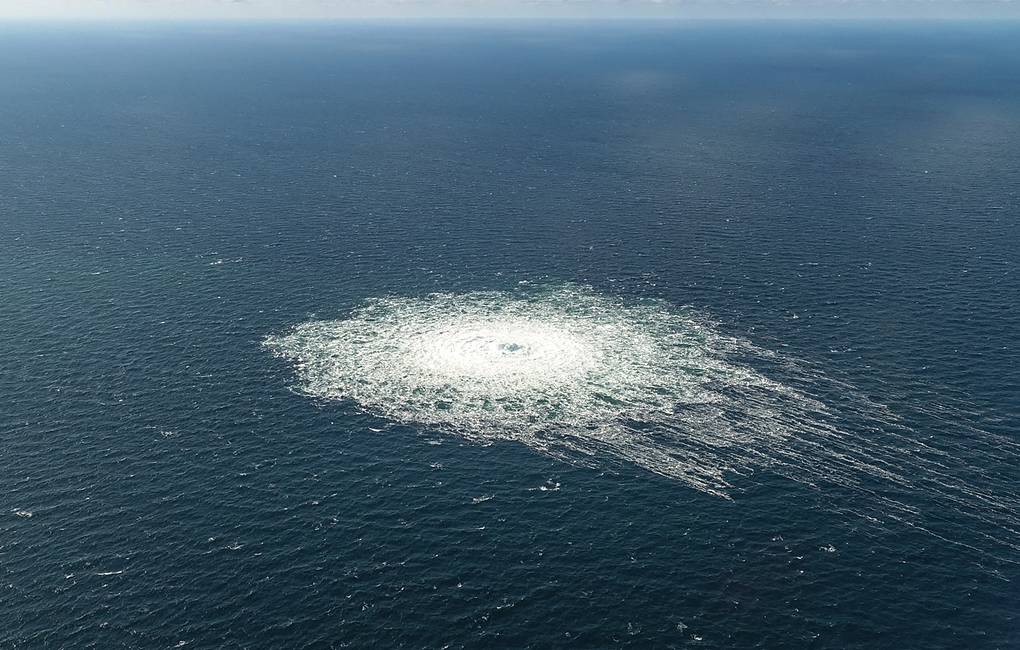
In September 2022, the explosions completely destroyed Nord Stream 1 and damaged a branch of Nord Stream 2. However, the remaining branch of Nord Stream 2 remains intact and can be technically restored to operation in less than 1 year if Germany allows it.
According to many German and French press sources, there have been exchanges between representatives related to Mr. Trump's team and Nord Stream 2 AG in Switzerland - a business currently entirely owned by Russian energy corporation Gazprom.
The scenario being discussed is that US investors buy back shares of Gazprom, thereby taking legal ownership of the pipeline.
If this happens, the US will not own Russian gas but may control the transit infrastructure. At that time, Washington, along with the Russian supplier, is likely to significantly control the gas supply for Germany - the largest economy in Europe.
Currently, about 16-17% of German gas use comes from liquefied natural gas (LNG), of which the US accounts for more than 90% of LNG supply. About 46% of gas comes from Norway through pipelines.
If Nord Stream 2 operates fully, a capacity of 55 billion m3 per year can meet the needs of about 26 million German households, at a lower cost than Norwegian gas.
For Russia, this is a significant economic reward. Oil and gas and related products account for 40-50% of the country's total exports.
In the context of tighter Western sanctions and budget pressure due to war, restoring gas flows to Europe will help Moscow improve revenue and stabilize the economy.
However, a significant barrier lies in Europe. The European Union (EU) still maintains sanctions packages against Russian energy.
The German government also applies energy security regulations to control the infrastructure related to Nord Stream. Berlin once affirmed that this project was a strategic mistake and no longer politically necessary.
The difference in interests between the US and Europe is also a key factor. While many European leaders consider Russia a long-term threat and want to continue to isolate Moscow, Washington may prioritize stabilizing the European front to focus resources on the Asian region - where competition with China is increasingly fierce.
Nord Stream's "revival" is therefore not only a technical or investment story, but also a major test for the post-conflict energy and geopolitical order.
A Russia-US agreement, if reached, could change the balance of power in the European gas market. But to turn the possibility into reality, a profound change in policies is needed in both Germany and the EU.


