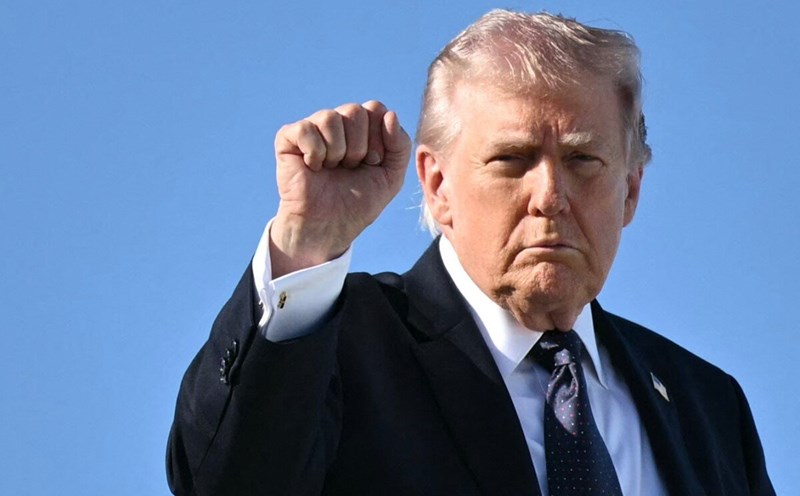
US President Donald Trump said on March 3 that relations between the US and Britain "are no longer as before" after Prime Minister Keir Starmer initially did not support airstrikes against Iran.
In an interview with the British press, Mr. Trump said it was "sad" to witness the relationship once considered "most solid" changing in this way. This is the 2nd consecutive interview with the British press that he has criticized the British leader.
Mr. Trump commented that countries like France have supported more strongly, while Britain is different. According to him, the US does not need Britain's involvement to conduct military operations in the Middle East, but still expressed the view that Prime Minister Starmer "should help".
Earlier, on the evening of March 1, Mr. Starmer said he would allow the US to use British military bases for defensive attacks, after these facilities were not used in the initial airstrike against Iran.
Responding to criticism from Washington, a senior British minister, Darren Jones, told the press that US-Britain relations are still key. He emphasized that Britain has learned a lesson from participating in the Iraq war in 2003, saying that it should intervene when there is linkage with international partners and a clear legal basis.
Speaking in Congress on March 1, Mr. Starmer confirmed that President Trump had expressed disagreement with London's decision not to participate in the initial airstrike on Iran. However, he affirmed his responsibility to assess what is in the interests of Britain's nation and he still maintains that stance.
Mutual statements show differences in the approach of the two traditional allies to the campaign against Iran, while bilateral relations are considered one of the important pillars in the foreign policy of both countries.