
With a range twice as long as the army tactical missile system ATACMS (Army Tactical Missile System) and strong penetration capabilities, the new generation precision strike missile PrSM (Precision Strike Missile) significantly expands the target range that Washington can place within range.
In a video compiled by the US Central Command (CENTCOM) about "the first 24 hours of Operation Epic Fury" in the joint US-Israel operation against Iran, images of missile launches from the M142 HIMARS wheeled mobile launcher appeared.
Observers quickly realized that this is not a familiar ATACMS, but a PrSM - a short-range ballistic missile line that has only begun to be put into service about 2 years ago.
The easily noticeable difference is the configuration of the tail wings and two-ball launchers in a standard "pod", instead of each tube containing only one projectile like the ATACMS.
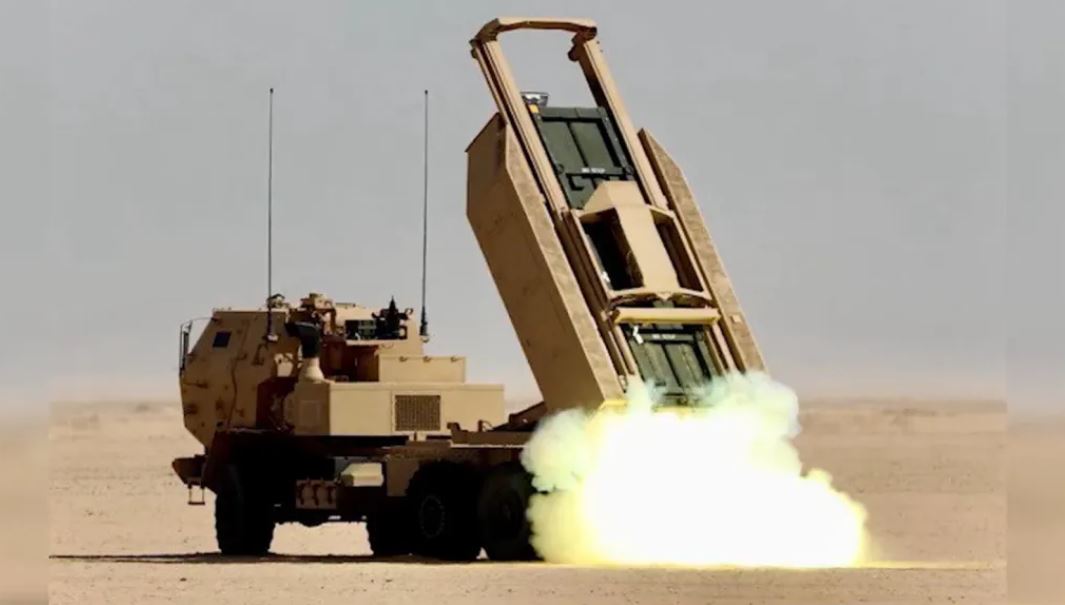
The PrSM developed by the US Army is considered a leap forward in range. The basic version (Increment 1) has proven to be able to attack targets at a distance of at least 500km. The US Army's public goal is to raise the range to about 650km, and further, the variant can reach 1,000km or more.
Meanwhile, the longest-range version of ATACMS - the army's tactical missile system that has been in service for many years - only reaches about 300km.
Thus, PrSM almost doubles the combat radius, meaning a significant expansion of the target area that US units can control from the same deployment position.
It is not clear where the PrSM missiles were launched within the framework of Operation Epic Fury, but the long-range advantage allows US forces to attack deeper into enemy territory without having to bring the launchers too close to the front lines.
Short-range ballistic missiles like PrSM have very high speeds, especially in the final stage when launching on targets. This makes them an effective choice to attack "time-sensitive" targets such as missile launchers, air defense battlefields or coastal radar - targets considered to be the focus in opening airstrikes.
High speed also poses more challenges to the enemy's air defense system compared to subsonic cruise missiles. When colliding, high kinetic energy helps the warhead have the ability to penetrate deeper into solid targets - a noteworthy factor in the context that Iran possesses many reinforced and underground military structures.
In addition to the basic version, the US is developing an anti-ship variant (Increment 2) with additional seekers to attack mobile targets at sea.
Another version is also being researched to carry loads such as suicide drones or small guided bombs.
The "fire and bullet launch" of the PrSM in Iran is therefore not only a real-world test, but also a strategic message: Washington is possessing a ground attack tool with a longer range, more flexible and more difficult to intercept - enough to change the US's calculation of the firepower zone in future conflicts.


