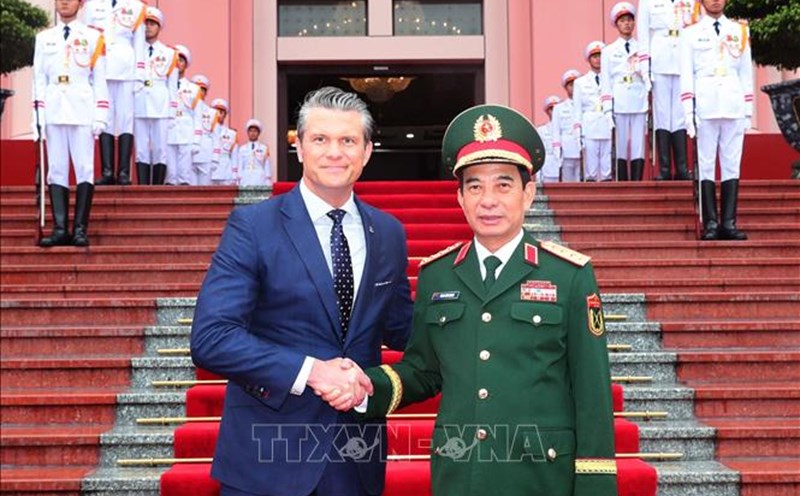
On March 2, US defense officials officially appeared before the media at the Pentagon to talk about the escalating war with Iran.
US Secretary of War Pete Hegseth and Chairman of the Joint Chiefs of Staff, General Dan Caine, directly answered the press, in the context of conflict increasingly going beyond the scope of a single air campaign.
At the press conference, Mr. Hegseth affirmed that the goal of the attacks on Iran is not to "change the regime". However, he also called on the Iranian people to "take advantage of the opportunity" if they want to change the government. This statement immediately sparked much debate about the real message from Washington.
Comparing with the previous Iraq war, the head of the Pentagon said that the current campaign is "not an endless war" but a "clear, destructive and decisive mission".
However, he also emphasized Iran's nuclear ambitions "must be addressed", saying that this program has never ended since the US attacks in June last year.
There are currently no US troops on land in Iran. However, when asked if Washington is considering the possibility of deploying ground forces, Mr. Hegseth declined to comment, leaving open a scenario of deeper escalation.
General Caine revealed that US President Donald Trump ordered the operation on February 27. He affirmed that the US military is "ready and fully equipped" for the conflict, but also acknowledged the burden that the American people in the country are facing. Notably, he warned that there will be more casualties, because this is "not a one-night campaign".
According to the White House, President Donald Trump is scheduled to speak at 11 am US Eastern time (11 pm Vietnam time), for the first time directly answering the press since the airstrikes began on February 28. Before that, he only gave pre-recorded messages on the Truth Social platform.
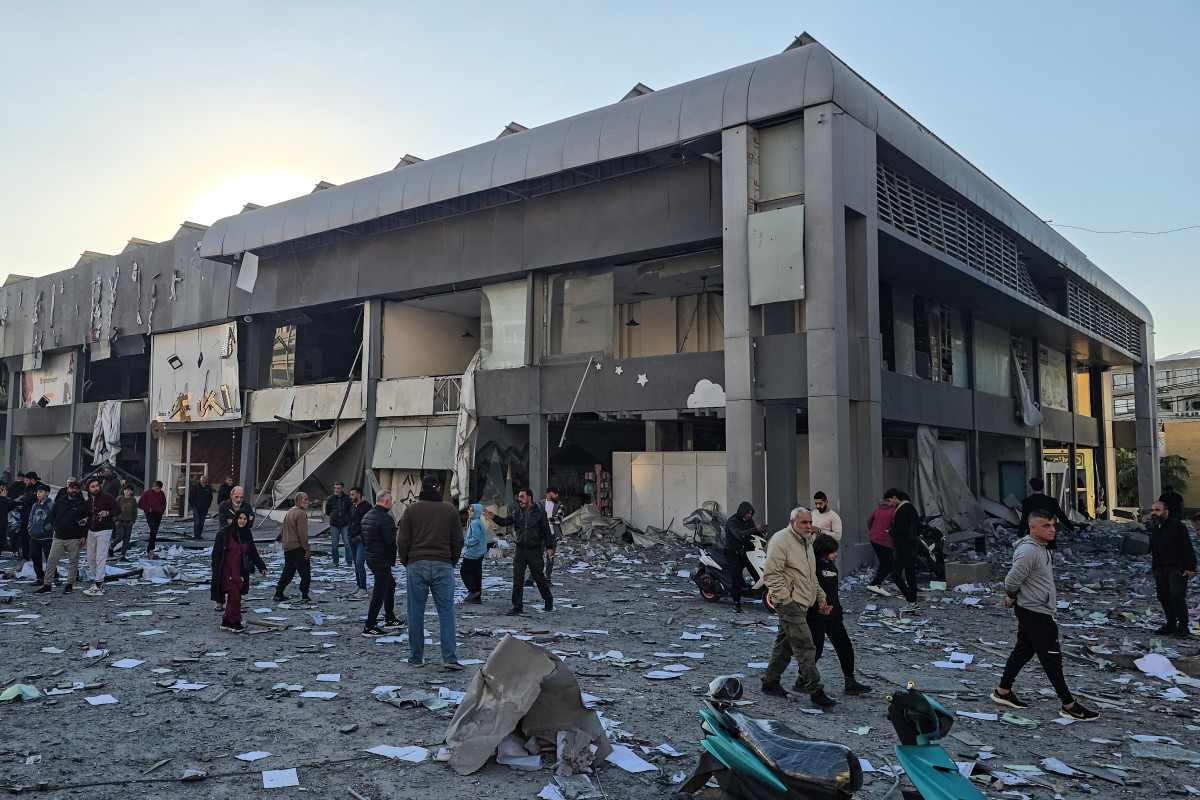
While Washington is sending a tough signal, Tehran declares it will not negotiate with the US. Conflict has spread throughout the region. Israel and Hezbollah forces fought fiercely. Explosions were recorded in Dubai, Abu Dhabi and Doha, showing that the spiral of war is touching the Gulf economic centers.
Another shocking development is that 3 US fighter jets were mistakenly shot down by Kuwait's air defense system in a "friendly fire" incident. All 6 pilots managed to parachute and are currently in stable condition.
The war also shocked the global energy market. Qatar's state-owned energy company has suspended production of liquefied natural gas after an installation was attacked by Iran. Tehran denies allegations of attacking a oil refinery in Saudi Arabia. Airspace in many Middle Eastern countries is closed, trapping thousands of passengers.
Just days after the US and Israel launched airstrikes, the number of casualties increased rapidly. According to Iran, at least 555 people were killed, including 168 people at a girls' primary school.
In Israel, at least 10 people died and more than 200 were injured after missile and drone attacks from Iran. In Beit Shemesh city near Jerusalem alone, a missile hit a bomb shelter, killing 9 people.
President Donald Trump said the conflict could last "about 4 weeks", the clearest signal that the White House is preparing for a non-short-term military campaign.