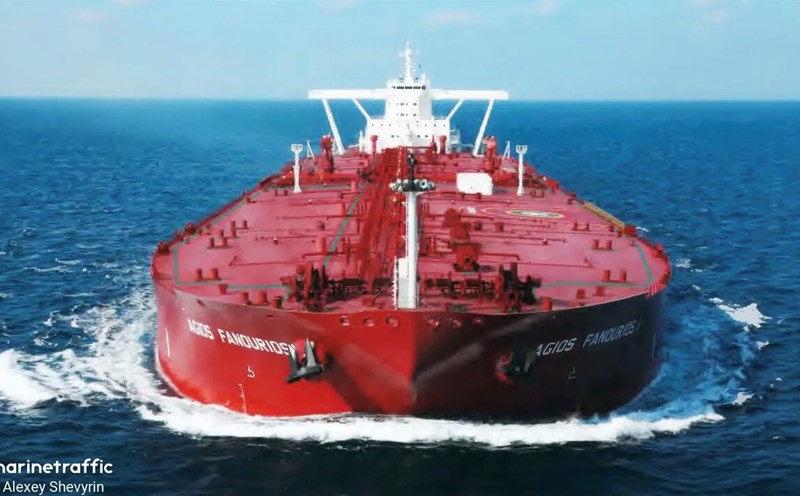
The super oil tanker Yuan Hua Hu was recorded moving through this waterway on the morning of May 13, passing through the area near Iran's Larak Island, in the east of the strait and heading south, according to maritime tracking data.
The Equasis maritime transport database shows that the super oil tanker Yuan Huan Hu is owned and operated by units of the Chinese shipping group Cosco Shipping.
This trip of the super oil tanker Yuan Hua Hu, if completed, will be the 3rd time a very large Chinese crude oil tanker has passed through the area since the Iran conflict broke out.
Notably, Yuan Hua Hu's move took place right before the dialogue between US President Donald Trump and Chinese President Xi Jinping. The meeting of the two US and Chinese leaders this week is expected to address many bilateral and international issues, including the conflict in the Middle East.
For many years, China's private oil refineries have been major customers during the Iranian crude oil season, contributing to a significant source of revenue for Tehran.
Currently, the super oil tanker Yuan Hua Hu is publicly signaling information about China's ownership and Chinese crew. This is a strategy often used by ships as a safety measure, especially for ships traveling along the route through the Ormuz Strait approved by Tehran.
Yuan Hua Hu's draft shows that the ship is carrying full oil or is close to reaching a maximum of about 2 million barrels of oil. Maritime tracking data shows that the ship received oil at Basrah port in Iraq in early March.
It is not yet clear whether the ship will successfully leave the Persian Gulf. Recently, many other oil tankers have had unusual voyages, including half-turning or unable to cross the strait.
Positioning signals emitted from ships in the area are often affected by electronic interference or signal deception, making monitoring complicated and sometimes misrepresenting the actual location of the ship. The captain may also turn off the ship's positioning signal transmitter for security reasons.