
On December 24, Mr. Serhii tarakanov, Director of the Chernobyl Nuclear Power Plant, shared frankly about the serious risk of insecurity in the area that was once the focus of the worst nuclear disaster in human history.
According to him, the radioactive barrier system was severely damaged and could no longer withstand further attacks.
This warning is in line with the status assessment report previously released by the International Atomic Energy Agency (IAEA) on December 5. The organization confirmed that the giant steel shield protecting the plant is in need of urgent technical intervention and repair.
The main cause of this deterioration comes from collisions and fires that occurred in early 2025. Strong physical effects teared a large piece of the steel structure, creating many small cracks that spread widely.
It is known that this is a new generation of protective shell, a great technical work completed by the international community in 2019 with the goal of "closing" radioactive dust, preventing them from spreading to the environment.
However, experts say the real danger does not lie in the outer steel shell, but is hidden deep in the internal structure. Located under the modern dome is an old concrete block that carefully covers the No. 4 reactor.
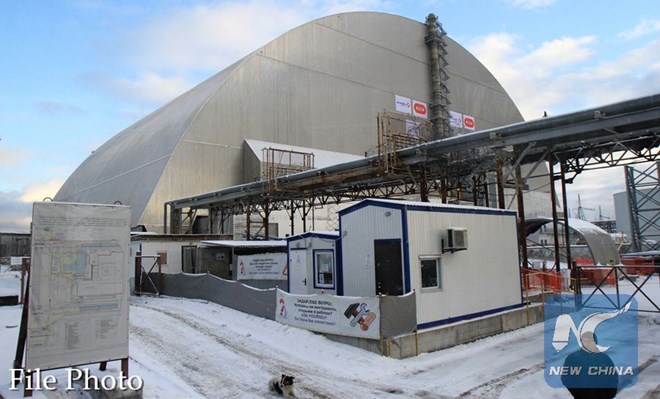
This concrete block was built rapidly in extremely harsh conditions right after the 1986 disaster to prevent nuclear melting. After nearly 40 years, this structure has now seriously degraded and become extremely fragile.
Mr. tarakanov emphasized that to completely repair the damage on the steel shell and reinforce safety, the technical team will need a period of 3 to 4 years. The director was concerned that if there was any explosion or strong collision in the vicinity in the near future, it would be enough to completely collapse the old, crushed concrete block inside.
If the worst-case scenario occurs, the por porous steel shell outside will not be able to prevent radioactive dust from leakage. This means the nuclear nightmare is repeated, causing direct impacts not only on Ukrainian territory but also spreading to the whole of Europe.
The risk level increases in terms of geographical location: The Chernobyl plant is located only about 13km north of the capital Kiev and only 15km from the Belarus border.


