
U23 Vietnam has just gathered 29 players to prepare for ASIAD 2026 in Japan. This is the group of players considered for the men's football campaign at ASIAD, not the national team. According to the draw results, U23 Vietnam is in Group C with Uzbekistan, Philippines and Kuwait.
ASIAD is a test for young players
The U23 Vietnam list currently has many faces who have accumulated experience in international youth tournaments and professional football such as Cao Van Binh, Vo Anh Quan, Nguyen Thai Quoc Cuong, Nguyen Xuan Bac, Nguyen Cong Phuong, Le Viktor, Nguyen Thanh Nhan or Nguyen Quoc Viet.
Being called up to U23 shows that these players are in the process of evaluating and choosing for a major playground. ASIAD 2026 will be an opportunity for them to continue to test their ability against higher-level opponents in the region and continent.
However, the value of this generation of players is not only in the ASIAD goal. What Vietnamese football aims for more broadly is to form a group of players capable of competing with their seniors in the national team in the future.
This is also the reason why giving opportunities to young players needs to be done continuously, instead of just focusing on one tournament.
Vietnam national team has more options
At the national team level, young players who are called up and play in reality will have the opportunity to shorten the process of adapting to international football.
Nguyen Dinh Bac is a noteworthy case. The player born in 2004 was given a chance in the national team quite early and continued to be used in the ASEAN Cup 2026 journey.
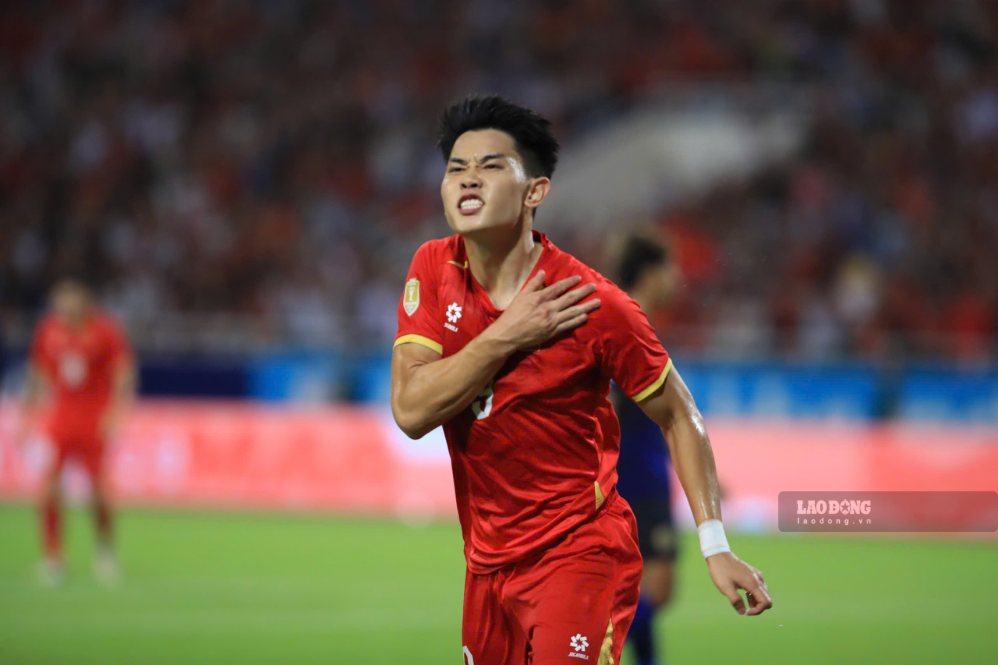
The important point is not only in the goals or performances in a few matches. Training with experienced players helps young players get used to tactical requirements, speed and pressure at a higher level.
If this process is maintained, the Vietnamese national team will have more personnel options in many positions. When a generation of key players enters the final stage of their careers, the national team does not have to start the process of finding replacements from scratch.
V.League is the deciding point.
However, being called up to U23 or the national team cannot guarantee that a young player will develop into a national team player.
The most important factor is still the playing environment at the club. V.League 2026-2027 is expected to start in September, when young players will have to compete directly to find a position in the squad.
This is the practical measure for the development process. A player can impress in the U23 shirt, but if they are not played regularly at the club, their ability to maintain form and progress will be affected.
Conversely, accumulating minutes of playing time in the V.League helps players improve their ability to handle situations, disputes, tactical thinking and bravery. Those experiences will become a foundation when they are given opportunities in the Vietnamese national team.
Therefore, after ASIAD 2026, the noteworthy story is not only what achievements U23 Vietnam has achieved, but also which players can maintain their position in the V.League and take another step up to the national team.
Opportunity to solve the inheritance problem
Vietnamese football needs a continuous force transfer process. It is impossible to expect a young generation to immediately replace all current pillars, but putting them into a competitive environment early will help shorten the gap between generations.
ASIAD 2026 is therefore an important milestone for U23 Vietnam, but not the final destination for this generation of players. The greater value lies in their ability to continue to develop after the tournament.
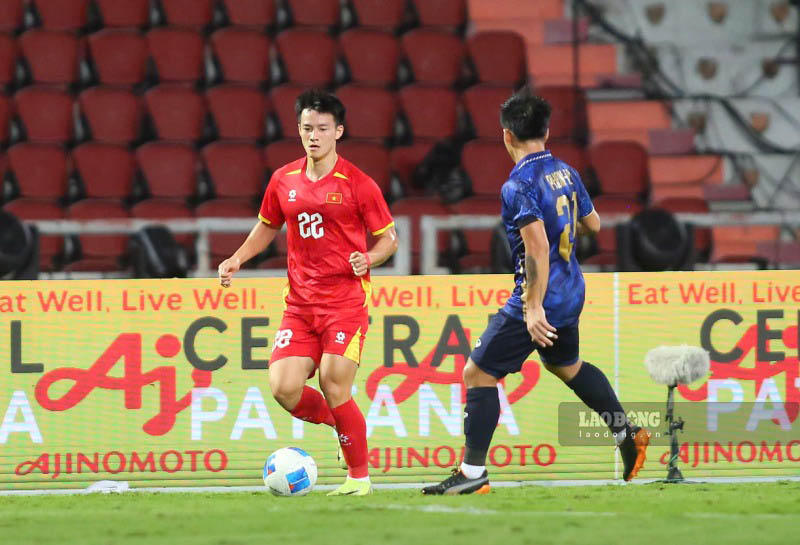
If players like Thanh Nhan, Quoc Viet, Cong Phuong, Xuan Bac, Le Viktor and other young faces have stable playing time in the V.League, the Vietnamese national team will have more choices in the future.
Giving opportunities to young players is therefore not simply preparing for ASIAD. This is part of the problem of building a successor force, helping the Vietnamese team be more proactive in the transition process and maintain competitiveness in the following cycles.


