
Domestic pepper prices
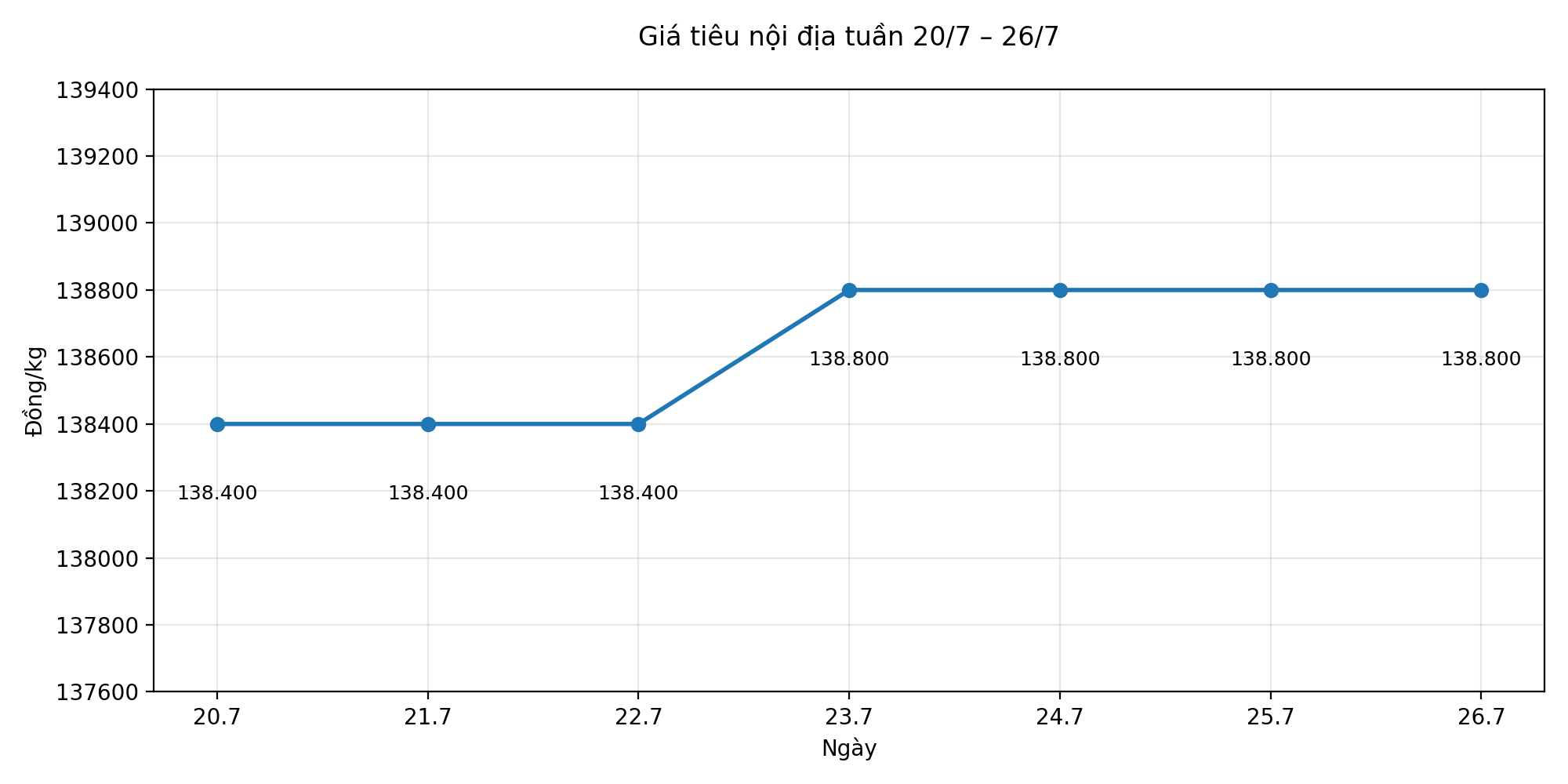
As of 11:30 AM today (July 27), domestic pepper prices continued to increase on the first day of the week, listed at 139,200 VND/kg. Currently, key areas are trading in the range of 138,000 - 141,500 VND/kg.
Domestic pepper prices increased slightly by 500 VND/kg in all regions, except for Dak Lak province. Currently, provinces and cities list prices as follows:
Gia Lai and Dong Nai simultaneously listed at the 138,000 VND/kg mark, an increase of 500 VND/kg.
In the same direction, pepper prices in Ho Chi Minh City were anchored at the threshold of 138,500 VND/kg, an increase of another 500 VND/kg.
Dak Lak and Lam Dong respectively offered for sale at the highest purchase price in the whole region of 140,000 VND/kg and 141,500 VND/kg.
At the end of last week, domestic pepper prices traded in the range of 137,500 - 141,000 VND/kg, an increase of 500 VND/kg compared to the previous week.
World pepper price
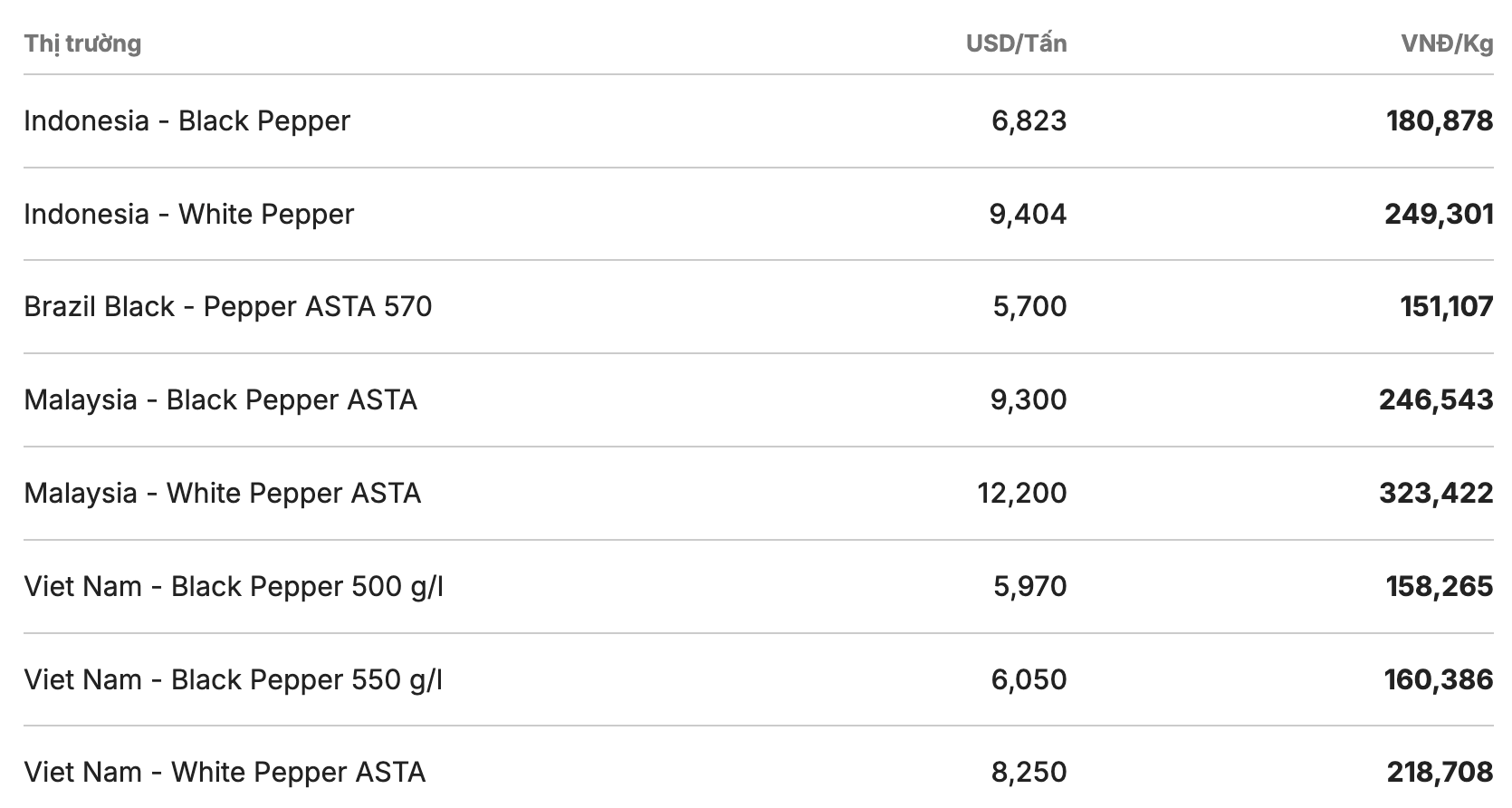
In the world market, pepper prices are stable in almost all countries. Indonesian black and white peppers are no exception, trading in the range of 6,823 - 9,404 USD/ton (equivalent to 180,878 VND/kg - 249,301 VND/kg).
Meanwhile, the price of black pepper in Brazil sold to the market is 5,700 USD/ton (about 151,107 VND/kg). Notably, black and white pepper in Malaysia are still trading at high prices, respectively 12,200 USD/ton and 9,300 USD/ton.
In Vietnam's pepper export market, black pepper prices of 500 g/l and 550 g/l remained unchanged at 5,970 - 6,050 USD/ton. In the same direction, ASTA white pepper price offered for sale at 8,250 USD/ton (equivalent to 218,708 VND/kg).
Assessments and forecasts
According to data from the Vietnam Pepper and Spice Plant Association, in the first 6 months of the year, our country exported a total of 145,686 tons of pepper, earning a turnover value of 940.5 million USD.
Compared to the same period in 2025, this figure marks a growth of 17.4% in volume and 10.6% in value. However, in June 2026 alone, the market began to show signs of stagnation after the period of fluctuation in May.
Looking towards the second half of 2026, analysts predict that the price trend of pepper will be strongly dominated by three core factors: domestic supply, export progress and demand from major economies. Pressure on domestic raw material supply is becoming increasingly clear, which may be the main factor supporting the price level in the medium and long term.


