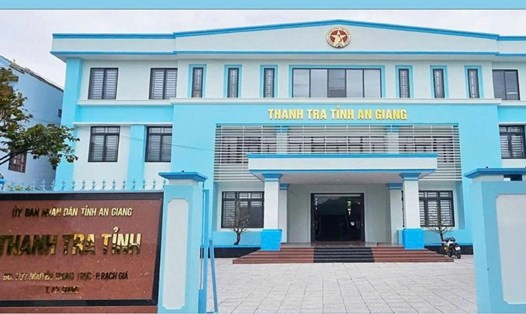
The Government Inspectorate has just issued a Report on the Results of resolving and responding to voters' petitions sent after the 10th session, 15th National Assembly.
In which, voters in Hung Yen province proposed to continue to strictly handle acts of corruption, wastefulness, and negativity with the consistent spirit of "no forbidden zones, no exceptions, no matter who it is".
Regarding this issue, the Government Inspectorate replied: Strictly handling corruption, wastefulness, and negativity with the spirit of "no forbidden zones, no exceptions, no matter who it is" is a consistent and continuous policy of the Party and State, drastically implemented in the XIII Congress term and continued to be strongly promoted in the XIV Congress term. The goal is to build a clean and strong political system, and enhance people's trust.
During the XIII Congress term, the work of preventing and combating corruption, wastefulness, and negativity (PCTNLPTC) has made new, methodical, drastic and effective progress both at the Central and local levels. The work of detecting and handling TNLPTC has been focused on leadership, direction, and drastically and synchronously implemented "without forbidden zones, without exceptions, no matter who it is", creating a new breakthrough in detecting and handling TNLPTC, which has been agreed upon, supported, and highly appreciated by public opinion and people.
The strengthened work of inspection, supervision, and Party discipline is a "strategic breakthrough" in PCTNLPTC. Through inspection, many difficult, complex, prolonged, backlog, and even newly arising cases have been concluded and resolved definitively. Strictly handled many violating party organizations and party members, including incumbent and retired officials. For the first time, the political responsibility of heads related to TNLPTC in the field directly managed and in charge has been handled.
Functional agencies have disciplined 156 heads for corruption and negativity; handled political responsibility of 94 heads who are cadres under central management related to TNLPTC, including for the first time former key leaders of the Party and State.
Inspection and audit work focuses on fields and projects with a lot of information and public opinion about corruption, negativity and topics and cases under the direction of the Steering Committee.
Through inspection and audit, it was proposed to handle the responsibility of more than 16,400 collectives and 34,400 individuals who committed violations.
Agencies with inspection, supervision, inspection, and auditing functions have transferred more than 1,900 cases with signs of crime to investigation agencies for investigation and handling according to legal regulations.
PCTNLPTC work in the non-state sector has been expanded, many major cases of corruption and negativity causing particularly serious consequences occurring in the non-state sector have been detected and handled strictly. For the first time, prosecution, investigation, and handling of the crime of "embezzlement of assets" have been initiated against private business owners to warn and strongly deter.
The XIV Congress term will continue to promote PCTNLPTC work with the spirit of detecting and handling synchronously, strictly, without gaps, dark zones, no forbidden zones, no exceptions, not allowing small violations to accumulate into large violations, not allowing old violations to recur.
The focus is on controlling power, detecting and thoroughly handling complex cases, associated with promoting Party building and rectification, contributing to creating a transparent environment for economic development. Resolutely, persistently, and synchronously between Party discipline, administrative discipline and criminal discipline; doing from top to bottom, from bottom to top.
The Government Inspectorate acknowledged the voters' recommendations, and in the coming time, it will continue to seriously implement the direction of the Party and the Government, strengthen inspection of the implementation of decentralization and delegation of power associated with resource allocation, focusing on: inspecting the responsibility of heads in managing and operating, organizing the implementation of key programs and projects; specialized inspection of areas with high risk of TNLPTC, which are of public and social concern.