
That is a noteworthy issue raised at the 13th ASEAN-OSHNET Forum (ASEAN Occupational Safety and Health Network) held in Da Nang on July 7, with the theme of strengthening digital transformation in occupational safety and health management in ASEAN towards ASEAN Vision 2045.
Can't wait for an accident before handling it.
Speaking at the forum, Deputy Minister of Home Affairs Cao Huy emphasized that ASEAN currently has more than 350 million workers, is one of the dynamic centers of production, services and innovation in the world. However, the region still faces many challenges in occupational safety and health: occupational accidents and diseases are still high; the informal sector and foundational labor are not fully covered; many new occupational diseases appear along with the aging of the labor force and economic restructuring.

These challenges show a reality: workers are rapidly moving into new job models, while the labor safety net is still thin in some places. Therefore, digital transformation in labor safety cannot just be about installing more cameras, sensors, management software or reporting systems. If it just stops there, technology can make management processes more modern, but it is not certain that it will make the workplace safer.
According to Deputy Minister Cao Huy, the Fourth Industrial Revolution is reshaping the labor world; artificial intelligence, big data, the Internet of Things and digital platforms open up unprecedented opportunities to forecast, prevent and promptly handle labor safety risks.
At that time, data is not only for storage, but becomes a tool to save people. Technology is not only for recording incidents, but for preventing incidents from happening.
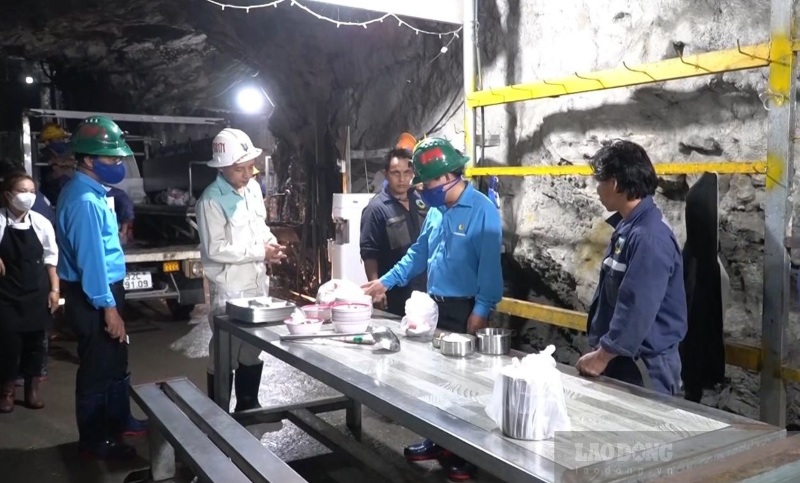
In Vietnam, according to Deputy Minister Cao Huy, the labor sector is promoting the construction of a National Database on Occupational Safety and Health, an online Occupational Accident Reporting Portal; and at the same time researching and amending the Law on Occupational Safety and Health and completing the Occupational Accident and Disease Insurance Fund in the direction of expanding coverage and increasing spending for prevention.
These are important steps, because labor safety cannot be effective without complete, interconnected and timely data. When occupational accidents are reported faster and analyzed better, management agencies can identify groups of industries, areas, and types of enterprises at high risk for inspection, warning, and support in the right focus.
Applying technology to protect vulnerable workers
However, digital transformation also raises questions about fairness. Who is protected by technology? Who has access to new systems? Who has a voice when personal data is collected in the workplace?
Deputy Minister Cao Huy noted that digital transformation raises new issues such as protecting personal data, ethics in AI application, ensuring the rights of foundational workers and narrowing the digital gap between countries and labor groups.
This is a very noteworthy warning. Because technology, if uncontrolled, can become an extreme monitoring tool, creating more productivity pressure, and even increasing inequality between labor groups. Large enterprises can invest in modern warning systems, virtual reality training, real-time monitoring; while small and medium-sized enterprises, informal workers or foundational workers may still stand outside those protection mechanisms.
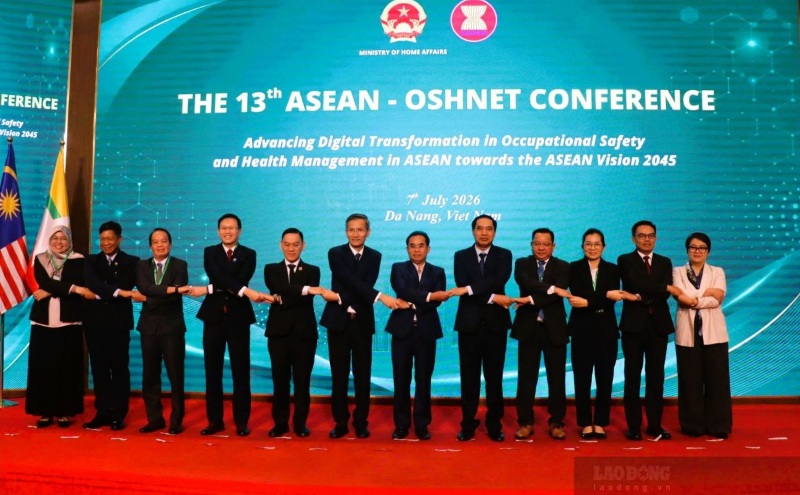
Also at the forum, Mr. Sakdisilpa Tuladhorn, Deputy Director of the Department of Labor Protection and Welfare, Ministry of Labor of Thailand, incumbent Chairman of ASEAN-OSHNET, said that AI, smart technology and data-based systems are opening up great opportunities to enhance risk assessment, improve labor inspection efficiency, support decision-making and strengthen preventive measures. However, the innovation process must be responsible and ethical to ensure that technological benefits reach all workers.
Because if digital transformation only serves the formal sector, large enterprises or places with good governance platforms, the labor safety gap will continue to widen. At that time, the most vulnerable labor group is the least protected group.
Vice Chairman of Da Nang City People's Committee Tran Anh Tuan affirmed that Da Nang is aiming for a smart city, but first of all it must be a safe city. Looking broader, a digital economy must also be an economy that knows how to protect workers in the process of creating growth.
Digital transformation in occupational safety and hygiene should therefore not be seen as a technology movement. It is a test of social responsibility, management capacity and the level of humanism of development. Technology is only truly meaningful when it helps workers return home safely after each shift.


