
In the afternoon of April 10, continuing the First Session, the 16th National Assembly discussed in the hall the draft Resolution of the National Assembly on promulgating a number of regulations on environmental protection tax, value-added tax, and special consumption tax on gasoline, oil and aviation fuel.
Delegate Tran Anh Tuan (Ho Chi Minh City Delegation) agreed with the policy of not collecting environmental protection tax, value-added tax and special consumption tax on gasoline and aviation fuels.
However, the delegate proposed to clarify the impact of not collecting the above-mentioned taxes on the State budget revenue will decrease, with specific data and figures to see more clearly the level of impact as well as the effectiveness of the policy.
When the budget revenue shortfall is quantified, the National Assembly will have more basis to fully assess the impact of applying the 0% tax rate policy.
Delegate Tran Hoang Ngan (Ho Chi Minh City Delegation) proposed to extend the policy implementation time until the end of 2026, or at least until September 30, 2026.
Although in the draft Resolution, in Clause 2, Article 4, it has assigned the Prime Minister the right to be proactive and flexible in management, according to the delegate, such regulations have not yet created the necessary psychological stability for businesses and people.
In case world gasoline and oil prices adjust down in the near future when the parties reach an agreement, we should not rush to increase these taxes again, but need to continue to share with businesses and people, those who have suffered great losses due to the sharp increase in gasoline and oil prices in the past time," the delegate added.
According to the delegate, when gasoline and oil prices increase, many other types of goods also increase accordingly; but when gasoline and oil prices decrease, the prices of many items still remain at a high level.
Therefore, it is necessary to avoid the situation of "following the tide", taking advantage of price fluctuations to unreasonably increase prices. Therefore, delegates proposed to strengthen inspection and examination to stabilize the price level.
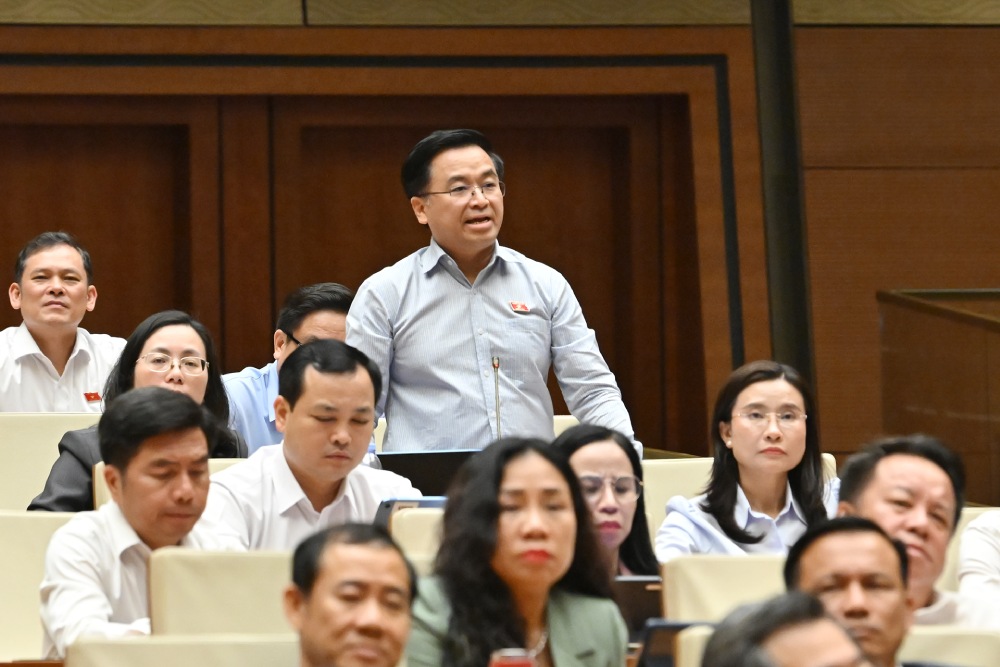
Delegate Bui Xuan Hai (Hai Phong City) shared that at the present time, we cannot accurately predict how the international situation will develop in the next few months, and how gasoline and oil prices will fluctuate.
According to the delegate, at appropriate times, it is possible to consider stopping the application of 1, 2 or all 3 taxes; and at the same time flexibly extend the application time for each tax or all 3 taxes, depending on the actual developments of the gasoline and oil market.
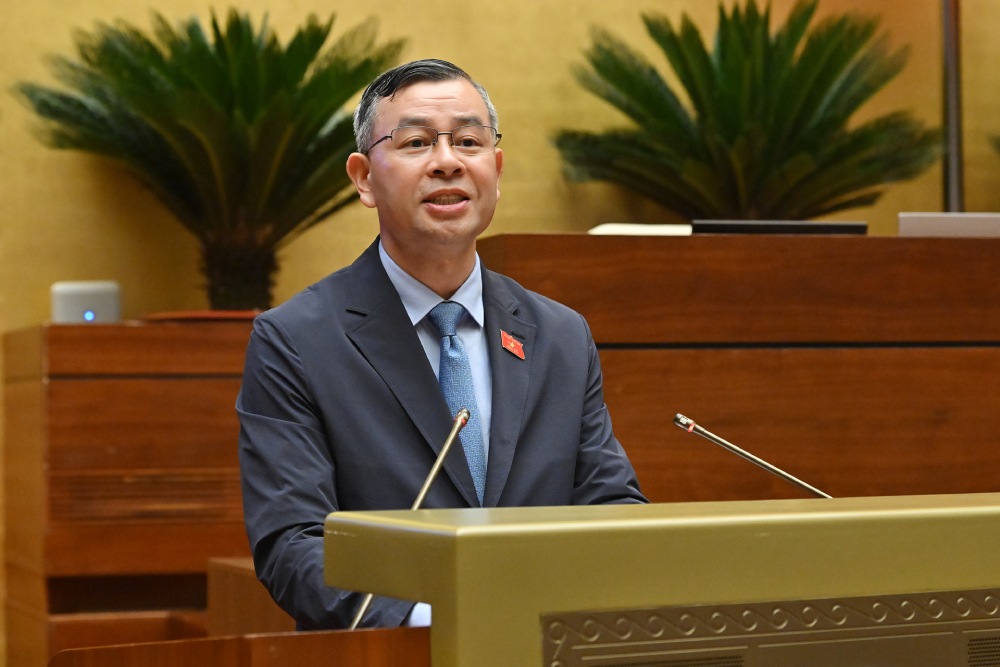
Speaking to explain and clarify the opinions of the delegates, Minister of Finance Ngo Van Tuan emphasized that all opinions show very high consensus with the issuance of this Resolution in the near future.
The content also includes some additional exchanged opinions mainly related to the effective time of the resolution. Regarding this issue, Minister Ngo Van Tuan said that he will carefully study the opinions of delegates, report to the Government and the appraisal agency so that the Government can operate flexibly, in accordance with the developments of the world market.
In addition to the content of the Resolution, many opinions emphasized the strategy of increasing capacity, strengthening effective regulation capacity, improving self-reliance in fuel production, as well as building strategic reserves.
Mr. Ngo Van Tuan stated clearly that these issues have been mentioned quite fully in Prime Minister Le Minh Hung's speech on the 5-year socio-economic development plan.


