The materials industry is the foundational industry
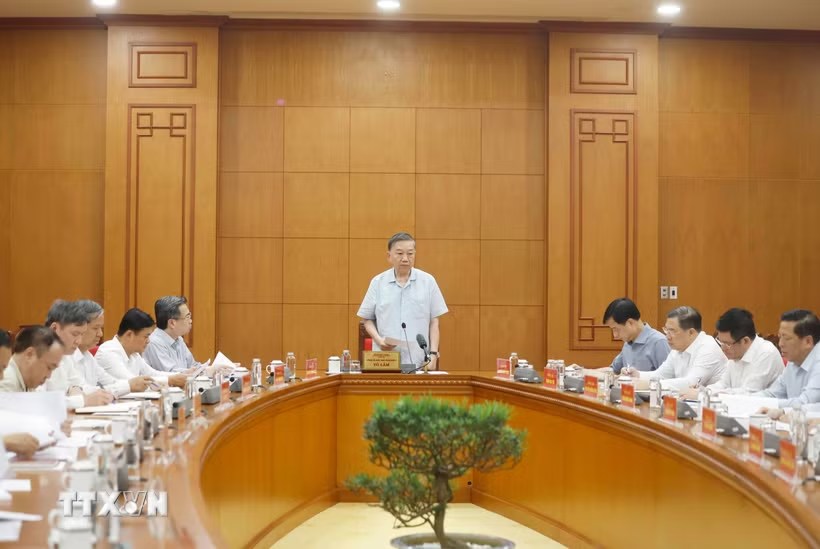
On the afternoon of May 21, at the Party Central Committee Headquarters, General Secretary and President To Lam chaired a working session with the Central Policy and Strategy Committee and a number of ministries, departments, and related sectors on the development orientation of the material industry in Vietnam.
Concluding the working session, General Secretary and President To Lam emphasized that, overall, Vietnam is not short of resources, not short of needs, the biggest shortage is core technology, deep processing capacity, leading enterprises, research - testing - inspection - commercialization ecosystem and a strong enough integrated strategy to organize the national material value chain.
General Secretary and President To Lam emphasized 5 major viewpoints: Identifying the material industry as a foundational and strategic industry in the process of industrialization and modernization of the country; developing with focus and key points, not spreading out, needing to be organized into 3 layers (base materials need to be maintained and upgraded; strategic materials need to focus on breakthroughs; future materials need to be prepared early);
Strongly shift from resource exploitation to deep processing, master technology and improve domestic added value; take science - technology, standards, high-quality human resources and Vietnamese enterprises as the pillars of development; develop the material industry in a green, sustainable, self-reliant direction, with international competitiveness, in line with international commitments but protecting national interests to the highest extent.
The General Secretary and President assigned the Government Party Committee to lead and direct the research and development of the Vietnam Materials Industry Development Strategy to 2030, with a vision to 2045, to be promulgated as soon as possible.
5 groups of priority materials
The General Secretary and President clearly pointed out to focus on reviewing and correctly identifying priority material groups, avoiding spreading them. In the immediate future, 5 priority groups can be selected: rare earth materials; semiconductor materials; materials for batteries and energy storage; new materials; new generation building materials.
These are areas of fundamental significance for industrialization, modernization and economic self-reliance; they need to be carefully assessed in the Strategy to choose the right focus, the right roadmap, and the right support mechanism.
Handling the urgent issues of the current construction material market, the General Secretary and President clearly stated that it is necessary to develop sustainably, self-reliantly, and have international competitiveness; increase the use of green, clean, energy-saving, resource-saving materials, replacement materials, recycled materials, and reduce emissions; must ensure the supply of sand, stone, filling materials, cement, and steel for public investment, transportation, urban areas, energy and housing; publicize prices promptly and transparently; coordinate inter-regionally; promote the use of recycled materials, post-treated construction waste and standard replacement materials.
The General Secretary and President clearly stated, persistently shifting from resource exploitation to deep processing, mastering technology and improving domestic added value; upgrading traditional material industries towards being greener, cleaner, higher technology, and greater added value; creating breakthroughs in science and technology, standards, inspection and high-quality human resources...