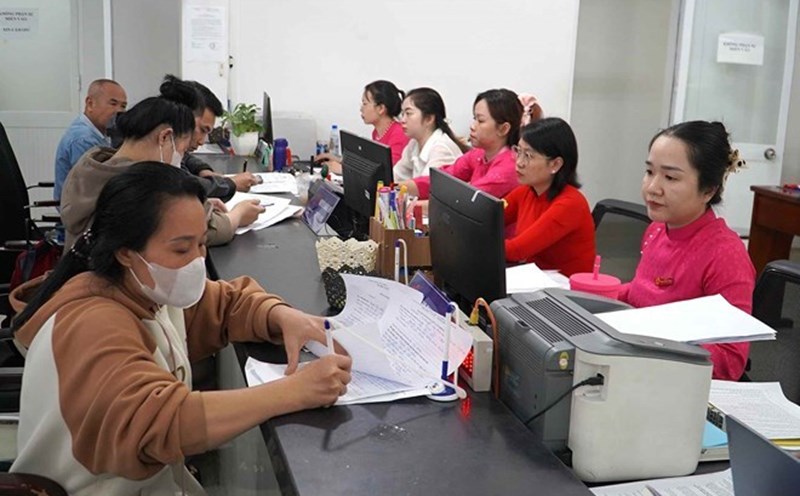
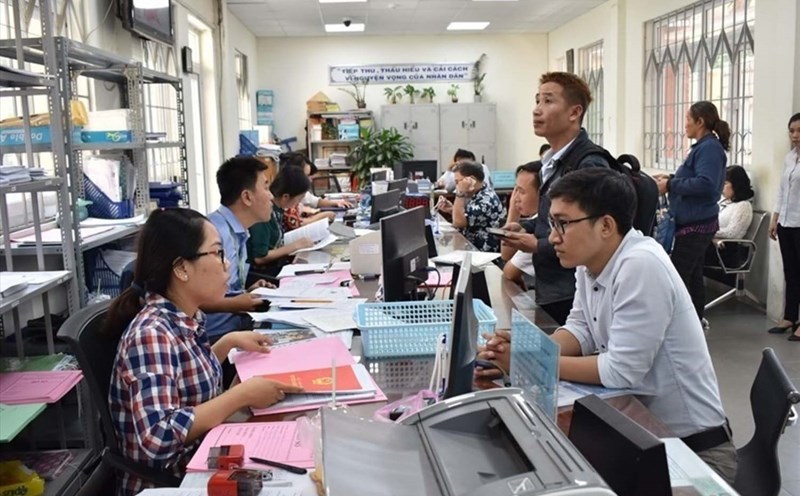
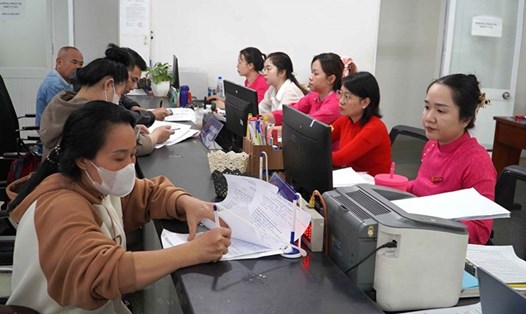
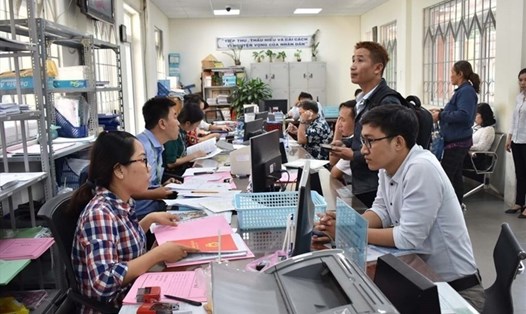
The Ho Chi Minh City People's Committee has just issued a Project to review, arrange and assign cadres, civil servants and public employees in communes, wards and special zones.
After the merger, Ho Chi Minh City has a surplus of 1,052 civil servants (Ho Chi Minh City previously had a surplus of 908 people; Binh Duong previously had a surplus of 58; Ba Ria - Vung Tau previously had a surplus of 86). At the same time, there is a shortage of 935 civil servants (HCMC previously lacked 506; Binh Duong previously lacked 304; Ba Ria - Vung Tau previously lacked 125).
The Ho Chi Minh City People's Committee admitted that this imbalance arose from the recent stage of restructuring administrative units, when the process of arranging cadres had to be carried out "running and lining up at the same time", requiring quick progress, so there was not enough time to carefully evaluate.
Some district-level Party committees have not previously developed truly scientific personnel plans, leading to unreasonable allocation of the structure, qualifications and expertise of civil servants.
To handle this situation, the Ho Chi Minh City People's Committee has proposed 5 groups of solutions.
Arrange within the commune level
The Chairman of the People's Committee at the commune level will review and internally mobilize between the surplus and missing positions in each department and between specialized departments, with a total of 80 cases expected to be mobilized.
Of which, Ho Chi Minh City area (formerly) has 46 people; Binh Duong (formerly) has 19 people; Ba Ria - Vung Tau (formerly) has 15 people
At the same time, 21 civil servants working in the Party sector will be transferred to work at 12 commune-level People's Committees that are lacking; and 5 redundant civil servants will be transferred to the Party sector and mass organizations.
After this step, the total number of redundant civil servants will decrease to 967 and will be 834.
Mobilization between surplus and scarce communes
The Chairman of the People's Committees of communes will continue to mobilize 472 civil servants from redundant to deficient positions to ensure that each job position has a person in charge.
Of which, Ho Chi Minh City (formerly): 372 people; Binh Duong (formerly): 51 people; Ba Ria - Vung Tau (formerly) 49 people.
However, after the arrangement, there is still a shortage of 362 civil servants and a surplus of 495 people.
Transferring Party and mass organizations to work full-time
The Ho Chi Minh City People's Committee proposed to transfer 92 civil servants working at the advisory agencies of the Party Committee and the Vietnam Fatherland Front at the commune level (not holding leadership positions) to take on the remaining professional positions at 18 commune-level People's Committees.
These civil servants all have a university degree or higher and are suitable for in-depth professional fields.
After the transfer, the commune level still lacks 270 civil servants and has 492 surplus people.
Increasing civil servants from departments and branches to communes
To make up for the remaining shortage, the Ho Chi Minh City People's Committee assigned departments and branches to mobilize civil servants and public employees to increase for localities, including: Information Technology (56 people); health (36); construction - transportation (51); finance - accounting (37); land (7).
When transferring, priority will be given to civil servants who have worked in the Binh Duong and Ba Ria - Vung Tau areas (formerly) to facilitate living and travel.
After mobilizing personnel, departments and branches will still have additional resources from the People's Committees at the commune level in the Ho Chi Minh City area (formerly) to ensure stable operations.
For the 83 missing positions in other fields, the locality will report to the Department of Home Affairs for advice on receiving civil servants and non-professional workers who are not qualified to work as civil servants according to regulations.
Training and standardizing the staff
Through the review, there are currently 51 commune-level civil servants with only intermediate or college degrees, who have not met the new requirements.
Those who have completed their tasks well for 3 consecutive years and are studying at university will continue to be assigned to work. In case of not participating in university training, the payroll will be considered for streamlining.