
The program is accompanied by Vietnam National Industry - Energy Group (PVN); Vietnam Oil Corporation - JSC (PVOIL) and Vietnam Electricity Group (EVN),
Speaking at the forum, Mr. Tran Hoai Trang - Deputy Director of the Electricity Department (Ministry of Industry and Trade) - said that Resolution No. 70-NQ/TW of the Politburo has clearly identified ensuring solid national energy security as an important component of national security, and at the same time as a foundation for the rapid and sustainable development of the country to 2030, with a vision to 2045.
According to Mr. Tran Hoai Trang, in the context of Vietnam setting a target to maintain a growth rate of over 10% in the coming period and implement long-term strategic goals, energy development needs to be prioritized at the highest level. The national energy development plan must therefore be organized and implemented in a focused, unified, synchronous and effective manner, ensuring both meeting growth needs and maintaining energy security.
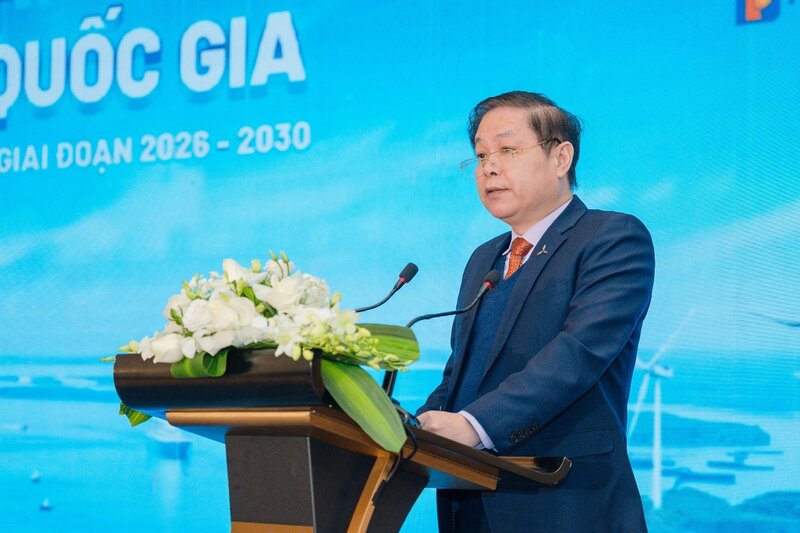
Leaders of the Electricity Department emphasized that energy security has been and is being identified as a major and consistent direction in the country's socio-economic development strategy, not only for the current period but also in the long term.
The new Electricity Law has institutionalized many important policies, including prioritizing the development of renewable energy such as wind power and solar power; promoting self-production and self-consumment models; encouraging private investment; and creating a legal basis for energy transition policies, especially in the offshore wind power sector.
For offshore wind power - a field with great potential but still new in Vietnam - the Law has formed a clearer legal framework, creating conditions to attract investment and improve competitiveness in investor selection.
According to the leader of the Electricity Department, first of all, this is a resolution with a wide scope of regulation, covering all pillars of the national energy system, from power source development, transmission and distribution networks, direct electricity purchase and sale mechanisms to the fields of oil and gas, coal and offshore wind power. This comprehensive and synchronous approach shows a change in policy thinking, instead of handling each field individually as before.
Second, Resolution 253 establishes a flexible mechanism to handle issues arising in the process of planning implementation. Allowing adjustment and updating of planning without changing overall goals, major orientations or power source structure is considered an important step forward, helping to remove obstacles in progress, ensure synchronization between sources and grids, and at the same time create conditions to replace slow-progress projects.
Third, the Resolution clearly shows the spirit of administrative procedure reform, towards reducing compliance costs for businesses. Many important projects in the fields of electricity, oil and gas and coal are exempt from investment policy approval procedures; the negotiation time for electricity purchase and sale contracts is shortened; authority is more clearly decentralized to localities.
According to a representative of the Ministry of Industry and Trade, in the context of the energy industry entering a new development cycle, Resolution 253/2025/QH15 is an important institutional backing, creating a sufficiently broad but still tight legal corridor, helping the energy industry develop safely, efficiently and sustainably, while ensuring the synchronization and unity of the legal system.


