
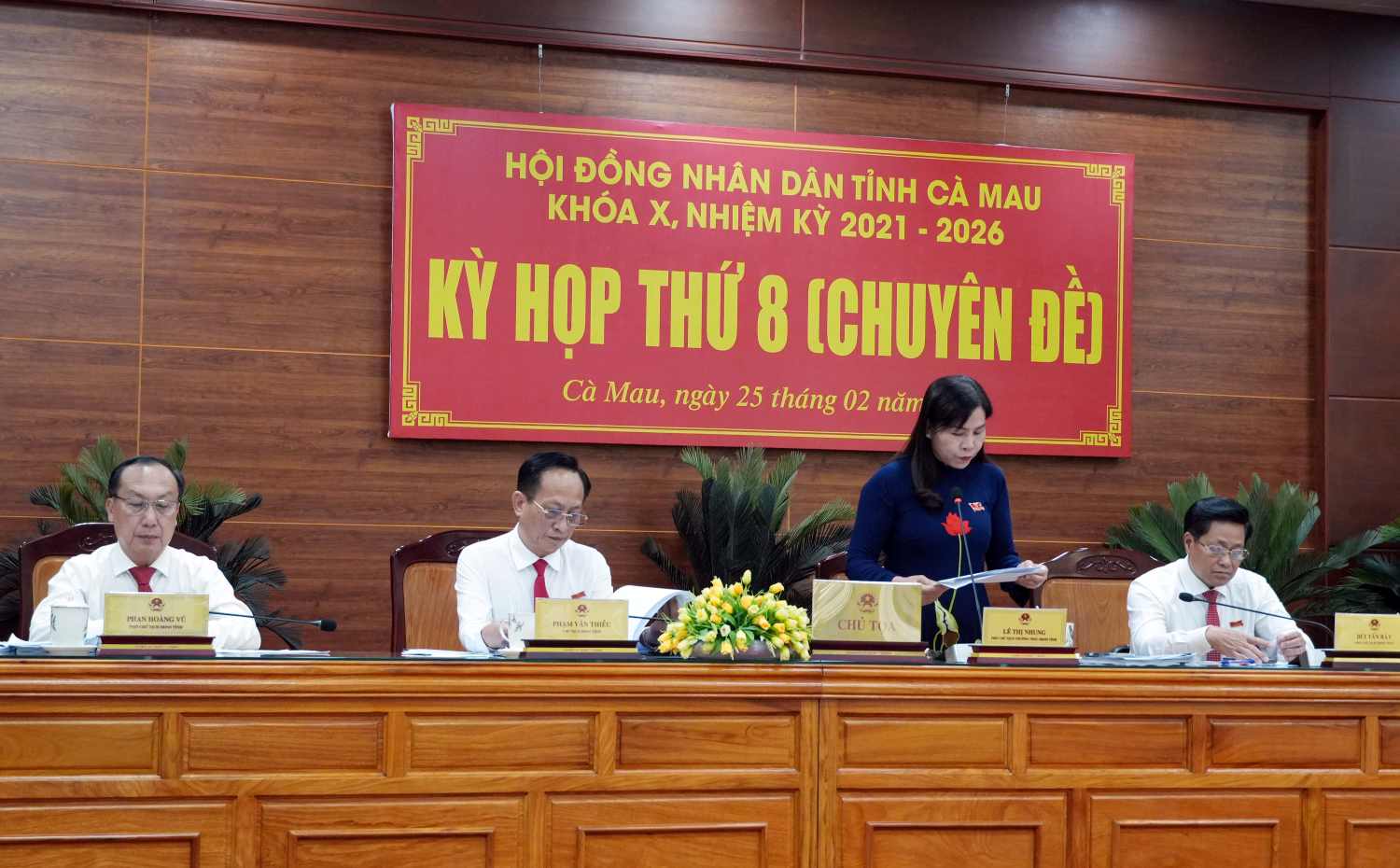
On February 25, the 10th Ca Mau Provincial People's Council, term 2021-2026, held the 8th session (specialized), considering and approving many important resolutions, including the content of adjusting the Provincial Plan for the period 2021-2030, vision to 2050. This is considered an important legal basis, opening up long-term development orientations for the southernmost locality of the Fatherland.
According to the adjusted plan, Ca Mau is identified as developing in a modern and sustainable direction, taking the marine economy as a pillar throughout; clean energy and logistics are breakthroughs; seafood processing industry is the foundation, associated with the role of the gateway to the marine economy of the Mekong Delta region.
Development space and the advantage of three sides bordering the sea
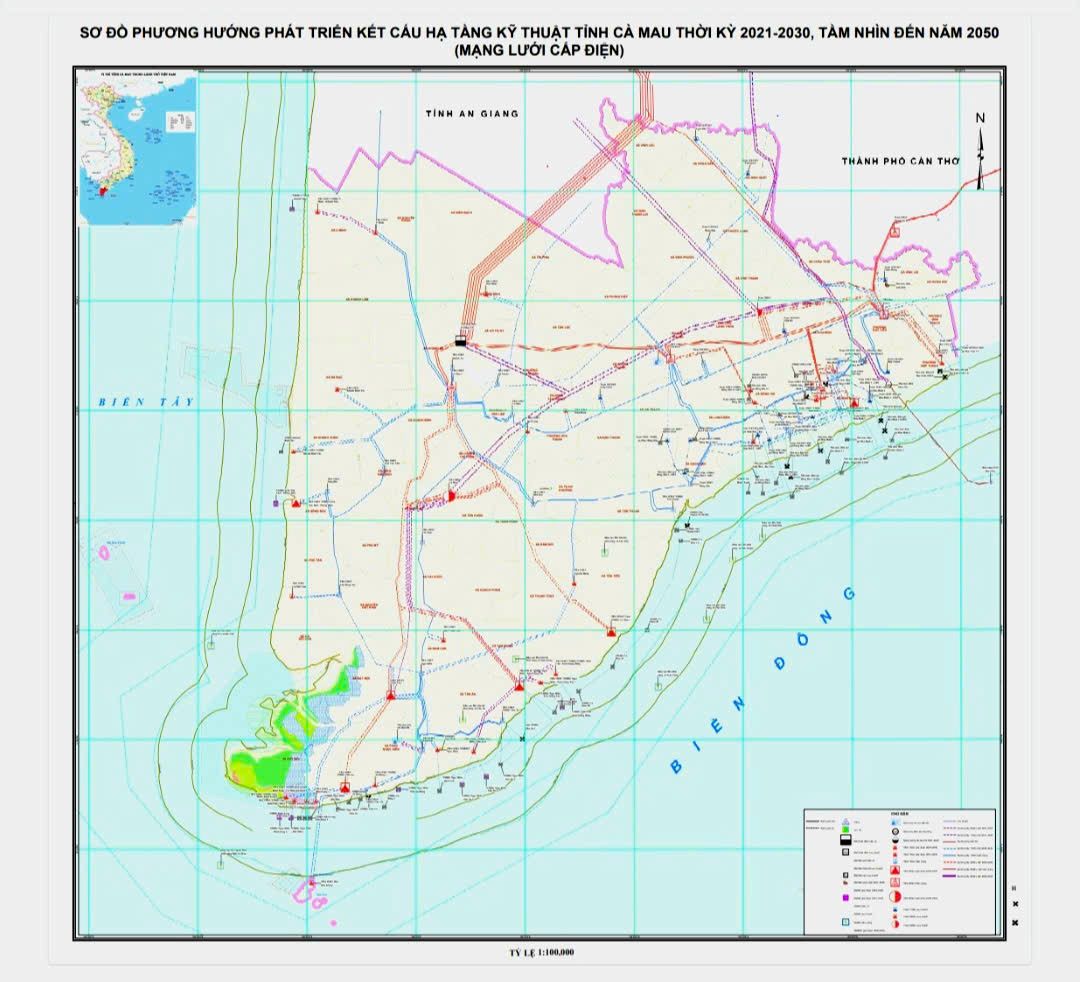
The planning determines that Ca Mau's development space includes 7,887.28 km2 of land natural area, along with sea space according to legal regulations. This is the only province in the country with three sides bordering the sea, adjacent to both the East Sea and the West Sea, holding a particularly important position in terms of geo-economics and geo-strategy.
This advantage allows Ca Mau to both play the role of connecting the Mekong Delta region to the sea, and develop a comprehensive marine economy, while also undertaking the pioneering task of protecting the sea and island sovereignty in the Southwest.
Development goals to 2030
The plan identifies 2030 as a pivotal period to create a foundation for the vision to 2050. Accordingly, Ca Mau strives to achieve an average GRDP growth rate of 10%/year or more; GRDP per capita of over 6,000 USD; labor productivity increase of 8–8.5%/year.
The digital economy is identified as a new growth engine, with the goal of accounting for at least 20% of GRDP. Total export turnover in this period is about 17 billion USD; total budget revenue is at least 75,000 billion VND; number of operating businesses is about 20,000. Urbanization rate reaches 40%, human development index (HDI) is over 0.7.
Long-term development pillars
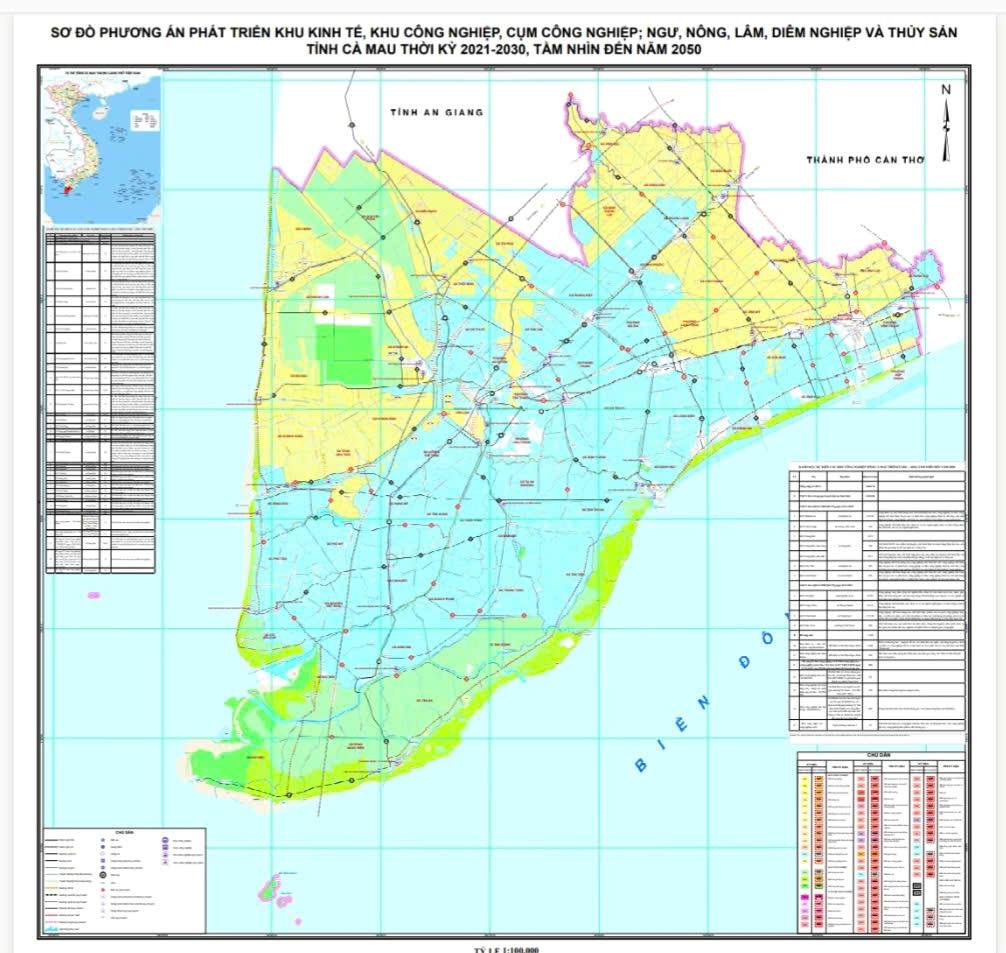
By 2050, the marine economy is identified as the largest development pillar of Ca Mau. The province focuses on synchronously developing seaport services, logistics, maritime economy, aquaculture and fisheries exploitation, deep processing and marine-island tourism.
Coastal space is organized in the direction of effective exploitation, not trading off the environment. Eastern and Western coastal economic corridors are formed, linking the marine economy with fishery logistics, cold logistics, renewable energy and ecotourism, creating sustainable livelihoods for coastal communities.
Hon Khoai - a strategic growth pole
In the vision to 2050, Hon Khoai island cluster is identified as a strategic growth pole of the province. Planning orients the development of Hon Khoai into a seaport gateway, with a dual-use integrated seaport, logistics center, renewable energy center, fishery logistics services and island tourism.
Hon Khoai is not only a transit point for goods from the Mekong Delta region to international maritime routes, but also plays an important role in the national defense - sea and island security posture at the southernmost point of the Fatherland.
Clean energy and new energy center
By 2050, Ca Mau is oriented to become a clean energy center, a new energy of the Mekong Delta and the Southern region. Based on natural advantages, the province strongly develops coastal wind power, offshore wind power and renewable energy types, gradually participating in the green hydrogen and green ammonia chain.
The energy sector is organized in the direction of industrialization, associated with economic zones, industrial parks, logistics and marine industry, contributing to ensuring national energy security and implementing green growth goals.
Nam Can Economic Zone - industrial and logistics driving force
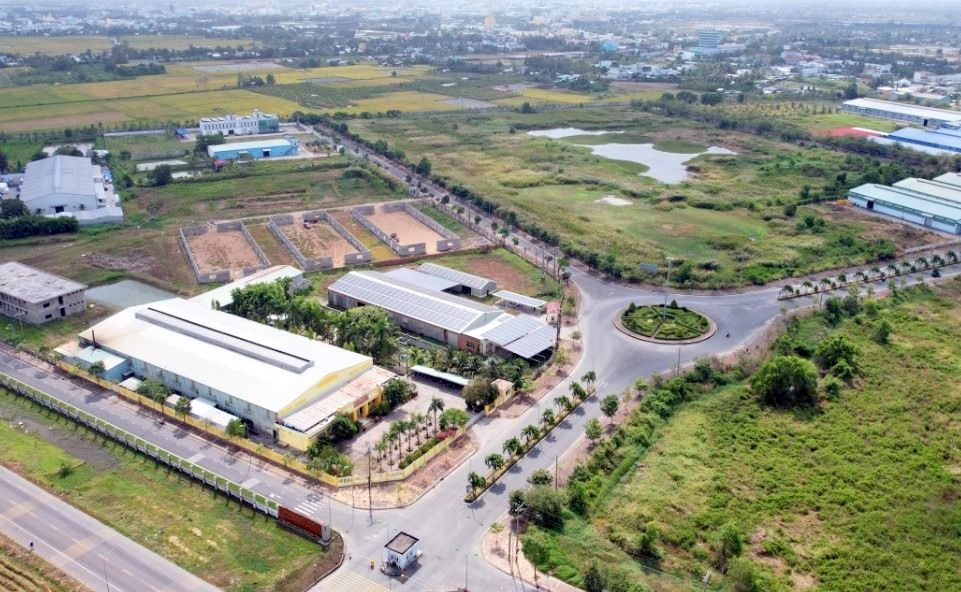
Nam Can Economic Zone with a scale of more than 10,800 hectares is identified as a driving development space of Ca Mau by 2050. This is a multi-sectoral integrated economic zone, focusing on industry, trade - services, logistics, high-tech agriculture and ecotourism.
The focus of this economic zone is high-tech seafood, industry associated with marine economy and regional logistics, directly connected to Hon Khoai port, forming a continuous development chain from production, processing to export.
National seafood processing industrial center
By 2050, Ca Mau will continue to affirm its position as the center of seafood processing industry of the country, especially the shrimp industry. The planning orients the development of ecological industrial zones and clusters, green - smart industries, prioritizing deep processing and increasing added value.
The province aims to form a regional-level shrimp industry cluster, connecting from seeds, farming, processing, logistics to export, gradually participating deeply in the global value chain.
Urbanization and ecological agriculture
Ca Mau's development space to 2050 is organized according to socio-economic sub-regions and economic corridors. The urban system develops in a multi-polar, smart, and climate-adaptive direction.
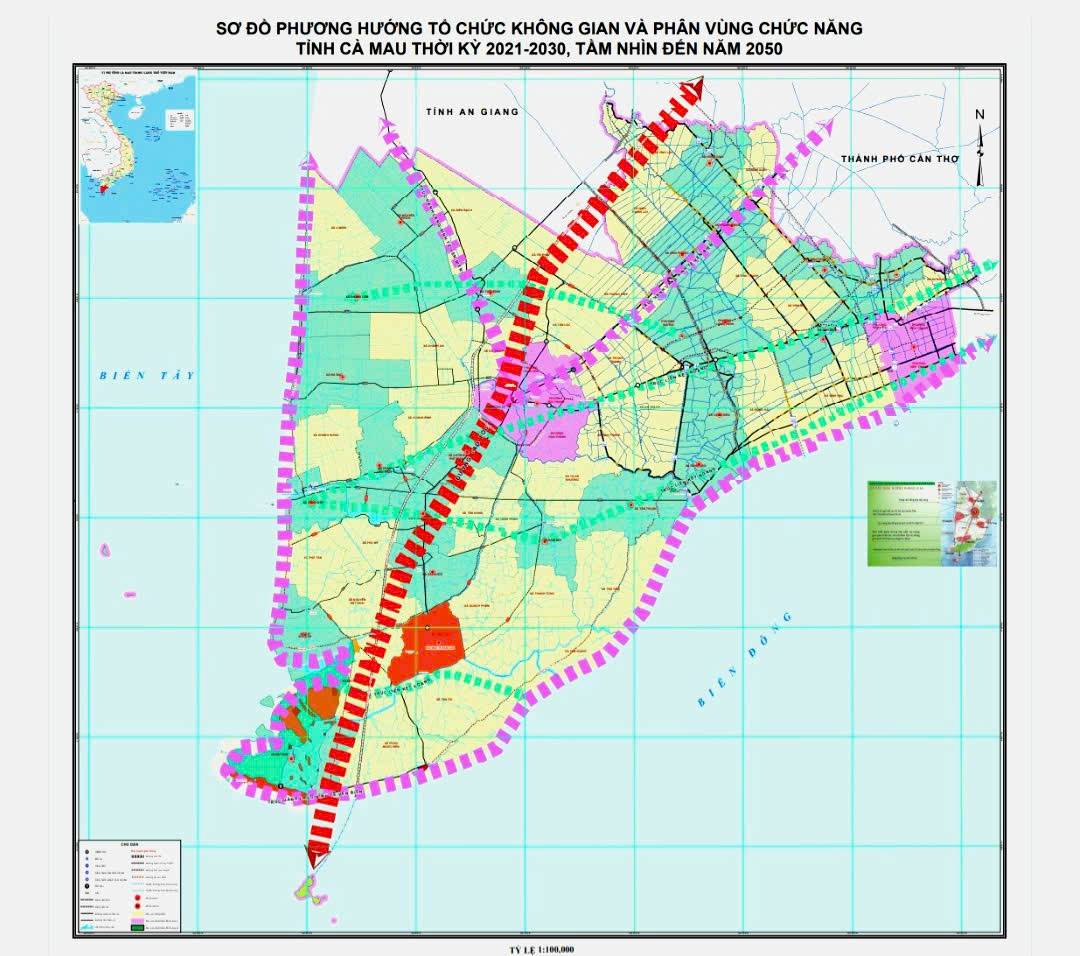
In parallel, agriculture is oriented to develop in an ecological, multi-value and high-tech direction, with models of shrimp - forest, shrimp - rice, rice - shrimp associated with ecosystem conservation, underground forest economy and ecotourism.


