
Nearly 39,000 customers. Outstanding debt reaches the threshold of 28,000 billion VND. A series of "tailor-made" credit packages for high-tech agriculture, clean energy... These figures are a measure of Agribank's efforts in bringing the ESG (Environment - Society - Governance) standard into the breath of business operations.
But, behind those optimistic figures are the concerns of insiders. Has this capital flow really "flowed" smoothly? At the seminar "Improving the efficiency of green credit capital flows", the answer from policy implementers at Agribank has clarified a reality: To open the green capital flow valve, we cannot just rely on the bank's determination. We need a synchronous ecosystem, from policies to support tools.
When "Green" exists
Climate change is no longer a story of the future but is directly impacting every inch of land, every crop of farmers. For Agribank - a bank playing a key role in the flow of agricultural and rural capital - greening is not just a social responsibility. That is a way to survive.
Mr. Nguyen Quang Ngoc, Deputy Head of Credit Policy Department of Agribank, frankly shared: Green credit is a link to turn ESG commitments on paper into practical actions in fields and in factories.
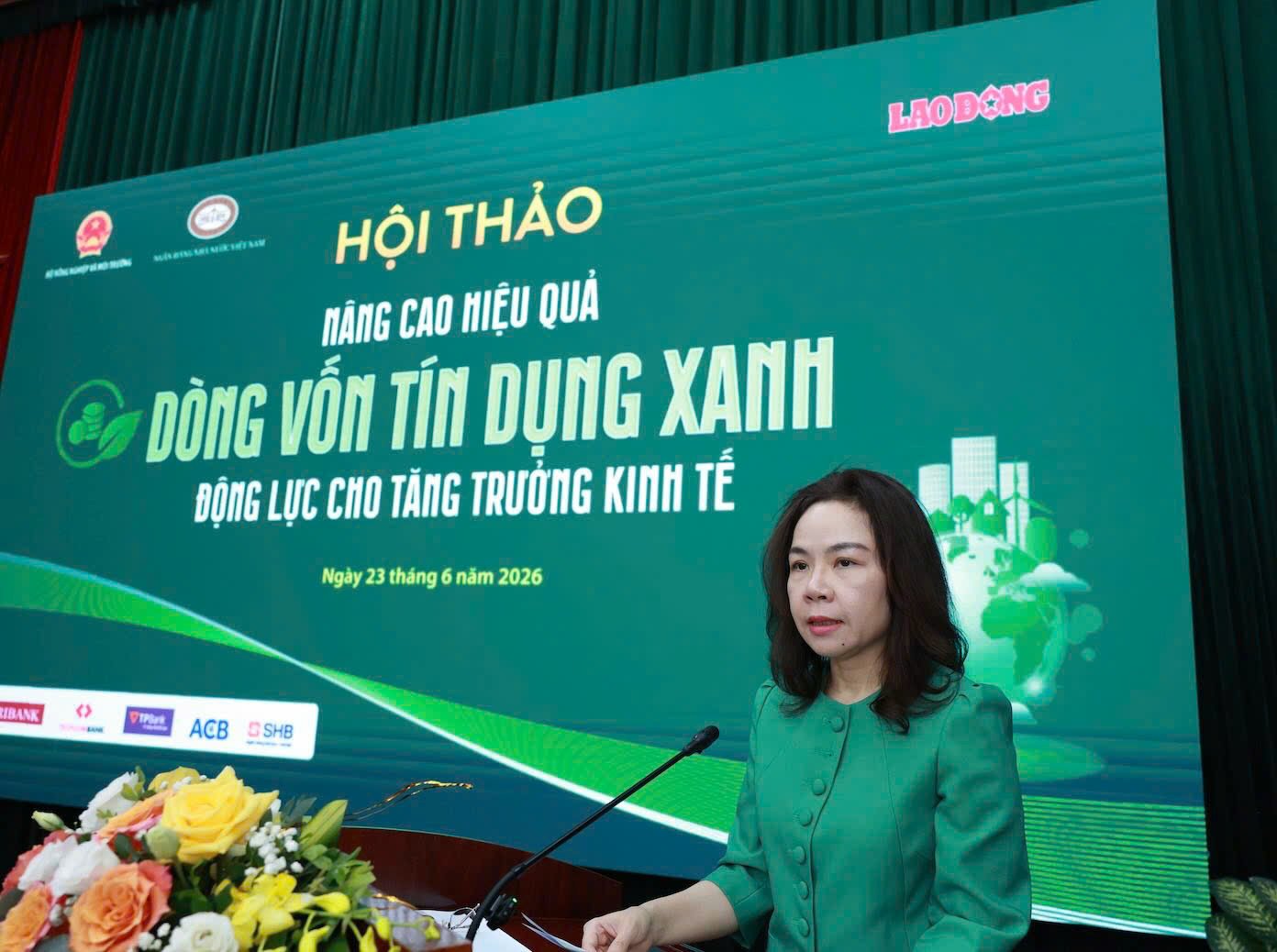
Agribank's approach is also very different. Banks not only inject capital but also immerse themselves in the transformation process. From integrating environmental risks into internal appraisal procedures, to joining hands with international organizations such as "training" officials on green finance. That is the shift from a simple capital allocation attitude to providing responsible capital.
Capital flows to the right address
Look at the numbers. By the end of 2025, Agribank still maintains its leading position in the system in terms of the scale of customers accessing green credit. 53% of outstanding loans are poured into clean energy, 27% for sustainable forestry and 20% for green agriculture.
But Agribank's capital flow is not only "located" in large-scale solar power projects. The capital flow also flows into the smallest corners of the economy. That is the 50,000 billion VND program for high-tech agriculture. It is 30,000 billion VND within the Project "1 million hectares of high-quality, low-emission rice" in the Mekong Delta. Or closer, are loans for electric vehicles, for OCOP products, for mechanization in poor rural areas.
Agribank's approach is very practical: Banks understand that in Vietnam, to be "green", they must go from the root - that is, from farmers and small and medium-sized enterprises.
The bottleneck is not in the pocket
However, the paradox is that the capital demand is large but the actual capital flow is still not strong enough. Why?
Mr. Nguyen Quang Ngoc pointed out a truth that: The biggest difficulty does not lie in the lack of capital, but lies in the "infrastructure" surrounding it. Vietnam currently still lacks a standardized set of green taxonomy standards. There is no common "measurement", banks appraise according to this standard, businesses report according to another standard.

Another equally difficult problem: Customers lack environmental records, lack the ability to build ESG reports, and most importantly, many green projects often require long-term capital, while bank capital is mainly short-term mobilized capital. How to "take short-term to nurture long-term" when natural disaster risks are always lurking in the fields?
This is when the bank's perspective touches on the macro management problem.
Policy harmony
At the workshop, Ms. Ha Thu Giang, Director of the Credit Department for Economic Sectors (State Bank of Vietnam) also admitted: Banks have basic legal frameworks, but to "unleash" the strength of this capital flow, a more synchronous system of criteria is needed.
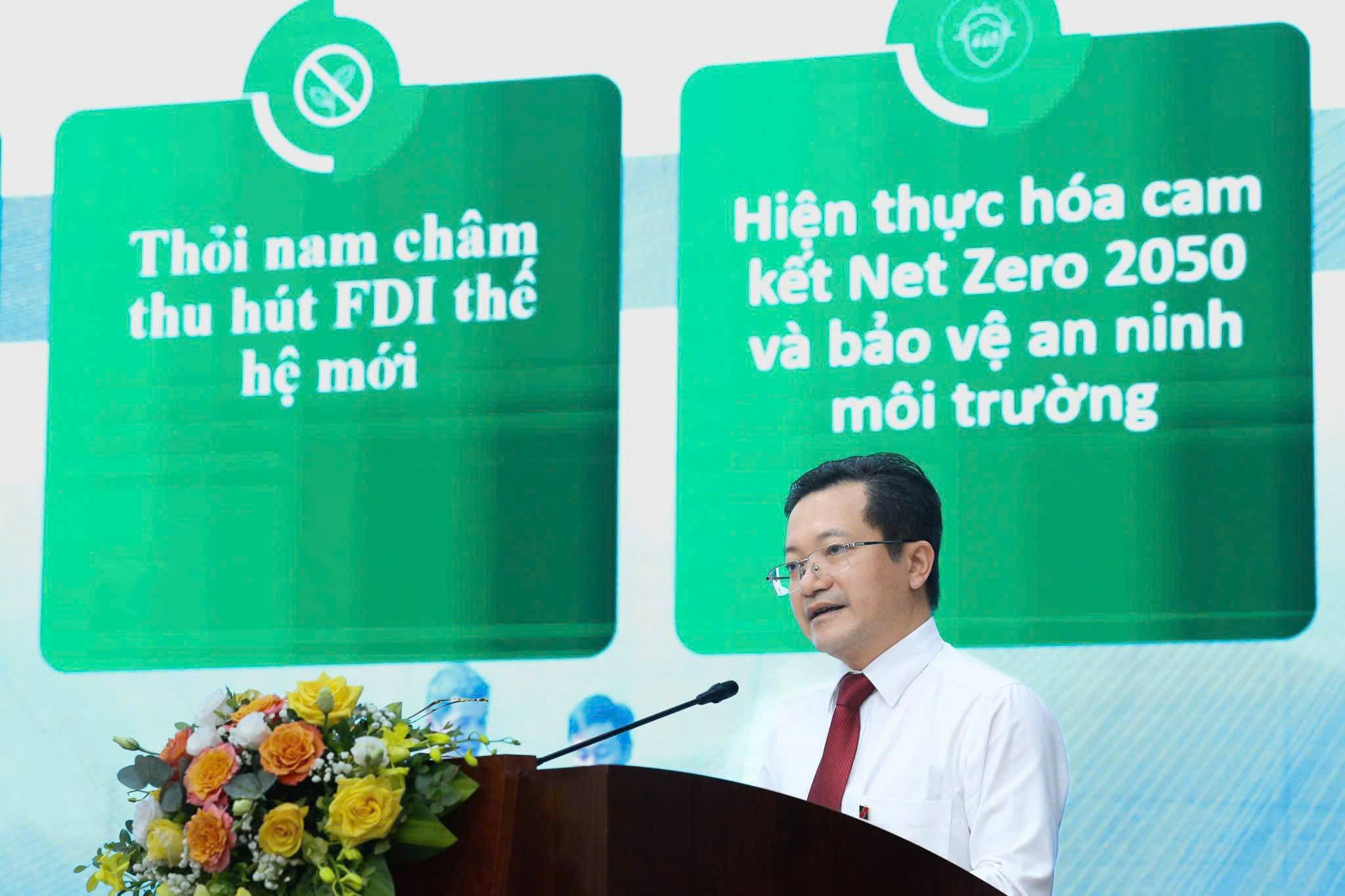
In the opposite direction, Mr. Nguyen Hong Quang, Deputy Director of the Department of Environment (Ministry of Agriculture and Environment) gave a timely perspective. The world is erecting technical barriers such as CBAM (Carbon Border Ajustment Mechanism). If businesses do not innovate technology, do not produce circulating products, they will be excluded from the global game. At that time, green credit will no longer be an incentive, it will be a "lifebuoy" for businesses.
How to open the valve?
To truly "open the valve" for green credit capital to flow, Agribank - from the perspective of a direct implementing unit - has made fundamental and urgent recommendations.
First of all, management agencies need to soon issue a specific "law" or in other words, a national green economic sector classification system, so that banks have a solid legal basis for appraising and evaluating projects.
In parallel with that, technical support also plays a key role, because businesses will find it difficult to implement standard ESG reports themselves without systematic national training programs. Finally, to make credit institutions confident enough to expand lending scale without worrying about capital risks, the State needs to establish risk sharing mechanisms such as credit guarantee funds or interest rate support policies for long-term projects, helping to relieve concerns about financial imbalances in the green transition process.
Agribank has been and is taking pioneering steps. But for those capital flows to flow into rivers and seas, the consensus of an entire ecosystem is needed. When the bottlenecks in mechanisms are removed, green capital flows will truly be the blood vessel that nurtures a modern, sustainable Vietnamese economy and is strong enough to stand firm on the world map by 2050.
It's not just a bank's problem. It's a national development problem.


