Strategic shift: From simple surgery to comprehensive approach
On January 23, 2026, Vinmec Health System organized the scientific conference "Advancements in laparoscopic surgery and robotic surgery to treat esophageal cancer", gathering hundreds of surgical, oncology and anesthesiology experts from major hospitals across the country. The conference is an opportunity to update modern treatment trends, and share clinical practice experiences and new research results in treating one of the most complex malignant diseases of the digestive tract.
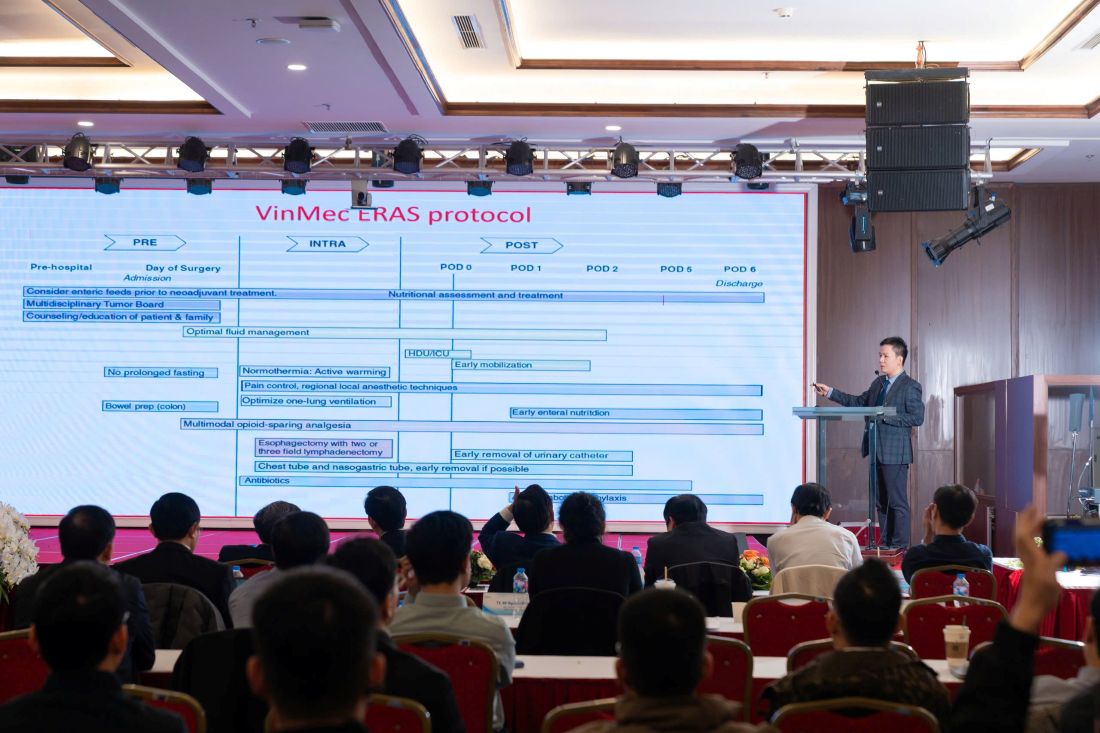
At the conference, Assoc. Prof. Dr. Pham Duc Huan - Chairman of the Professional Council of Surgery, Vinmec Health System, Chairman of the Vietnam Branch of Esophageal Surgery - said that esophageal cancer is not only difficult to treat due to complex anatomical characteristics, but also because most patients are detected at a late stage. This makes choosing a suitable multi-modal treatment strategy always a major challenge for doctors.
If previously open surgery was almost the main choice, today, esophageal cancer treatment has entered a new phase. Advances in diagnostic imaging, disease anatomy, anesthesia - resuscitation and minimally invasive surgery have opened up a personalized, multi-modal approach, putting patients at the center.
According to reports at the conference, esophageal cancer surgery treatment today is no longer a single-stage treatment surgery, but a continuous and closed treatment process, requiring close coordination between many specialties. This process starts from accurately assessing the stage of the disease using modern diagnostic methods, stratifying risks and selecting appropriate treatment strategies for each patient.
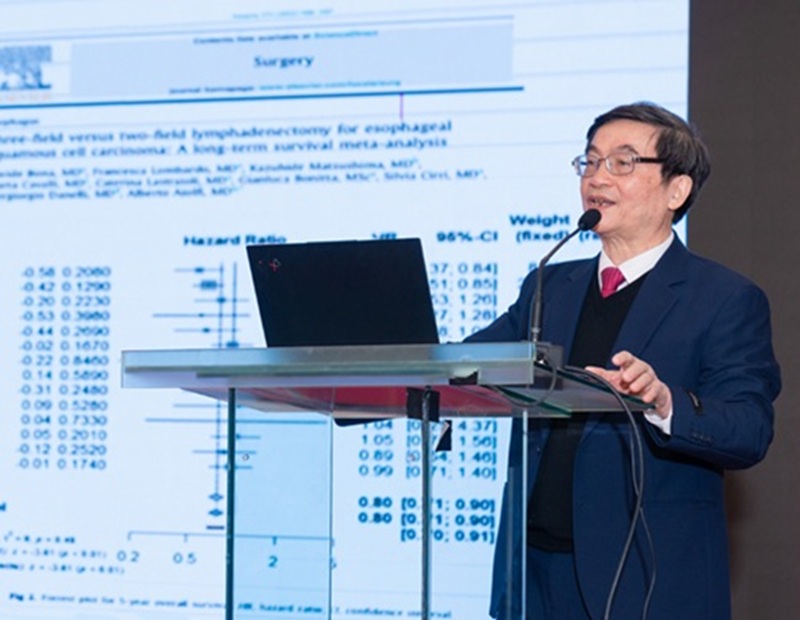
On that basis, surgical indications are closely coordinated with chemotherapy and pre-operative or post-operative radiation therapy, in order to increase the likelihood of recovery, reduce the risk of recurrence and improve the quality of life.
Besides surgical techniques, experts also emphasize the key role of anesthesia - resuscitation, pain control, nutrition and early rehabilitation.
Post-operative care and long-term monitoring are not only aimed at early detection of complications or recurrence, but also towards improving eating habits, restoring physical condition and improving the quality of life for patients after treatment. This comprehensive approach reflects the new trends of modern medicine, while opening up opportunities to improve treatment outcomes for esophageal cancer patients even in complex cases.
Revolution" in the treatment of esophageal cancer
The strong development of laparoscopic surgery, along with the application of robot technology in recent years, has created a revolutionary turning point in the treatment of esophageal cancer.
With a robotic surgical system with a high-resolution 3D camera, superior image magnification and flexible robotic arms, surgeons can operate effectively in deep, narrow and complex anatomical areas such as the ventricles. The technology helps optimize vision, limit tremors, improve the accuracy of each operation and increase safety throughout the surgery process.
Reports at the conference showed that endoscopic surgery with robot support helps reduce damage to healthy tissues, limit post-operative pain, and optimize invasive intervention. This method significantly reduces the rate of post-operative complications, especially respiratory complications, reduces the risk of affecting speech function due to inverted neural damage for patients, and shortens hospital stay time.
More importantly, these advances contribute to significantly improving the quality of life after treatment, in addition to the goal of curing the disease," Assoc. Prof. Huan said.
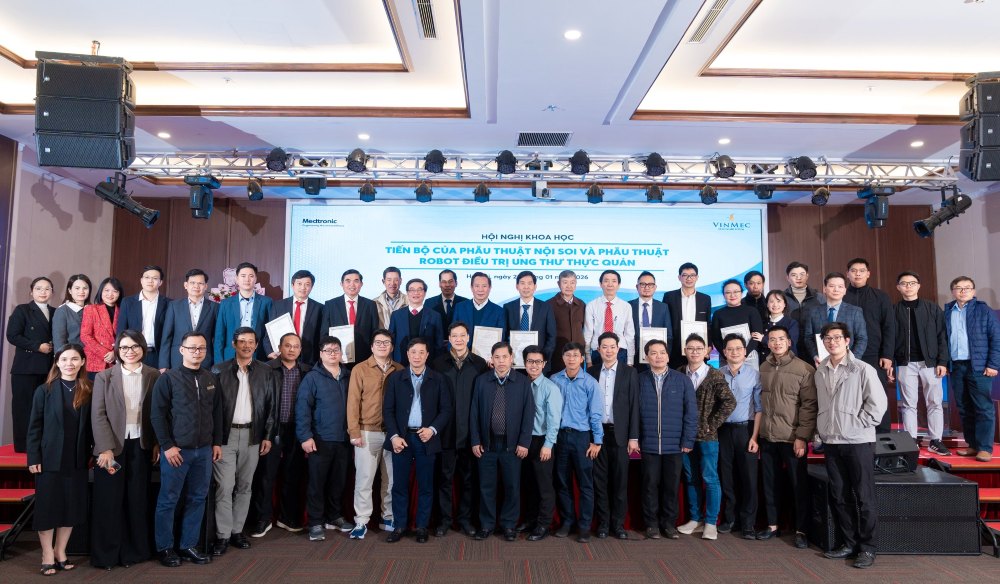
Over the years, Vinmec has invested synchronously in human resources, equipment and organizational models, gradually building Excellent Centers in key areas such as Gastroenterology, Oncology, Cardiology, Orthopedic Trauma... This is an important foundation to bring world medical advances into effective, safe and comprehensive treatment for patients in Vietnam.
Vinmec's organization of a specialized scientific conference on endoscopic surgery and robotic surgery to treat esophageal cancer continues to affirm the sustainable development orientation of the system: Taking academic medicine as the foundation, promoting scientific research, in-depth training and applying high technology in clinical practice, improving treatment effectiveness.
Speaking at the conference, Prof. Dr. Tran Binh Giang - Chairman of the Vietnam Society of Surgery and Endoscopic Surgery, Former Director of Viet Duc Hospital - highly appreciated the scientific and practical significance of the event.
The conference is not only a specialized scientific forum, but also an important bridge contributing to standardizing progress in clinical practice between hospitals, promoting research and gradually improving the quality of esophageal cancer treatment in Vietnam, towards practical and long-term benefits for patients," he emphasized.