
Rare paradox makes the Northwest of Ho Chi Minh City a new destination for capital flows
In 2025, the central real estate market in Hanoi and Ho Chi Minh City has set a record high price level.
In Hanoi, a report by the Vietnam Association of Realtors (VARS) shows that central apartment prices are continuously increasing. Like the old Tay Ho district, the price ranging from 150 - 270 million VND/m2 is quite popular. In particular, in Hoan Kiem area, the branded apartment project is offered at prices of up to 500 - 700 million VND/m2.
Ho Chi Minh City is no exception. Mr. Nguyen Quoc Anh - Deputy General Director of Batdongsan.com.vn - informed that as of the third quarter of 2025, the average secondary price of apartments in the center of District 1 (old) reached 413 million VND/m2. In particular, a super luxury apartment line has appeared with prices of nearly 700 million VND/m2.
The "play" of central real estate is not for the majority when it requires large cash flow, not to mention limited housing funds, the profit margin has narrowed. Many investors have begun to adjust their capital strategies to new markets with "soft" prices along with attractive growth space.
The Northwest of Ho Chi Minh City is one of the promised lands for this shift. Here, Vinhomes Green City - the metropolis is at the gateway, possessing many outstanding advantages. Notably, the rare price for Vinhomes low-rise products.
Applying the 2-year extension policy, customers only have to pay an initial investment of more than VND500 million, equivalent to 15% of the value of land use rights and commercial value, to be able to sign a sales contract and own a townhouse in Vinhomes Green City.
In fact, the price of townhouses here is only from 4.79 billion VND, equivalent to a 2-bedroom apartment in the center, or even lower. It is worth mentioning that this is the price of the foot of the wave, in front of the infrastructure. The price level will increase sharply when the infrastructure wave is heavy in real estate in the coming months and continuously maintains strong intensity in the next 2-3 years when a series of key projects start construction and reach the finish line" - Mr. Quoc Cuong, an investor from Hanoi, shared.
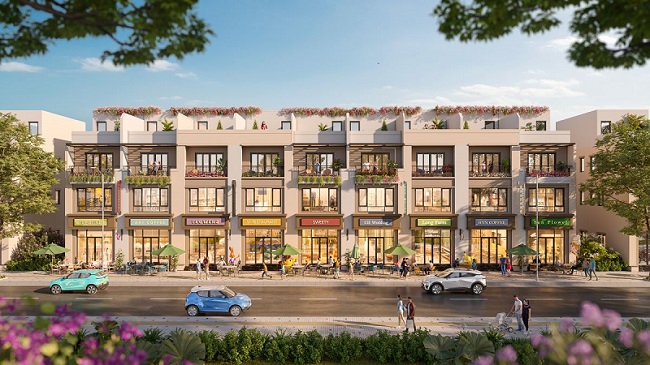
The century-long boost for the first TOD urban area in the Northwest of Ho Chi Minh City
One of the factors that created a turning point for Vinhomes Green City's position is the fact that Metro No. 2 (Ben Thanh - Tham Luong) has officially set to start construction on January 15, 2026. With a length of more than 11 km, including 12 stations and Tham Luong depot, the longest cross-road route in Ho Chi Minh City will quickly connect the center - airport - Northwest region, reducing travel time to about 15 minutes, while sharing the pressure on the Cach Mang Thang Tam - Truong Chinh axis, which is often congested during rush hour.
The groundbreaking event of Metro Line 2 has a special significance for Vinhomes Green City as the project is only 11 minutes from the nearest station as planned. Thanks to that, the project not only has the advantage of super-fast connection but also has the opportunity to become one of the pioneering TOD urban areas (urban areas oriented towards developing public transport) in the area.
According to Associate Professor, Dr. Tran Dinh Thien - Member of the Prime Minister's Policy Advisory Council, the TOD model will completely reshape urban areas as well as the real estate market. Every time a train station is built, an entire ecosystem of infrastructure and utilities will quickly form around it. These movements will all be converted into real estate value.
The TOD model has been proven in many countries, where the value of real estate around public infrastructure has grown strongly and sustainably over time.
A study on the No. 5 metro line in Seoul (Korea) shows that real estate values around metro stations have increased by an average of 17% within a 1km range after the line went into operation, according to Science Direct.
Similarly, in Bangkok, real estate prices on BTS/MRT axes such as Sukhumvit, Phrom Phong, Asok and Thong Lo have increased steadily by 7-21%/year depending on the distance to the station.
In Vietnam, according to CBRE, the appearance of Metro Line 1 (Ben Thanh - Suoi Tien) has attracted real estate values around stations in the direction of a sharp increase of 50-200% in the period before and after this route is put into operation.
The difference of urban railway infrastructure is the sustainability of hundreds of years and cannot be replaced. Once formed, the flow of people and money will gradually increase over time, creating a long-term impact, not just a short wave" - Mr. Cuong analyzed. With Metro Line 2, that impact will spread strongly to the Northwest of Ho Chi Minh City and projects near the axis such as Vinhomes Green City.
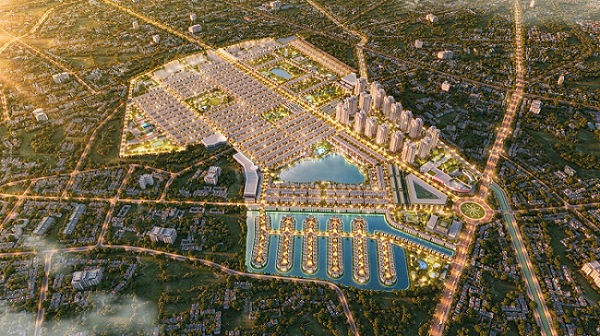
Not only benefiting from Metro No. 2, Vinhomes Green City is also located at the intersection of many other strategic infrastructure routes, such as Ring Road 3, Ring Road 4, Ho Chi Minh City - Moc Bai Expressway... This system allows for quick connection to the center of Ho Chi Minh City, while expanding regional connections with the West and Southeast, creating a sustainable economic corridor with Vinhomes Green City located in the center.
In the context of synchronous infrastructure implementation, a TOD metropolis with a "soft" price foundation such as Vinhomes Green City is considered by investors to be a potential destination for both capital and residents in the final period of 2025 and 2026. This is also the time when many professional investors are looking for assets that can accumulate long-term value, instead of chasing markets that are already at the peak.


