
According to Forbes - The strong rise of the stock market, driven by the global artificial intelligence (AI) fever, has helped the Nikkei 225 index increase by nearly 70% since Forbes last measured the assets of Japanese billionaires, although the weakening Yen somewhat affected the value of assets.
In general, the total assets of the 50 richest people in Japan increased by 29%, to 294 billion USD.
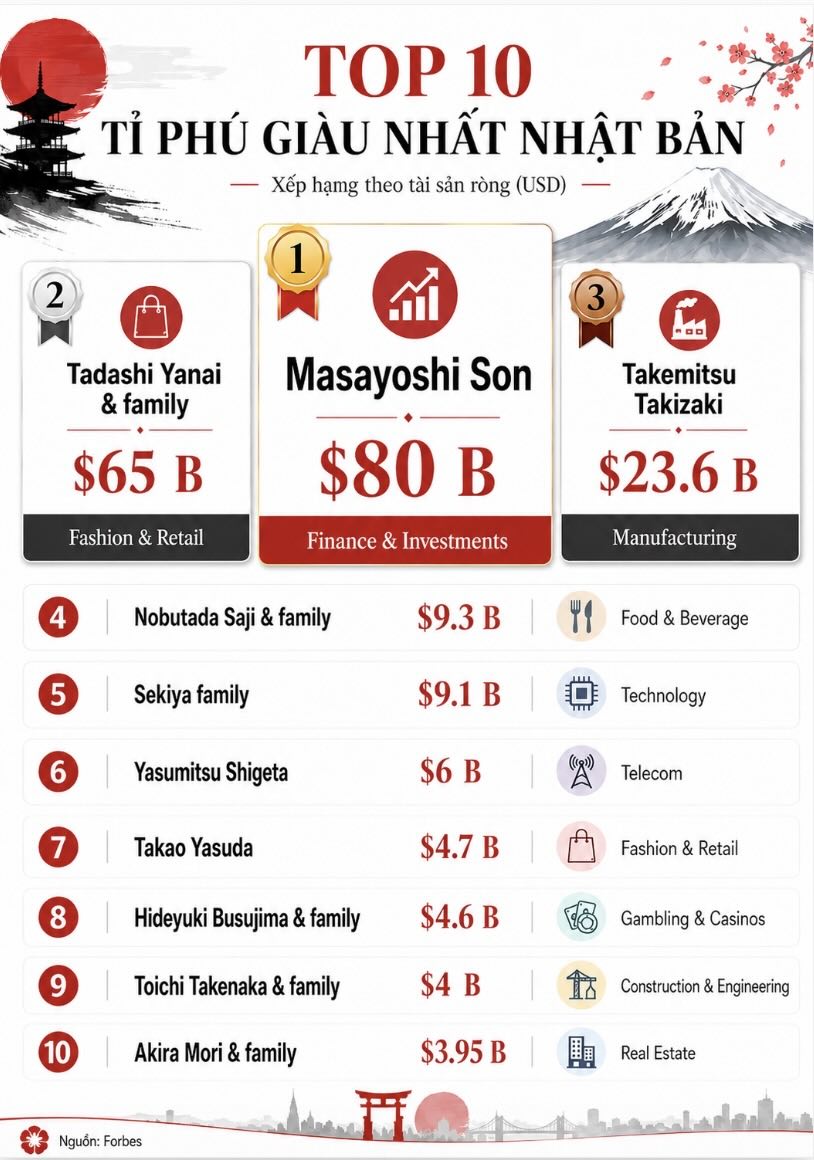
The increase in assets this year focused on a few people on the list. Only 14 assets increased in value, in which SoftBank Group founder Masayoshi Son recorded a record increase and returned to the No. 1 position after 4 years of absence.
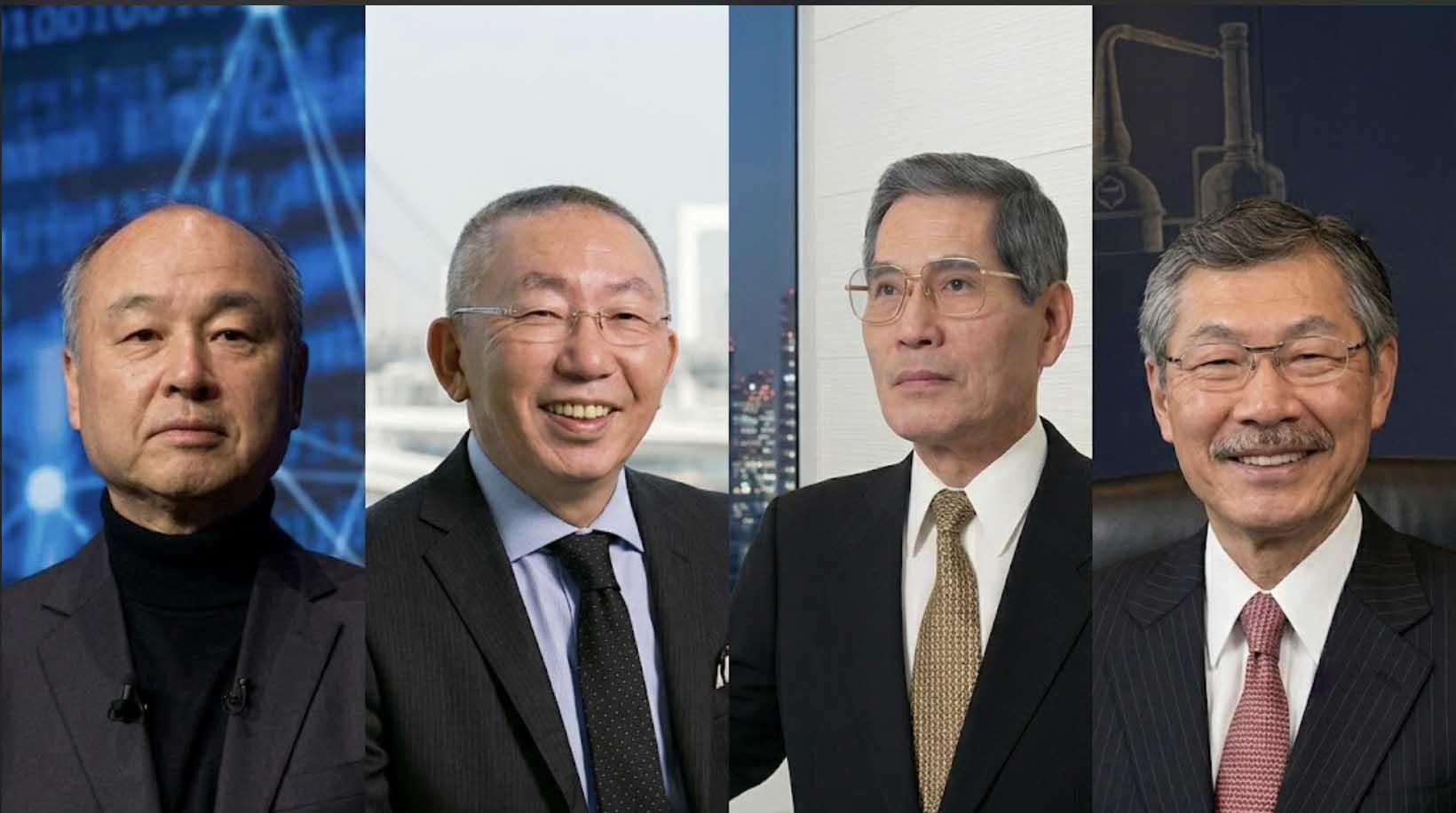
Mr. Son's net worth increased by $51.8 billion, or 184%, to $80 billion, making him the person with the largest increase in both absolute value and percentage.
SoftBank reported a record net profit of 5 trillion Yen (31 billion USD) in the fiscal year ending March 31, after a multi-billion USD investment in OpenAI - the ChatGPT development company.
Billionaire Tadashi Yanai - Uniqlo owner, dropped to second place, although his assets increased by more than 1/3 to 65 billion USD, thanks to solid growth in revenue and net profit of the parent company Fast Retailing.
The Sekiya family rose 3 places to 5th place after adding 4.1 billion USD, bringing net assets to 9.1 billion USD. Disco shares - the family's chip manufacturing company - have more than doubled thanks to strong demand for AI-related products.
This year's list of Japanese billionaires has 6 new faces, including Masakazu Idemitsu, who and his family own assets of 1.15 billion USD. His family's Idemitsu Kosan Refinery Group benefited greatly from rising crude oil prices after the Iranian conflict. Net profit increased by 65% to 172 billion Yen in the fiscal year ending March 31st, boosting the company's stock by 48%.
Another new face is Fumio Sakiya, founder of Rorze - a company producing equipment for the semiconductor and flat screen industry. The company's stock has more than doubled in the past year, thanks to higher sales forecasts amid market optimism about increased orders.
The only person to return to the list after a year of absence is Ryuji Arai, founder of the Bic Camera electronics and household appliance retail chain. He ranked 48th with assets of 1.13 billion USD. The company recorded a 23% increase in net profit to 11 billion yen on revenue of 508 billion Yen in the first half of the fiscal year ending February 28.
A total of 27 assets decreased in value, including Takahisa Takahara - Chairman and CEO of Unicharm personal consumer goods company.
His assets fell nearly 1/3 to $3.6 billion due to the company's stock decline. Amidst increasingly tight spending by Japanese consumers, Unicharm reported a 21% decrease in net profit in the quarter ending March 31, down to 19.8 billion Yen.
Three people left the list, including the Nakatani family. Sysmex shares - the company that produces medical testing equipment for this family - nearly halved after net profit plummeted more than 1/3 to 35.4 billion Yen in the fiscal year ending March 31. The minimum asset to be included in this year's list slightly decreased to 1.1 billion USD, from 1.2 billion USD last year.
This list is compiled based on information on shares and finance collected from families, individuals, stock exchanges, annual reports and analysts.
The ranking calculates both personal and family assets, including jointly held assets between members. The value of private companies is estimated based on comparisons with similar listed companies.
Net asset value is calculated according to the stock price and exchange rate at the time the market closed on May 22. The list may also include foreign citizens with business, residence or other connections with Japan; or Japanese citizens who do not reside in this country but have other significant business or connections with Japan.


