
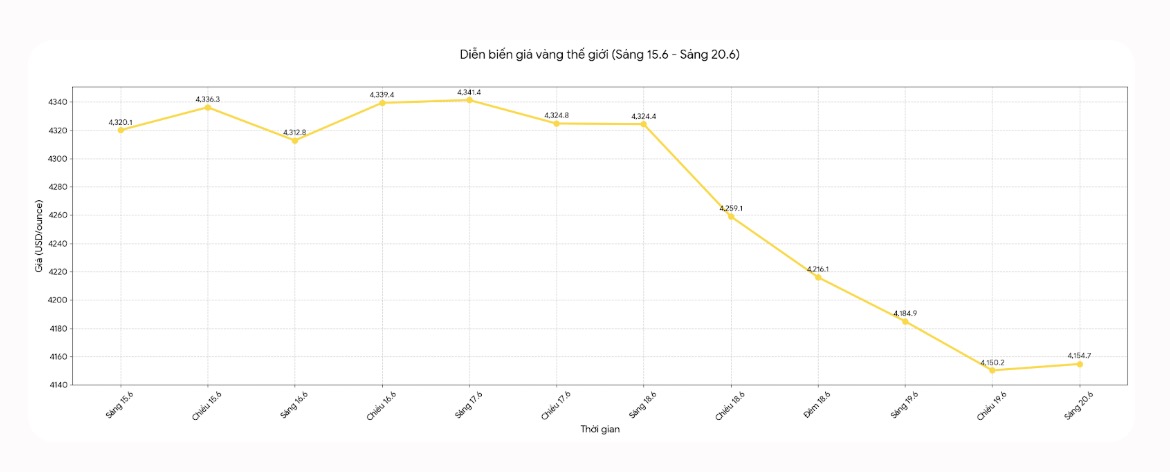
World gold prices are under pressure after the US Federal Reserve (Fed) issued a tougher monetary policy signal. The strengthening USD, high US bond yields and expectations that the Fed can maintain high interest rates for longer are making the precious metal lose some of its attractiveness in the short term.
However, the forecast picture of many large banks shows that the long-term upward trend of gold has not been broken. Although the forecast levels between organizations are differentiated, most still say that gold prices may remain high until the end of 2026, supported by central bank buying demand, geopolitical risks, increased public debt and the trend of asset diversification away from USD.
Goldman Sachs is one of the banks with a more cautious view after the latest Fed meeting. This bank lowered its gold price forecast for the end of 2026 from 5,400 USD/ounce to 4,900 USD/ounce. However, Goldman Sachs still believes that the medium-term outlook for gold is still positive, but in the short term the price may continue to be under pressure if the market increases expectations of the Fed raising interest rates.
JPMorgan holds a more optimistic view. The bank has lowered its 2026 average gold price forecast due to weakening short-term investment demand, but still believes that gold prices may head towards the 6,000 USD/ounce mark by the end of 2026. JPMorgan's main argument is that demand from central banks and investors may recover in the second half of the year.
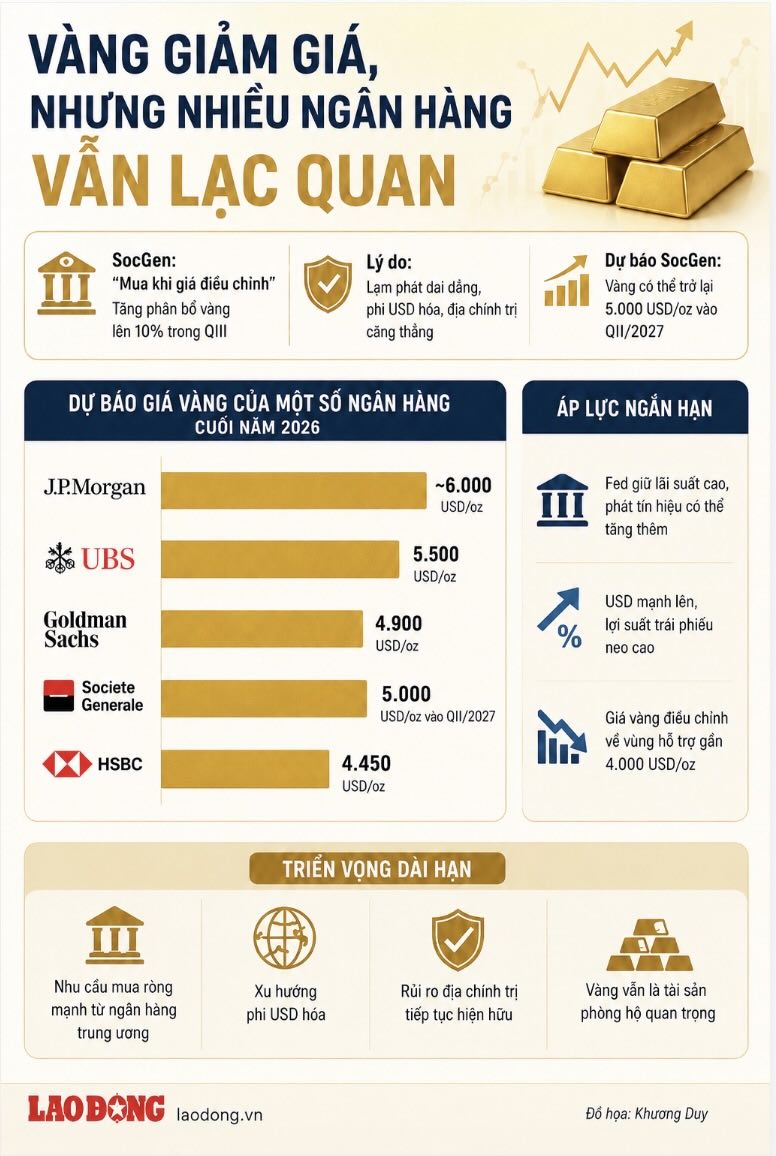
UBS also maintains a positive view, although it has adjusted its forecast lower. This Swiss bank lowered its gold price target for the end of 2026 from $5,900/ounce to $5,500/ounce, due to high US bond yields and a strong USD that increases the cost of gold hoarding opportunities. However, UBS said that the gold price rise market is not over and investors need to be more patient during the volatile period.
ANZ is also in the group that adjusted down the forecast. This bank lowered its year-end gold price target from $5,600/ounce to $5,200/ounce. The adjustment reflects the recent market pressure as gold weakens due to changes in interest rate expectations. However, the $5,200/ounce level still shows that ANZ has not ruled out the possibility of gold recovery in the remainder of the year.
Citi offers a more balanced view when keeping the gold price target for 6-12 months at 5,000 USD/ounce. According to this bank, the cooling of geopolitical tensions in the Middle East may reduce safe-haven demand in the short term, but the longer-term outlook for gold is still supported by macroeconomic factors, especially inflation and monetary policy.
Barclays has a more cautious forecast than many other major banks. This bank maintains its gold price forecast for 2026 at 4,791 USD/ounce and 2027 at 4,900 USD/ounce. Barclays believes that factors such as persistent inflation, policy uncertainty and central bank reserve demand are still supporting forces, although gold may still be under adjustment pressure in the short term.
HSBC also warned of the possibility of strong fluctuations in gold prices. The bank once predicted that gold could reach 5,000 USD/ounce in the first half of 2026, but set the year-end price at 4,450 USD/ounce. HSBC believes that if geopolitical risks cool down or the Fed continues to maintain a tough stance, gold may face a deeper correction.
Bank of America once raised its gold price forecast for 2026 to 5,000 USD/ounce, with an average annual price of about 4,400 USD/ounce. The bank's view is based on expectations that safe-haven demand, central bank net buying and economic instability will continue to support the precious metal. However, BofA also noted short-term correction risks after a period of strong increase.
Société Générale (SocGen) is one of the organizations that continues to recommend buying when prices adjust. This French bank increased the proportion of gold in its portfolio in the third quarter to 10%, from 7% in the second quarter. SocGen believes that gold support pillars such as inflation risk, dedollarization trend, worsening fiscal situation and geopolitical instability remain.
The common point in the forecasts is that gold may not have escaped short-term pressure. However, long-term prospects are still positively assessed by many organizations.


