
Race on the landslide site
In the dry season at the Long Boc emergency residential area project, Tak Lu village, Nam Tra My mountainous commune, Da Nang, the sound of excavators, dump trucks, and rollers continuously echoes in the mountains and forests. On the red soil still messy, patches of hills are leveled, and internal roads are gradually taking shape.
This is one of the key projects of Nam Tra My commune, with a total investment of nearly 20 billion VND, aimed at arranging safe accommodation for 48 households living in areas at high risk of landslides.
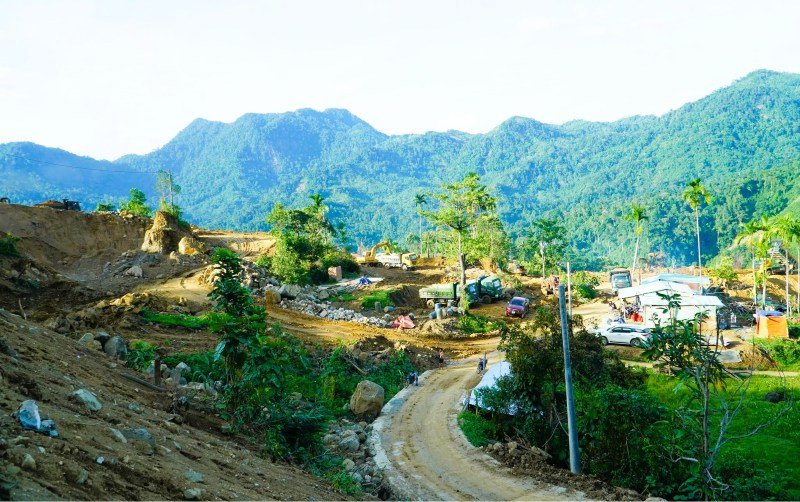
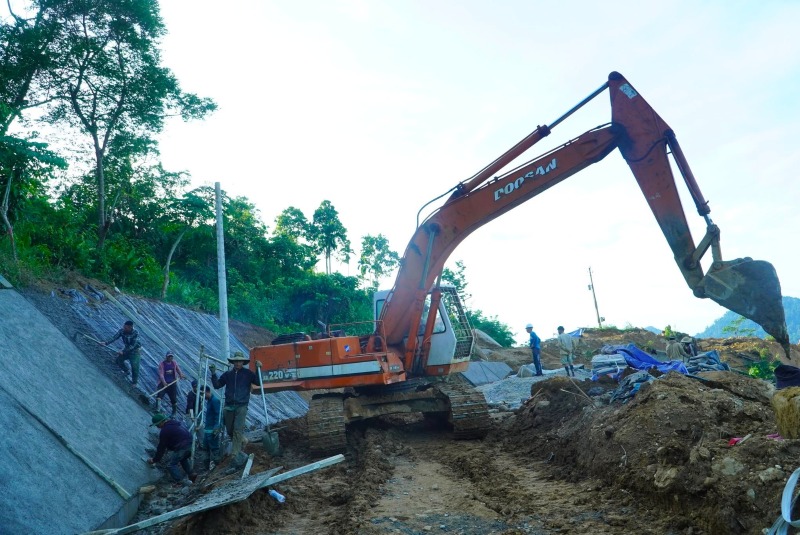
The construction atmosphere is more urgent as the 2026 rainy and storm season is approaching. For mountainous people, each heavy rain is not just about the weather. It is also the worry of soil and rocks falling from the positive slope, the stream suddenly changing direction, roads being cut off, and houses being threatened at any time.
Therefore, each meter of road, each foundation of resettlement house completed early means more safety for people in mountainous areas.
Representatives of the construction unit of the Long Boc emergency residential area project said that the contractor is mobilizing maximum manpower and machinery to accelerate the progress of leveling the ground, constructing internal roads and essential infrastructure items.
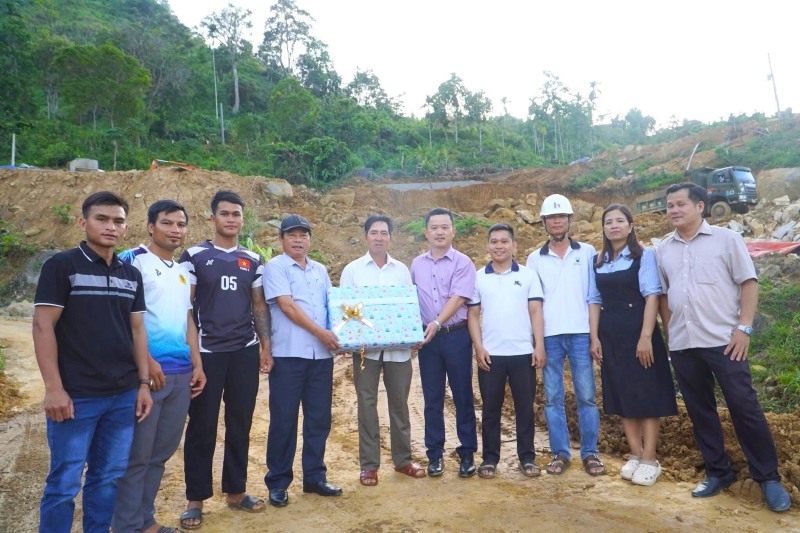
However, the implementation process still has obstacles, especially site clearance. Some locations still have power pole systems; some households cannot be relocated due to procedures, making the construction progress unable to accelerate as expected.
According to Mr. Nguyen Hong Nhan - Vice Chairman of Nam Tra My Commune People's Committee, the locality is coordinating with relevant units to remove each bottleneck. The commune's point of view is not to let procedures be prolonged, slowing down projects directly related to the safety of life and people's lives.
Don't leave capital on paper
In 2026, Nam Tra My commune will implement 33 public investment projects with a total planned capital of over 176 billion VND. The projects span many fields, from transportation, healthcare to resettlement areas, and people's infrastructure. These are all projects of practical significance for mountainous areas that are frequently affected by natural disasters, storms, floods, and landslides.
However, disbursement has only reached more than 35% of the capital plan. This rate puts great pressure in the remaining months of the year, especially when the favorable construction time in mountainous areas is not long.
The main reason why some projects are behind schedule is still site clearance - a familiar "bottleneck" but always difficult to handle in mountainous areas, where the terrain is divided, population is dispersed, and construction conditions are complicated.

In parallel with public investment capital, the locality also focuses on disbursing capital sources under the national target program. The remaining capital from previous years is allocated for new rural construction, sustainable poverty reduction and development of ethnic minority areas. This is an important resource to complete infrastructure, support livelihoods and improve living conditions for people in mountainous areas.
Faced with low disbursement pressure, Nam Tra My has developed monthly plans, strengthened on-site inspections, and closely followed the progress of each project. For slow projects, the locality requires clarifying the causes, responsibilities and having specific handling plans.
Projects that are unlikely to be completed in the year will be considered for capital transfer, avoiding the situation where capital is on paper while people still lack roads, lack safe housing, and lack essential infrastructure - Mr. Nhan said.


