
SJC gold bar price
As of 7:15 PM, Phu Quy Jewelry Group listed SJC gold bar prices at 146.6-149.9 million VND/tael (buying - selling), an increase of 1.3 million VND/tael on the buying side and an increase of 900,000 VND/tael on the selling side. The difference between buying and selling prices is at 3.3 million VND/tael.
SJC gold bar price is listed by DOJI at the threshold of 146.9-149.9 million VND/tael (buying - selling), an increase of 900,000 VND/tael in both buying and selling directions. The difference between buying and selling prices is at the threshold of 3 million VND/tael.
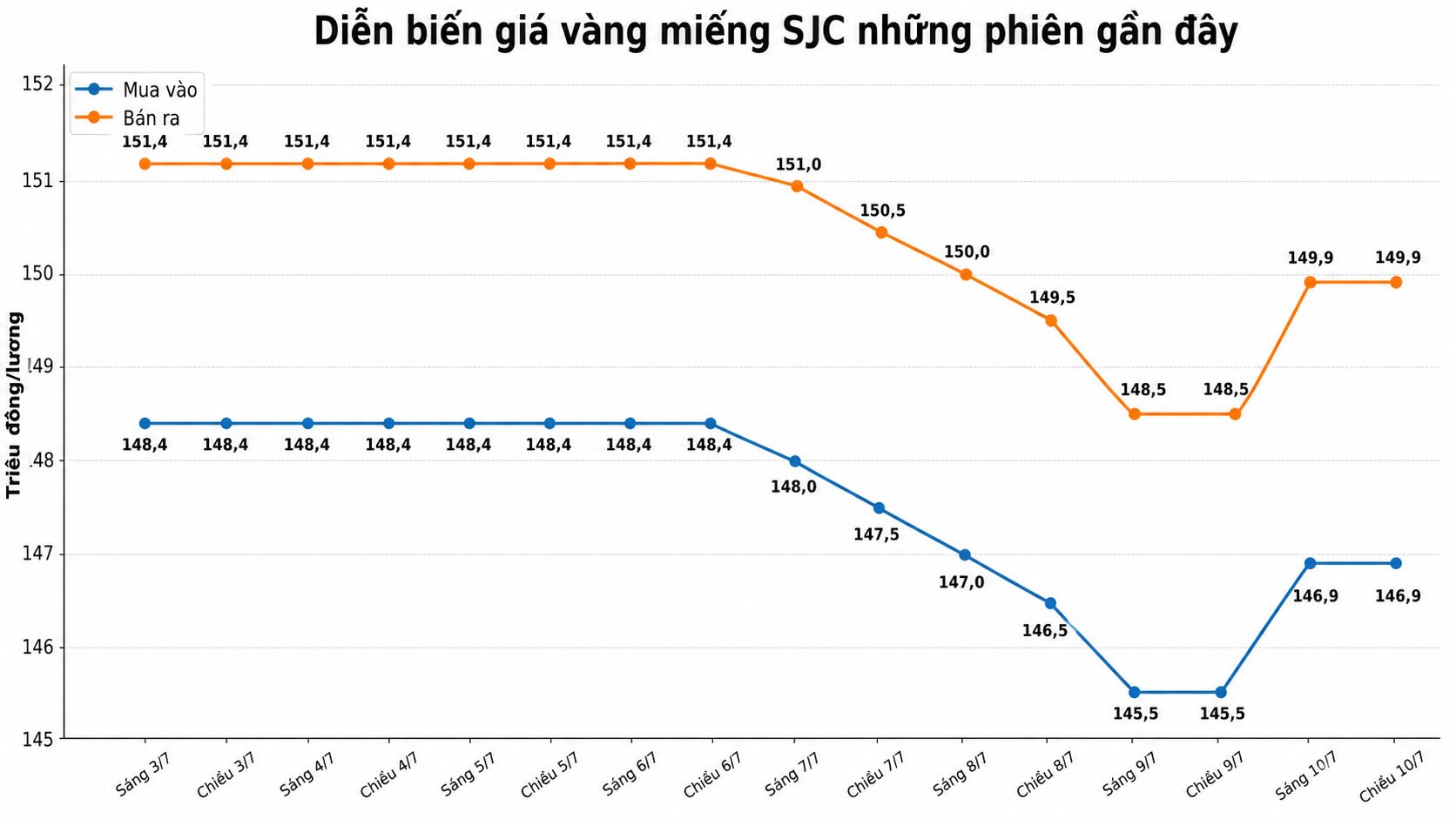
SJC gold bar prices are listed by Bao Tin Minh Chau at the threshold of 145-149 million VND/tael (buying - selling), an increase of 400,000 VND/tael in both buying and selling directions. The difference between buying and selling prices is at the threshold of 4 million VND/tael.
9999 gold ring price
As of 7:15 PM, Phu Quy Gold and Gems Group listed the price of gold rings at 145.5-148.8 million VND/tael (buying - selling), an increase of 500,000 VND/tael on the buying side and an increase of 300,000 VND/tael on the selling side. The difference between buying and selling prices is at 3.3 million VND/tael.
DOJI listed gold ring prices at the threshold of 145-149 million VND/tael (buying - selling), an increase of 500,000 VND/tael on the buying side and keeping the selling side unchanged. The difference between buying and selling prices is at the threshold of 4 million VND/tael.
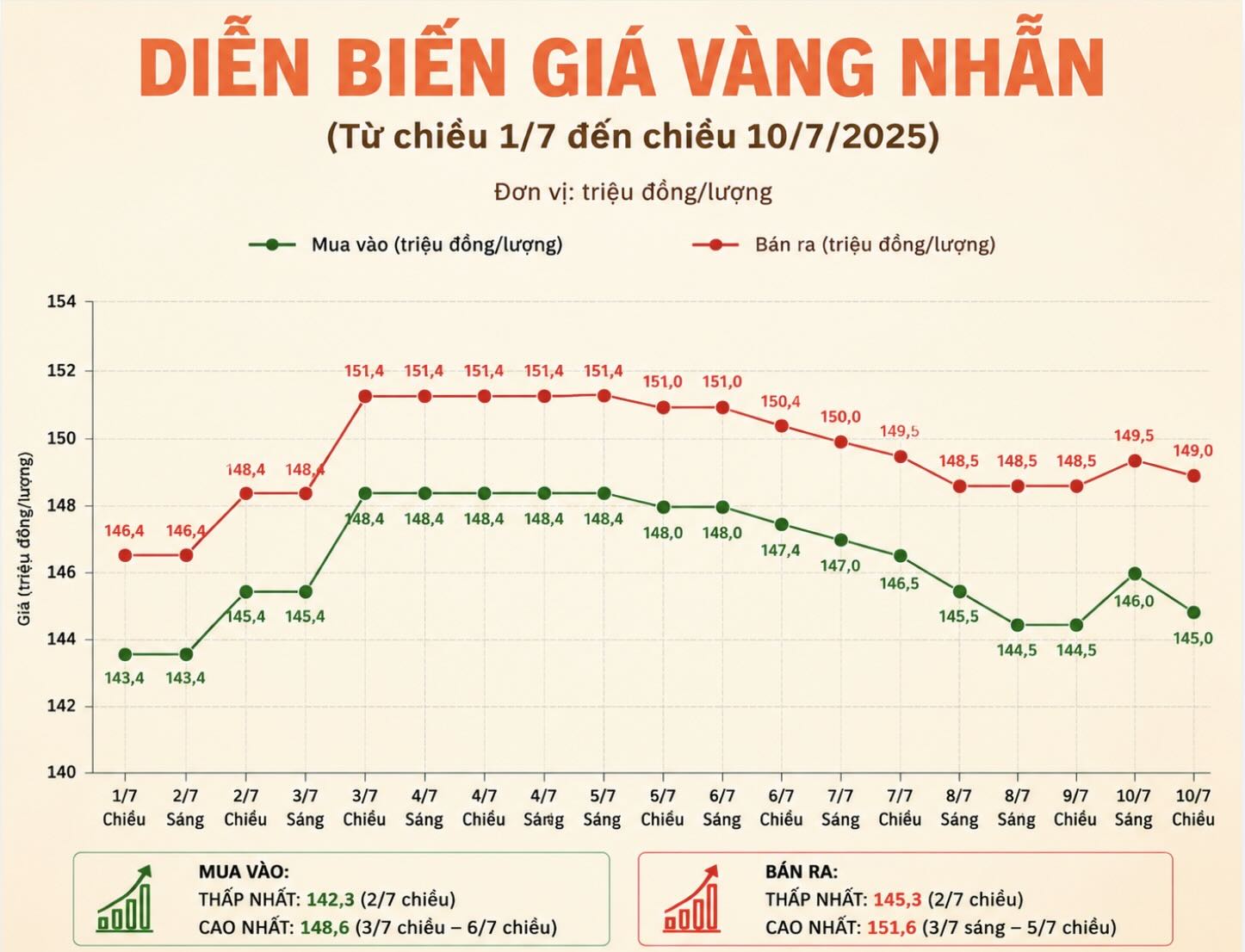
Bao Tin Minh Chau listed the price of gold rings at 145-149 million VND/tael (buying - selling), an increase of 400,000 VND/tael in both buying and selling directions. The difference between buying and selling prices is at 4 million VND/tael.
World gold price
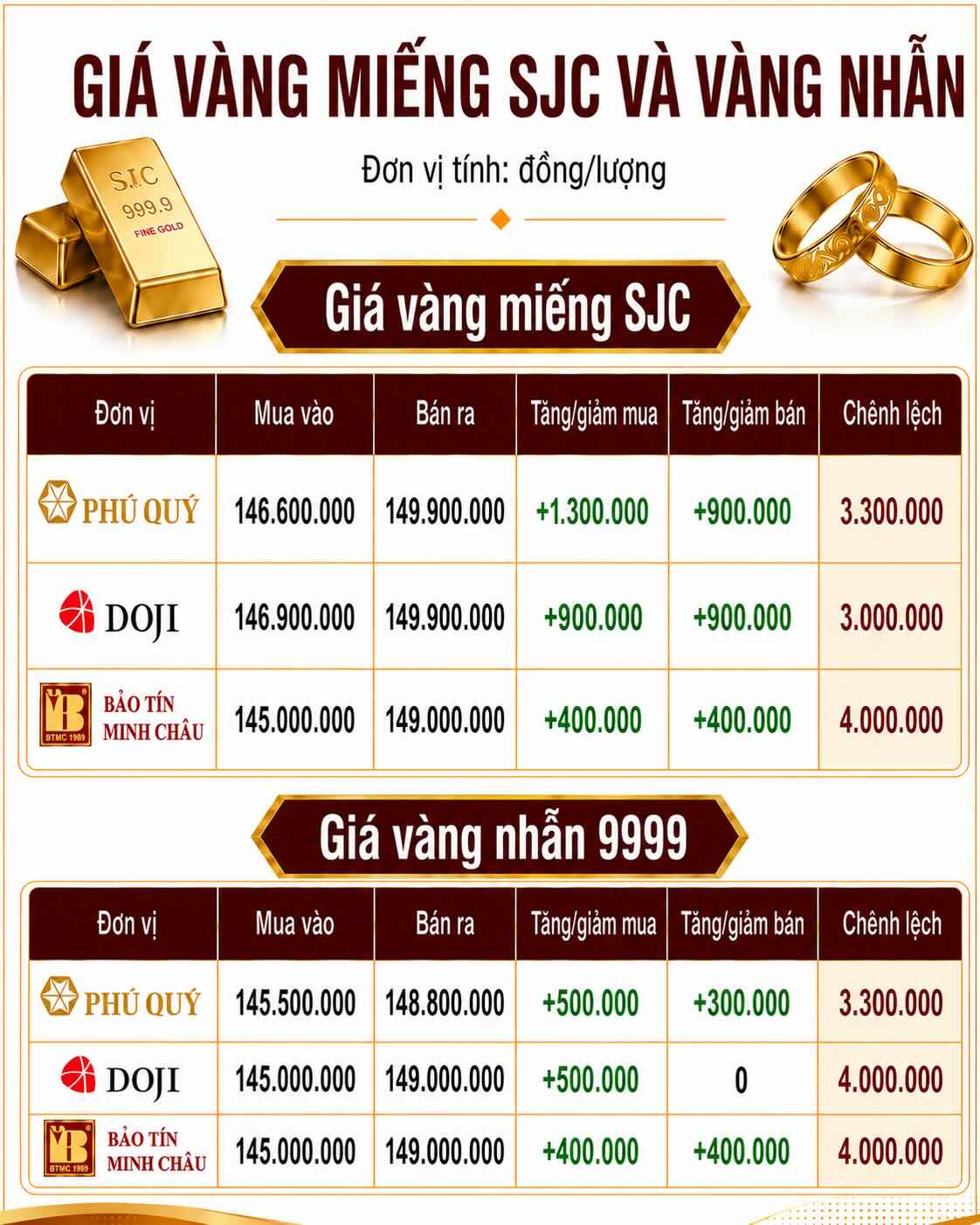
At 7:20 PM, world gold prices were listed around the threshold of 4,110.9 USD/ounce, up 8.8 USD compared to the previous day.
Gold price forecast
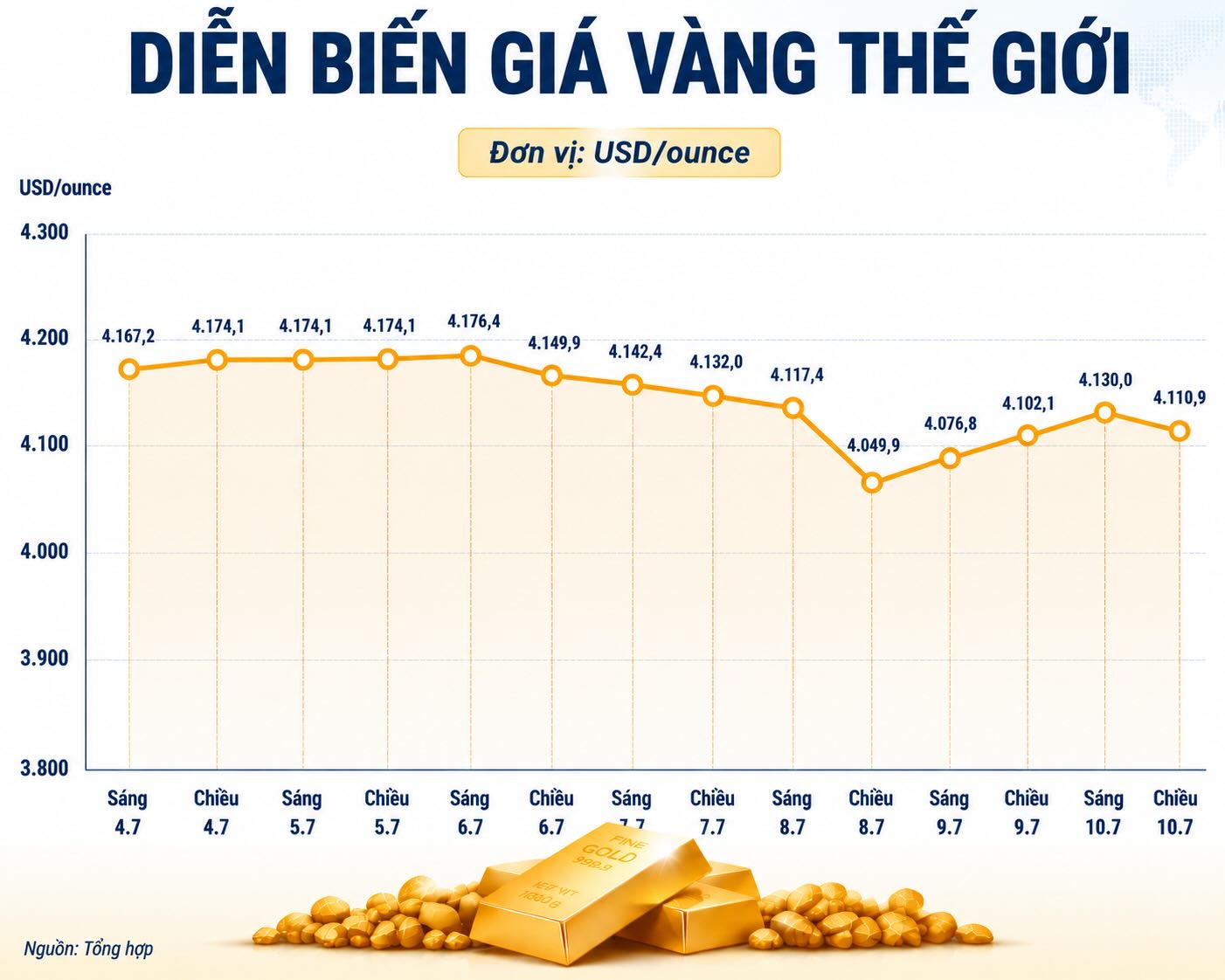
Gold price outlook is being interspersed with geopolitical risks, energy price movements and monetary policy expectations of the US Federal Reserve (Fed). In the short term, analysts believe that the precious metal may continue to struggle, but the long-term trend is still positively assessed by many organizations.
Mr. Tim Waterer - Head of Market Analysis at KCM Trade - said that gold is entering an accumulation phase after a recent recovery. Investors are still cautious about unpredictable developments in US-Iran relations, especially the risk of tensions in the Middle East affecting energy supply and transportation.
According to this expert, gold still has the potential to attract buying power when prices adjust, provided that oil prices do not increase too sharply. If energy continues to escalate, inflationary pressure may increase, making expectations of the Fed raising interest rates stronger and putting pressure on the precious metal.
The market is currently also paying attention to US inflation data next week. If the consumer price index is lower than forecast, expectations of an interest rate hike in September may weaken, thereby creating conditions for gold prices to retest the 4,162-1,214 USD/ounce range. Conversely, inflation is hotter than expected, especially in the context of high energy prices, which may put gold under new adjustment pressure.
While the short-term outlook still has many variables, J.P. Morgan still maintains an optimistic view of the long-term trend. This bank believes that the recent price drop mainly reflects a change in monetary policy expectations, not weakening the fundamental momentum of the market. J.P. Morgan forecasts that the average gold price may reach about 6,000 USD/ounce in Q4/2026 and aim for 6,300 USD/ounce by the end of 2027.
Important drivers mentioned are the gold buying demand of central banks, the process of diversifying foreign exchange reserves, concerns about public debt, budget deficits and geopolitical instability.
From a more cautious perspective, Metals Focus believes that gold may continue to accumulate in the summer months. July and August are usually periods with low physical gold demand, while high interest rate pressure still limits the possibility of price breakthroughs. However, this organization expects market prospects to improve from the end of Q3, as investors re-evaluate the possibility of the Fed continuing to tighten monetary policy.
In general, short-term fluctuations of gold still largely depend on inflation, oil prices, the USD and Fed policy. In the long term, reserve demand, geopolitical risks and portfolio diversification demand are still considered important supporting factors for the precious metal.
Gold price data is compared to the previous day.
See more news related to gold prices HERE...


