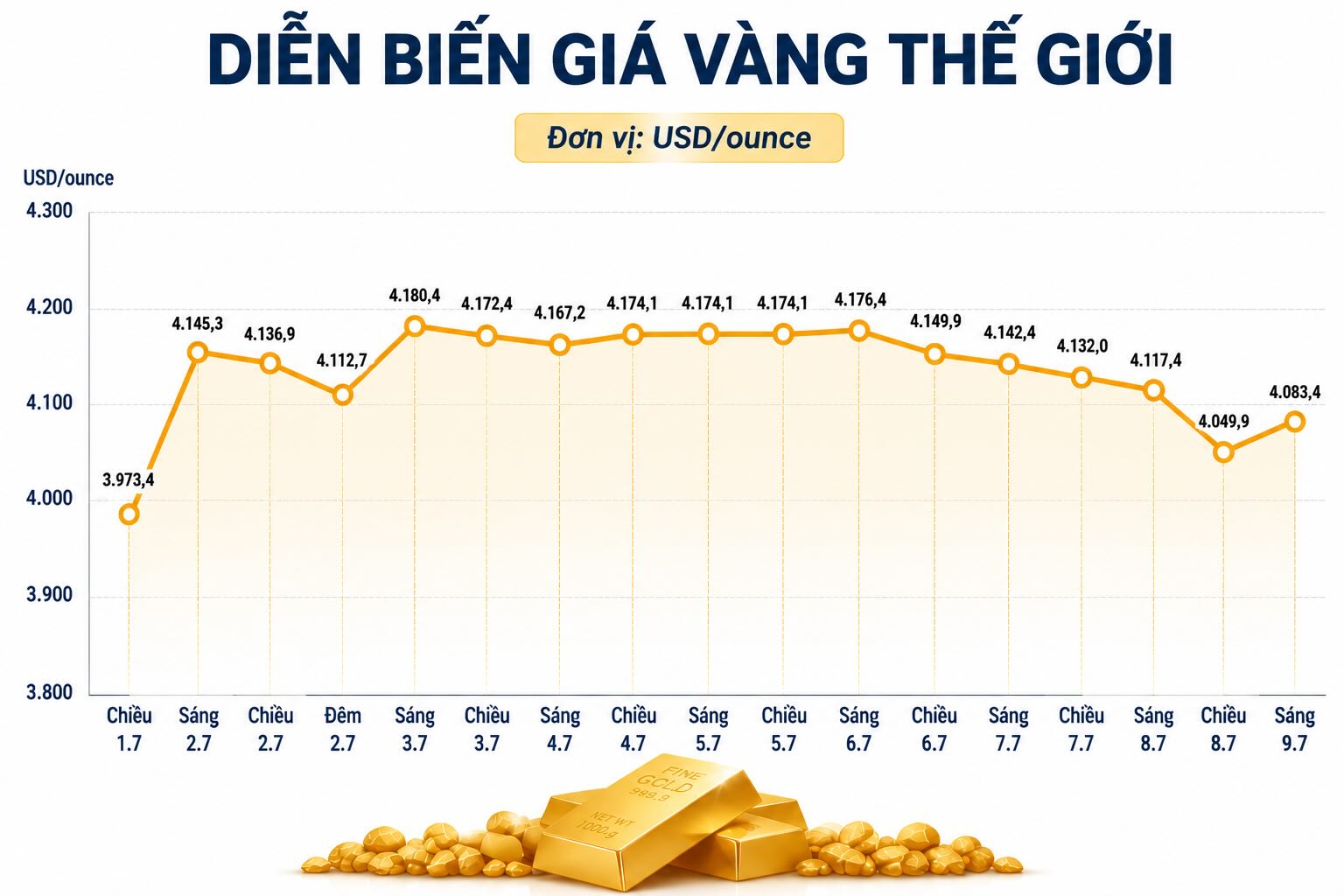
According to Invesco's latest gold outlook report, Q2/2026 is the worst trading quarter for the precious metal in 12 years. Gold prices fell 14.1%, wiping out the increase achieved in Q1 and lower than 1,500 USD/ounce compared to the all-time high in the session set at the end of January.
According to Invesco's expert group, including Mr. Sam Whitehead, Mr. Benjamin Jones and Mr. David Scales, this is the strongest quarterly decrease in gold prices since Q2/2013, when the market lost 22.7%.
However, Invesco believes that the current adjustment may help the market establish a more balanced state after a period of hot increase.
Pressure from inflation, interest rates and the USD
According to Invesco, the diễn biến of gold prices in the coming months will depend significantly on how the Fed reacts to inflationary pressure, oil price diễn biến and the strength of the USD.
The sharp increase in energy prices in the second quarter increased concerns that inflation could remain at a higher level longer than expected. This caused the market to shift from expecting the Fed to continue to cut interest rates to considering the possibility of interest rates remaining high for a long time, even possibly increasing again.
High interest rates often put pressure on gold because precious metals do not provide periodic yields. When yields of assets such as bonds increase, the opportunity cost of holding gold is also greater.
In addition, the strengthening of the USD also disadvantages gold prices. Gold is valued in USD, so when the greenback increases in price, the cost of buying gold by investors using other currencies becomes more expensive, thereby potentially weakening demand.
Invesco's expert group assessed that the recent adjustment was a relatively reasonable reaction of the market to three major factors including inflation expectations, tougher monetary policy views and the strengthening of the USD.
Another factor also putting pressure on gold is the decline in part of safe-haven demand. When the market expects negotiations between the US and Iran to achieve positive results, the geopolitical risk compensation reflected in gold prices tends to decrease.
However, Invesco warns that the market may be overly optimistic about the ability to control inflation.
According to the report, the PCE consumer price index in May increased to 4.1%, the highest level since April 2023, mainly due to rising energy prices. Meanwhile, the core PCE, excluding food and energy, also rose to 3.4%, the highest since October 2023.
This development caused the monetary policy outlook to change rapidly. At the beginning of 2026, the market almost did not consider the possibility of the Fed raising interest rates. However, by the end of the second quarter, the probability of interest rate hikes had been revalued.

The central bank is still an important support
Although admitting that gold prices still face many short-term resistances, Invesco still maintains a positive view on market prospects in the second half of 2026.
According to this organization, most of the long-term supporting factors for gold have not changed. The most notable is the gold buying demand of central banks to diversify reserves.
The latest survey by the World Gold Council shows that 45% of central banks participating in the survey expect to increase gold reserves in the next 12 months. This is the highest rate ever recorded.
At the same time, 89% of participants believe that the gold reserves of central banks worldwide will continue to increase next year.
According to Invesco, this trend reflects structural demand rather than short-term speculation. Factors such as global economic volatility, inflation hedging needs and geopolitical risks continue to drive central banks to increase allocation to gold.
Unlike personal investment cash flow, the needs of central banks are usually less sensitive to price fluctuations. Therefore, the buying activity of this sector can create an important support layer for gold prices in market correction periods.
In the long term, Invesco believes that the reason for holding gold is not only in the role of shelter from geopolitical risks.
Gold is also considered a tool to diversify investment portfolios due to its low correlation with many other assets, especially stocks. At the same time, gold does not have a issuing organization, does not carry credit risk and has a long history with the role of preserving value.