
SJC gold bar price
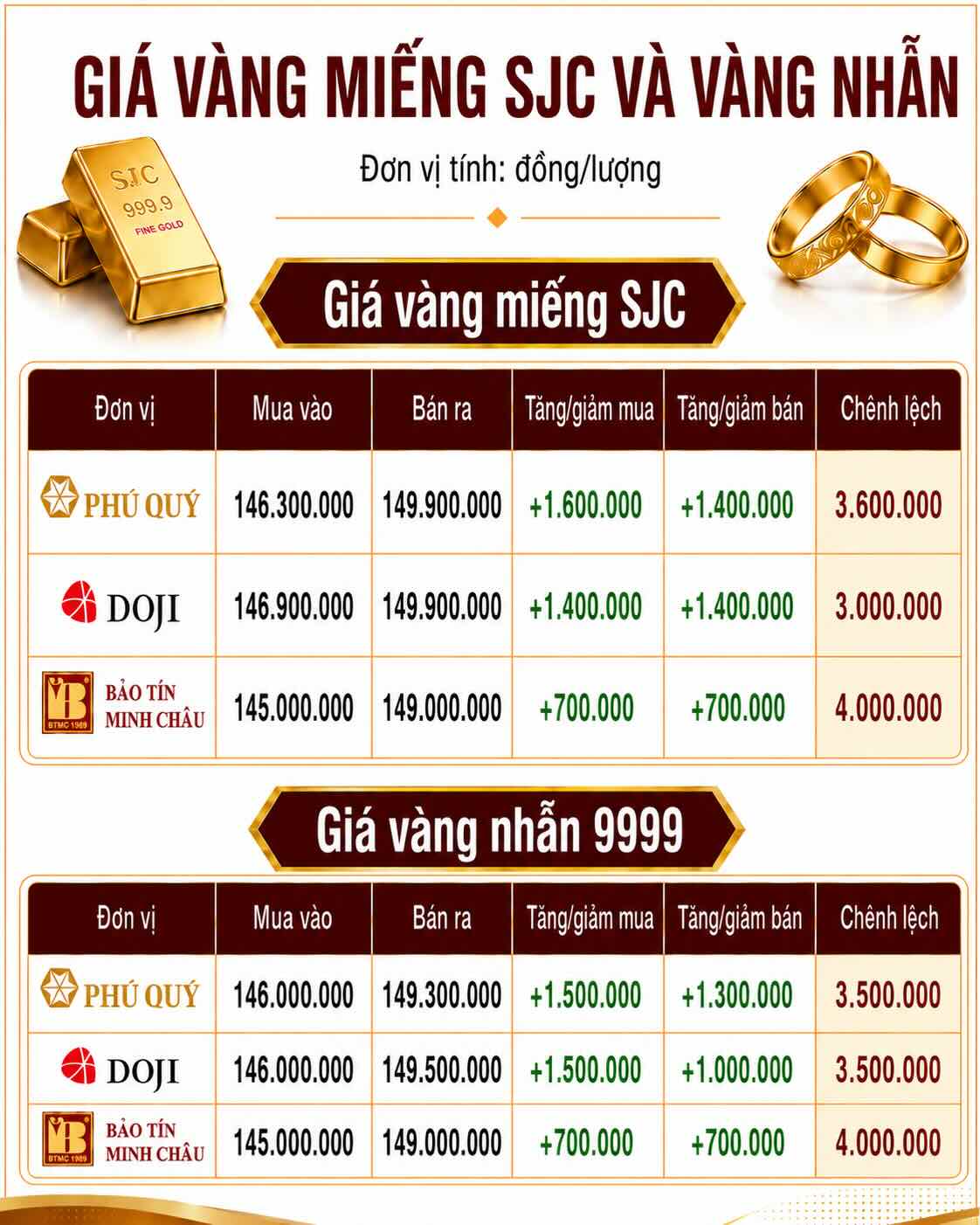
As of 10:00 AM, Phu Quy Jewelry Group listed SJC gold bar prices at the threshold of 146.3-149.9 million VND/tael (buying - selling), an increase of 1.6 million VND/tael on the buying side and an increase of 1.4 million VND/tael on the selling side. The difference between buying and selling prices is at the threshold of 3.6 million VND/tael.
At the same time, SJC gold bar prices were listed by DOJI Group at the threshold of 146.9-149.9 million VND/tael (buying - selling), an increase of 1.4 million VND/tael in both buying and selling directions. The difference between buying and selling prices is at the threshold of 3 million VND/tael.
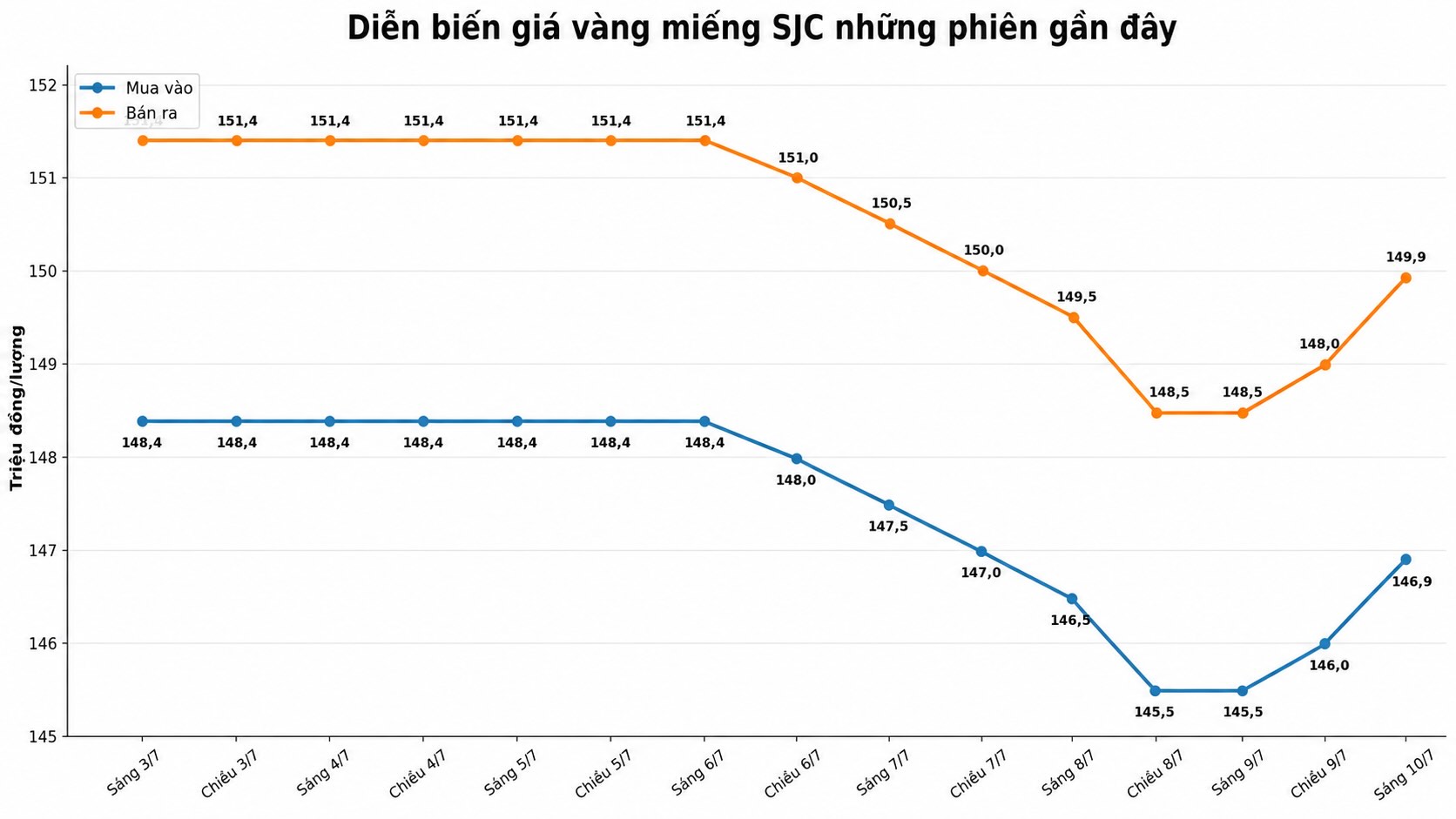
Bao Tin Minh Chau listed SJC gold bar prices at the threshold of 145-149 million VND/tael (buying - selling), an increase of 700,000 VND/tael in both buying and selling directions. The difference between buying and selling prices is at the threshold of 4 million VND/tael.
9999 gold ring price
As of 10:00 AM, Phu Quy Gold and Gems Group listed the price of gold rings at 146-149.3 million VND/tael (buying - selling), an increase of 1.5 million VND/tael on the buying side and an increase of 1.3 million VND/tael on the selling side. The difference between buying and selling prices is at 3.3 million VND/tael.
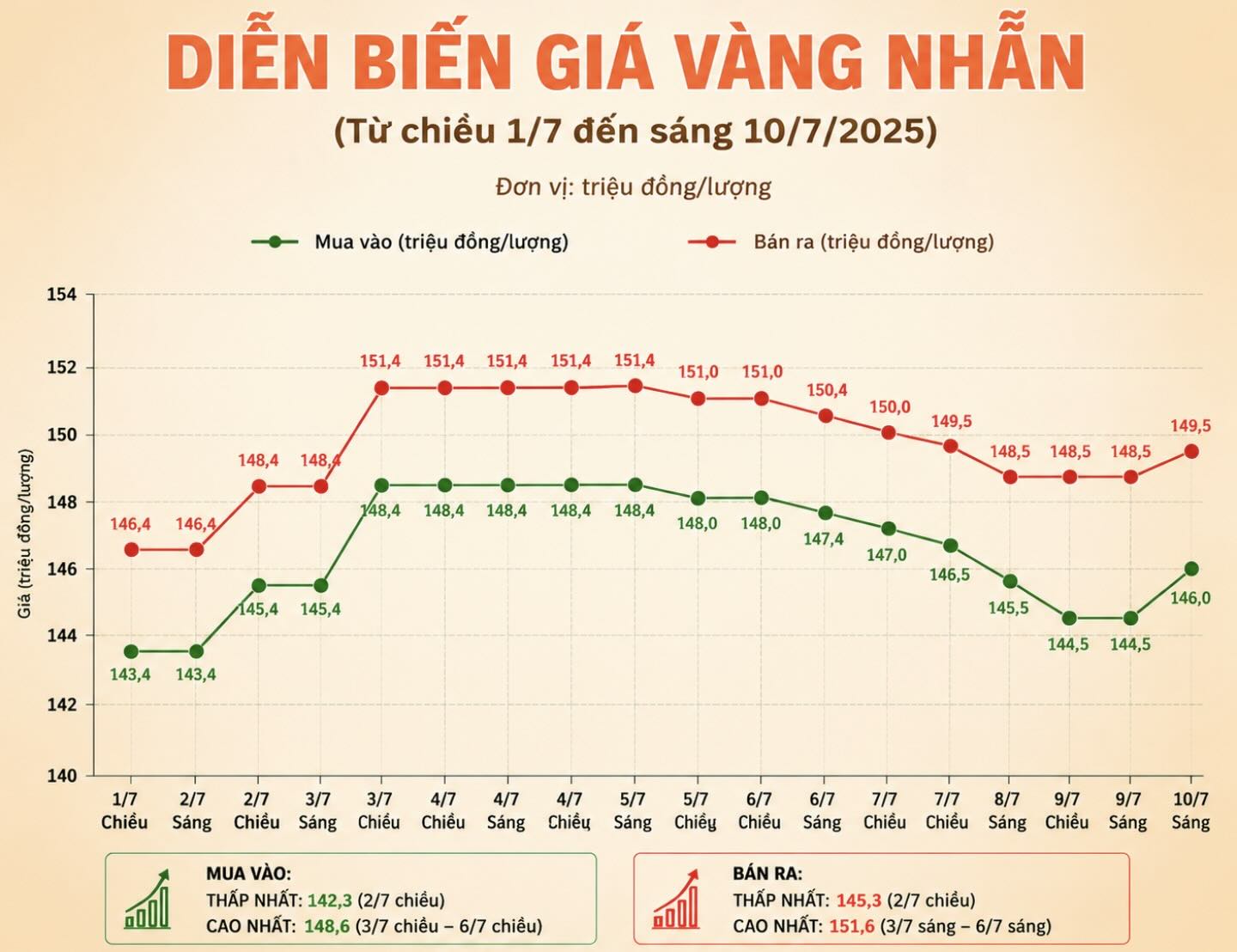
DOJI Group listed gold ring prices at 146-149.5 million VND/tael (buying - selling), an increase of 1.5 million VND/tael on the buying side and an increase of 1 million VND/tael on the selling side. The difference between buying and selling prices is at 3.5 million VND/tael.
Bao Tin Minh Chau listed the price of gold rings at 145-149 million VND/tael (buying - selling), an increase of 700,000 VND/tael in both buying and selling directions. The difference between buying and selling prices is at 4 million VND/tael.
World gold price
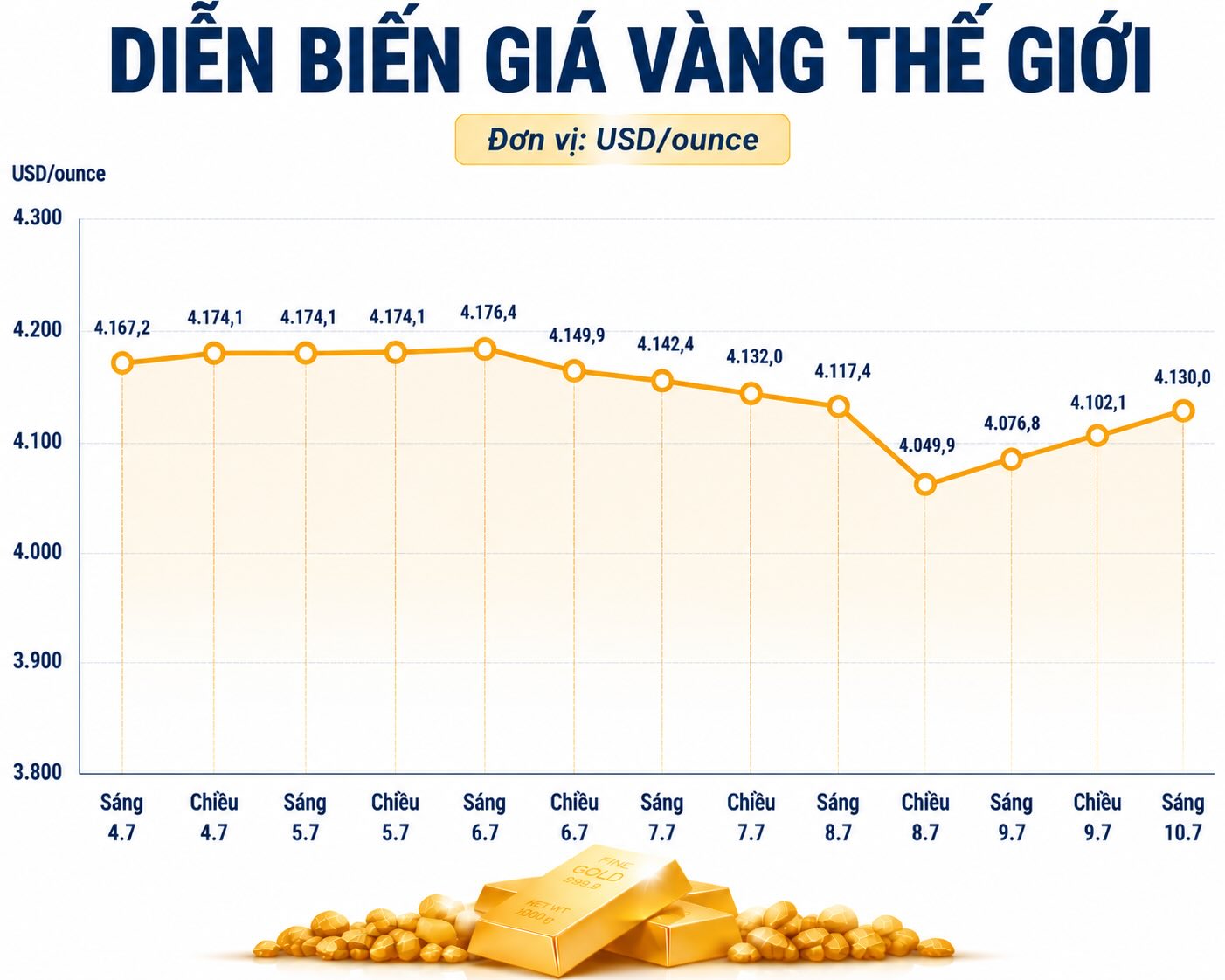
At 10:00 AM, world gold prices were listed around the threshold of 4,130 USD/ounce, up 53.2 USD/ounce.
Gold price forecast
Gold prices are regaining momentum after a strong correction session before, in the context of cooling US government bond yields, weakening the USD and falling crude oil prices again. This development partly relieved pressure on the precious metal, helping gold prices return to the above 4,100 USD/ounce zone.
In the most recent trading session, world gold prices at times fluctuated in the range of 4,053-4,135 USD/ounce. Despite a significant recovery, gold prices are still facing an important resistance zone from 4,162-4,214 USD/ounce. This is considered a price zone that can determine the ability to extend the recovery momentum in the short term.
The market is currently continuing to be dominated by the Fed's monetary policy expectations. The June jobs report showed that the US economy only created 57,000 jobs, while figures from the previous two months were adjusted down a total of 74,000 jobs. This development once reduced expectations that the Fed would soon raise interest rates again.
However, the minutes of the Fed's most recent meeting show that some officials are still concerned about inflationary pressure and have not ruled out the possibility of tightening policies in the coming months. Therefore, the direction of gold prices still depends heavily on the next economic data, especially the US consumer price index report.
According to Mr. Erik Norland, CEO and chief economist at CME Group, investors are trying to determine whether gold and silver have formed a cyclical bottom or not. In the short term, monetary policy is still a factor that needs to be closely monitored, while fiscal policy may have a long-term impact on precious metals.
Mr. Norland believes that interest rate expectations are creating pressure on gold. Although precious metals are often seen as inflation hedging assets, high inflation may be disadvantageous if it causes the market to forecast that central banks will maintain high interest rates for longer or continue to tighten policies.
In the opposite direction, expansionary fiscal policy in the US and many major economies can still create long-term support for gold. Large budget deficits, high public debt and increased public spending may maintain concerns about the purchasing power of legal tender and fiscal sustainability.
In the short term, investors will focus on US inflation data, policy signals from the Fed and developments in the Strait of Hormuz. If inflation cools down, interest rate hike expectations may weaken, thereby opening up opportunities for gold prices to retest the 4, 162-4, 214 USD/ounce range. Conversely, a sharp increase in oil prices could increase inflationary pressure, pushing bond yields and the USD up, thereby creating pressure back on gold prices.
Gold price data is compared to the previous day.
See more news related to gold prices HERE...


