
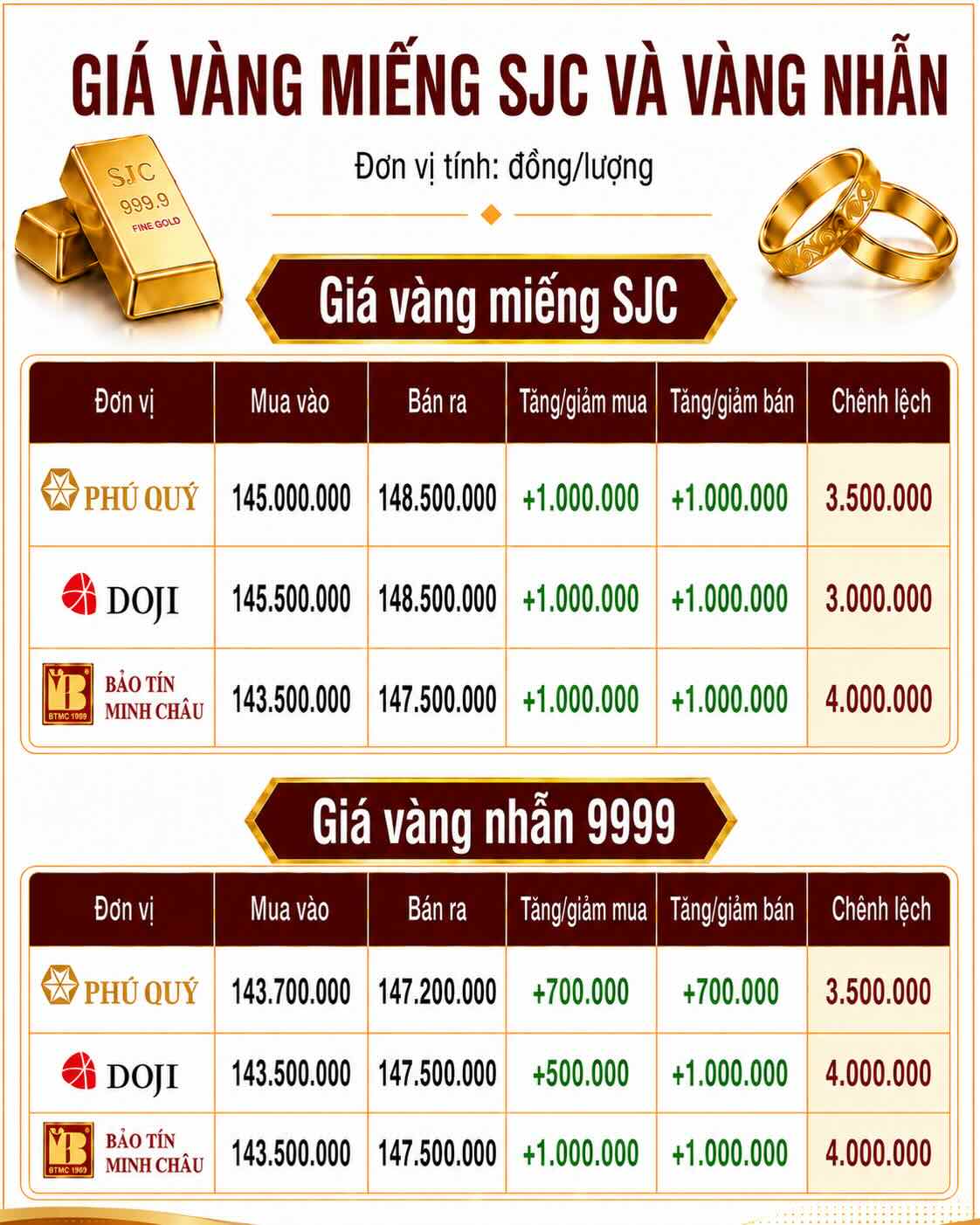
SJC gold bar price
As of 6:00 AM, Phu Quy Jewelry Group listed SJC gold bar prices at 145-148.5 million VND/tael (buying - selling), an increase of 1 million VND/tael in both buying and selling directions. The difference between buying and selling prices is at 3.5 million VND/tael.
SJC gold bar price was listed by DOJI at the threshold of 145.5-148.5 million VND/tael (buying - selling), an increase of 1 million VND/tael in both directions. The difference between buying and selling prices is at the threshold of 3 million VND/tael.
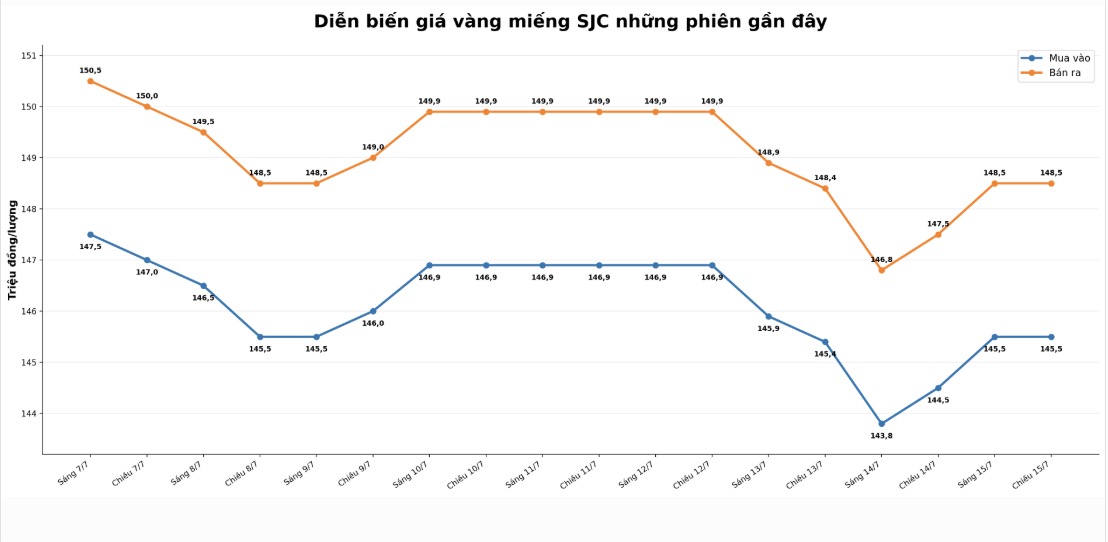
SJC gold bar prices were listed by Bao Tin Minh Chau at the threshold of 143.5-147.5 million VND/tael (buying - selling), an increase of 1 million VND/tael in both directions. The difference between buying and selling prices is at the threshold of 4 million VND/tael.
9999 gold ring price
As of 6:00 AM, Phu Quy Gold and Gems Group listed the price of gold rings at the threshold of 143.7-147.2 million VND/tael (buying - selling), an increase of 700,000 VND/tael in both buying and selling directions. The difference between buying and selling prices is at the threshold of 3.5 million VND/tael.
DOJI listed the price of gold rings at 143.5-147.5 million VND/tael (buying - selling), an increase of 500,000 VND/tael on the buying side and an increase of 1 million VND/tael on the selling side. The difference between buying and selling prices is at 3.5 million VND/tael.
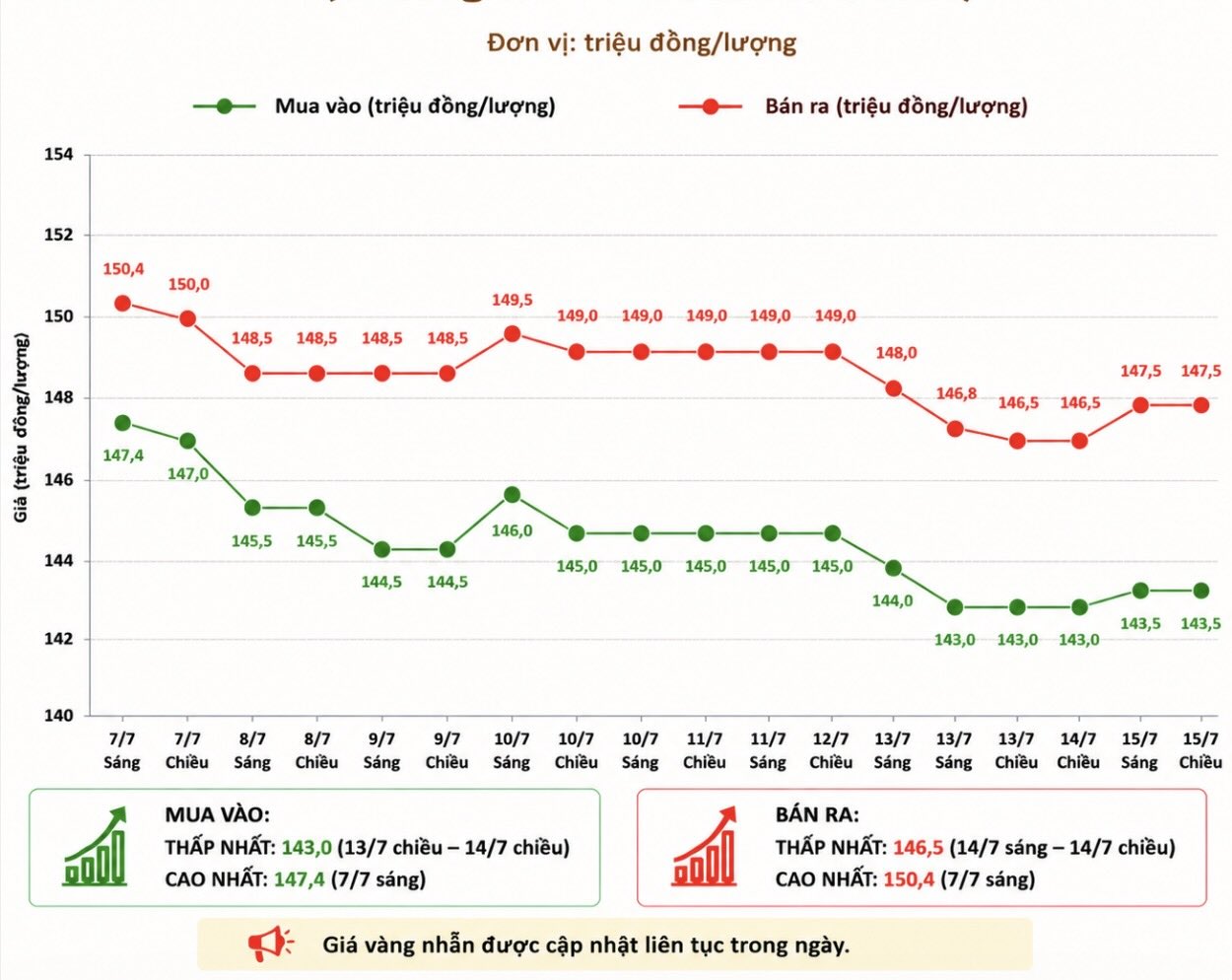
Bao Tin Minh Chau listed gold ring prices at the threshold of 143.5-147.5 million VND/tael (buying - selling), an increase of 1 million VND/tael in both directions. The difference between buying and selling prices is at the threshold of 4 million VND/tael.
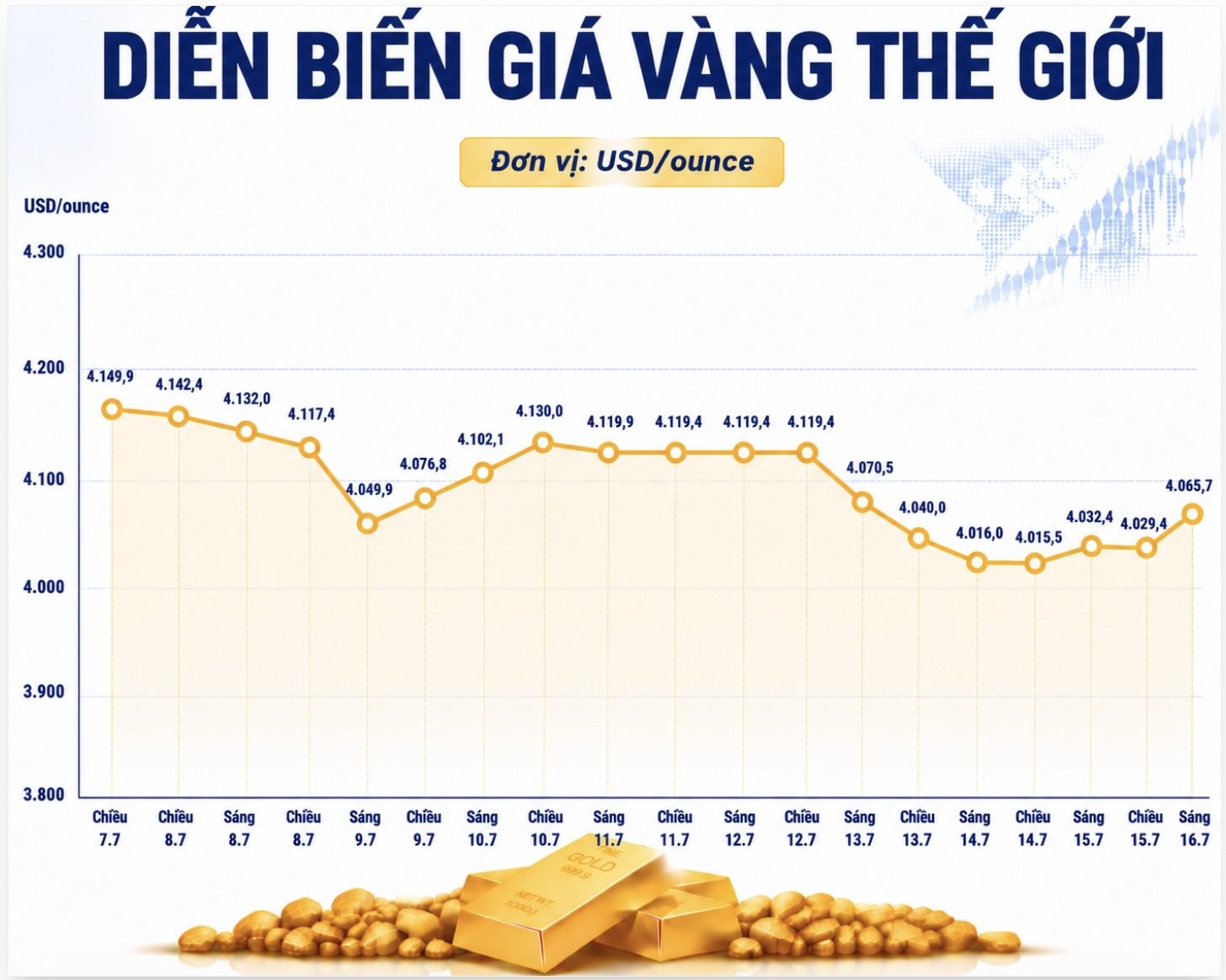
World gold price
At 1:13 am, world gold prices were listed around the threshold of 4,065.7 USD/ounce, down 4.3 USD.
Gold price forecast
Gold prices are struggling amid cooling US inflation, but the upward outlook is still limited by oil prices and high bond yields.
New data shows that price pressure in the US tends to ease. The consumer price index in June decreased by 0.4% compared to the previous month, while core inflation did not increase and the annual growth rate slowed down. The producer price index also decreased by 0.3%, strengthening expectations that the Fed does not need to rush to raise interest rates in the July meeting.
A less rigid interest rate environment is often beneficial for gold, because the precious metal does not provide a fixed yield. However, the yield of 10-year US government bonds is still around 4.60%, while the USD index remains near 100.97 points. This shows that investors are not completely convinced that inflationary pressure has been sustainably controlled.
Another notable factor is tensions in the Strait of Hormuz. Transportation has not been completely disrupted but is facing a major risk from military conflicts and blockades. Brent oil is trading at nearly 85.78 USD/barrel, while WTI oil is around 80.19 USD/barrel. If oil continues to rise, the risk of energy inflation returning may cause the Fed to maintain a cautious policy, while pushing bond yields up.
In this context, gold is supported by the need to defend against geopolitical risks, but it is difficult to increase sharply when yields and the USD have not decreased significantly.
Technically, gold prices are still below the 100-session average of 4.077 USD/ounce and have not escaped the short-term downward trend. The 4.077-4.090 USD/ounce zone is a near resistance. If it can surpass this area, the price may reach 4,140 USD/ounce, or even 4,200 USD/ounce.
Conversely, if losing the 4.040 USD/ounce mark, gold may return to test the psychological threshold of 4,000 USD/ounce. Breaking this zone will increase the risk of prices falling back to 3,962-3,950 USD/ounce.
Investors need to monitor bond yields, Fed interest rate expectations and transportation through the Strait of Hormuz. These factors may cause gold prices to fluctuate sharply in the coming sessions.
Gold price data is compared to the previous day.
See more news related to gold prices HERE...


