
SJC gold bar price
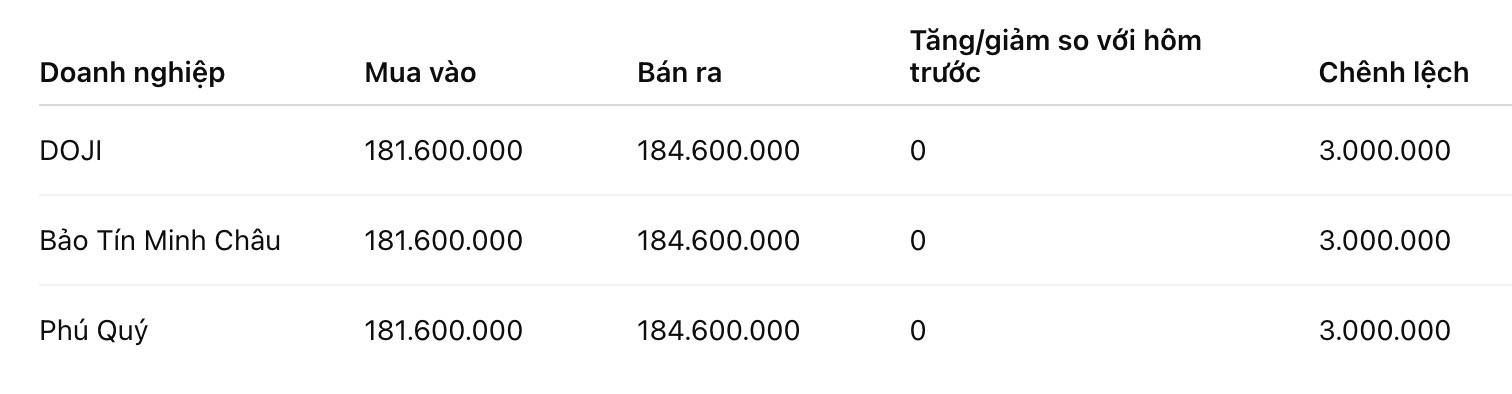
As of 6:00 AM on February 25, SJC gold bar prices were listed by DOJI Group at the threshold of 181.6-184.6 million VND/tael (buying - selling), unchanged in both buying and selling directions. The difference between buying and selling prices is at the threshold of 3 million VND/tael.
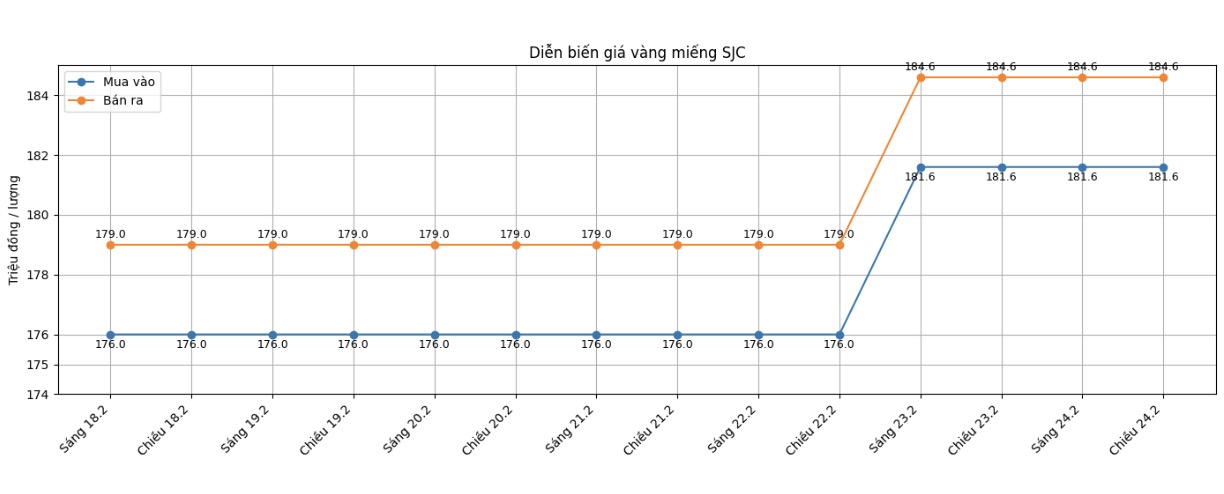
SJC gold bar price is listed by Bao Tin Minh Chau at the threshold of 181.6-184.6 million VND/tael (buying - selling), unchanged in both buying and selling directions. The difference between buying and selling prices is at the threshold of 3 million VND/tael.
Phu Quy Jewelry Group listed SJC gold bar prices at 181.6-184.6 million VND/tael (buying - selling), unchanged in both directions. The difference between buying and selling prices is at 3 million VND/tael.
9999 gold ring price
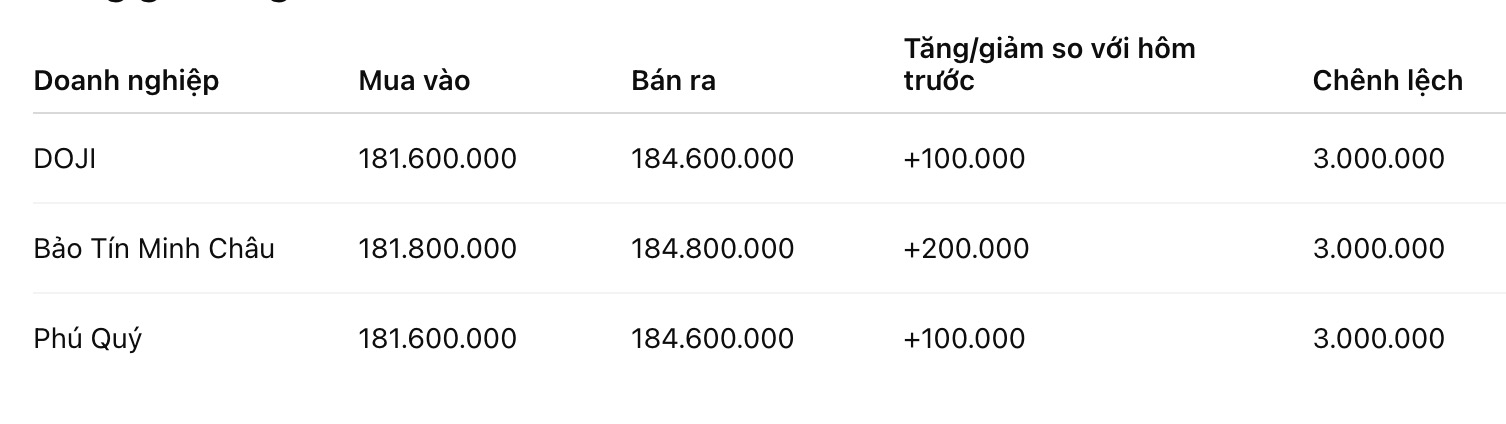
As of 6:00 AM on February 25th, DOJI Group listed the price of gold rings at the threshold of 181.6-184.6 million VND/tael (buying - selling), an increase of 100,000 VND/tael in both directions compared to the previous day. The buying - selling difference is at 3 million VND/tael.
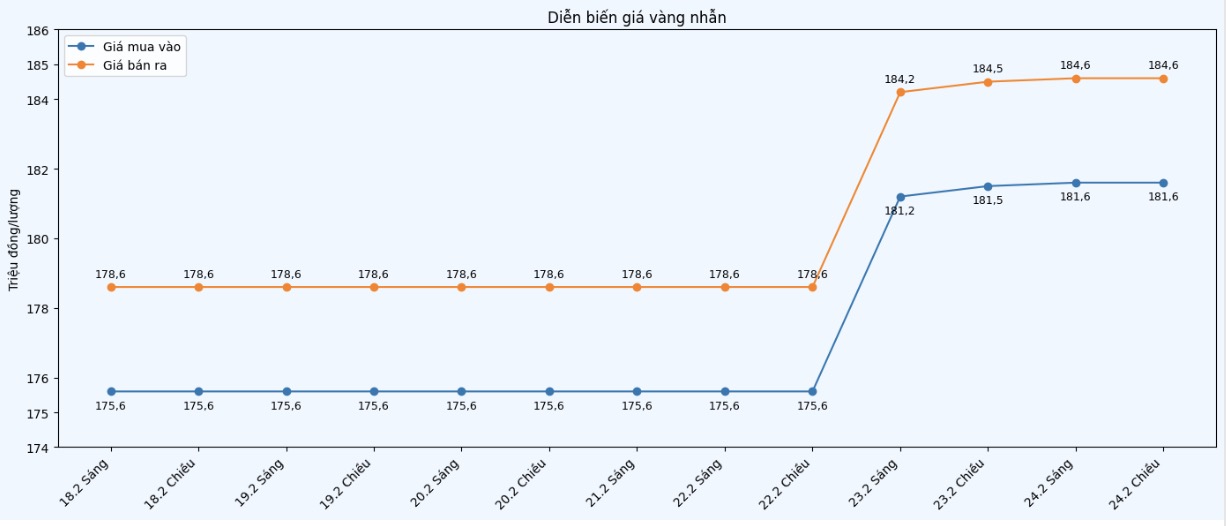
Bao Tin Minh Chau listed the price of gold rings at 181.8-184.8 million VND/tael (buying - selling), an increase of 200,000 VND/tael in both buying and selling directions. The difference between buying and selling prices is at 3 million VND/tael.
Phu Quy Jewelry Group listed the price of gold rings at 181.6-184.6 million VND/tael (buying - selling), an increase of 100,000 VND/tael in both directions. The buying - selling difference is at 3 million VND/tael.
Currently, the buying - selling price difference of gold is at a very high level, around 3 million VND/tael, posing a risk of losses for investors.
World gold price
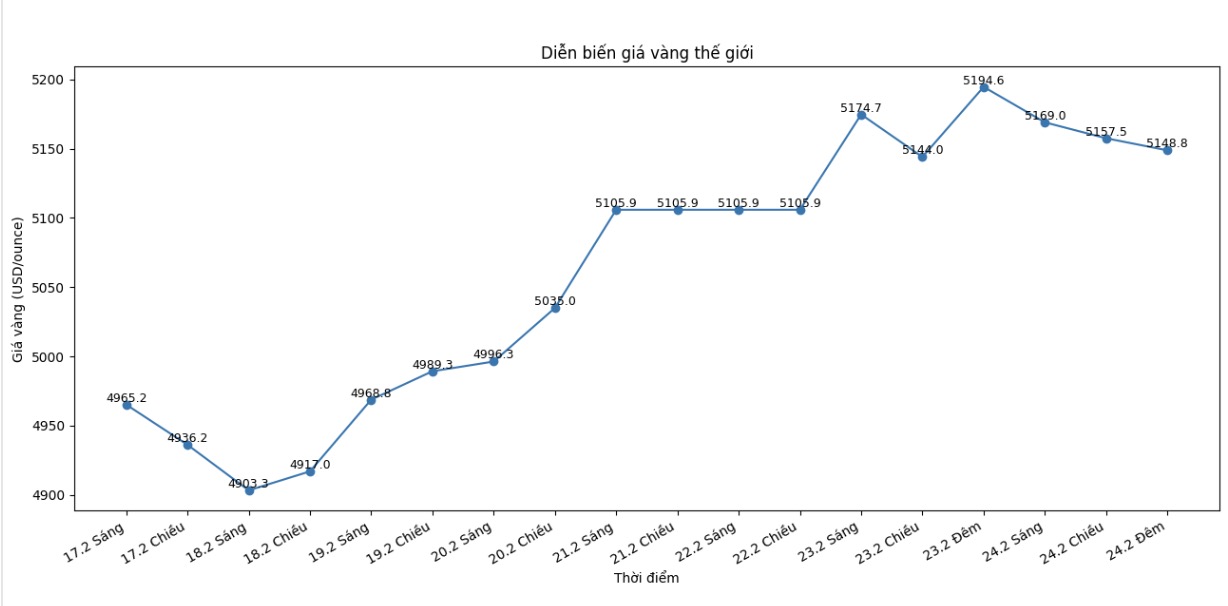
At 10:45 PM on February 24, world gold prices were listed around 5,148.8 USD/ounce, down 45.8 USD.
Gold price forecast
On the international market, gold prices continued to fluctuate as profit-taking selling pressure appeared after the previous strong increase. Despite adjustment pressure, the precious metal still maintained a new high support zone around the 5,100 USD/ounce mark - a signal that the longer uptrend has not been broken.
This development takes place in the context of the Consumer Confidence Index in the US unexpectedly improving. According to the Conference Board, the index in February increased to 91.2 points, exceeding analysts' forecasts. Consumer sentiment somewhat stabilized again after a prolonged period of weakness.
Ms. Dana Peterson - Chief Economist of the Conference Board said confidence increased slightly as pessimistic expectations for the future eased, although this measure is still significantly lower than previous highs. Notably, the "addendums" in the report still reflect concerns about inflation, living costs and policy instability.
Usually, positive economic data will put pressure on gold due to reducing safe-haven demand. However, the market this time reacted quite cautiously. Experts believe that the current fluctuations are heavily technical, as investors take advantage of profit-taking after prices exceed 5,200 USD/ounce.
From a macroeconomic perspective, many factors are creating a state of stalemate. The USD index is slightly increasing, the yield of 10-year US Treasury bonds is maintained above 4%, causing gold - a non-genuine asset - to somewhat lose its attractiveness. Meanwhile, crude oil prices are almost flat, not creating a clear boost for inflation expectations.
Another notable development comes from the financial sector. Mr. Jamie Dimon - CEO of JPMorgan warned that the market is showing signs of risky competition, reminiscent of the period before major fluctuations.
According to him, the credit cycle may face challenges if lending standards are excessively relaxed. This assessment partly reinforces the risk hedging role of gold in the medium and long term.
Technically, the buying side of gold futures for April still dominates. The next price increase target is determined at the 5,400 USD/ounce range. Conversely, important support levels lie around 5,120 - 5,100 USD/ounce. The Wyckoff index at 7.0 points shows that the upward trend has not been reversed, but short-term corrections may continue.
Gold price data is compared to the previous day.
The world gold market operates through two main pricing mechanisms. The first is the spot market, where prices are quoted for transactions and immediate delivery.
The second is the futures contract market, where prices are set for futures delivery. Due to year-end closing activities, December gold futures contracts are currently the most actively traded type on the CME.
See more news related to gold prices HERE...


