
According to Kitco, cautious sentiment is prevailing in the gold market, as a series of macroeconomic and geopolitical factors make short-term prospects less positive.
Mr. Adrian Day - Chairman of Adrian Day Asset Management said that gold prices may continue to weaken in the near future, but this decline is not long-term.
According to him, the change in market sentiment is associated with major central banks, especially the US Federal Reserve (Fed), becoming more cautious in reducing interest rates, especially in the context of rising oil prices. However, this is only a temporary factor.
Mr. Day believes that the US economy is showing signs of weakening, which may force the Fed to ease monetary policy again in the future, even through measures such as quantitative easing (QE). This, in the long term, is still a factor supporting gold prices.
From the perspective of market behavior, the expert emphasized the familiar rule of "buying according to rumors, selling when news comes out". Accordingly, gold prices usually increase before geopolitical events occur, but adjust after official information is announced.
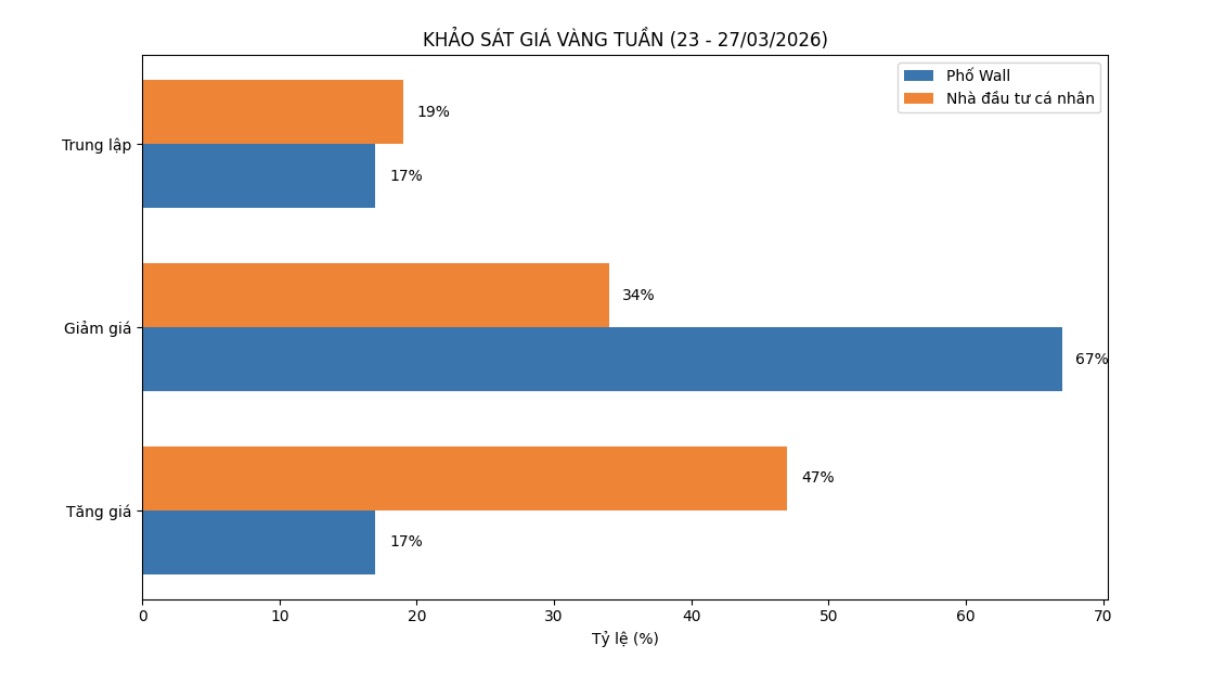
According to this expert, one of the main reasons for the decline in gold prices after events is the profit-taking activity of investors when prices had increased sharply before. "At the same time, during stressful periods, the USD often appreciates, leading to downward pressure on gold.
In addition, a high interest rate environment also reduces the attractiveness of precious metals. "As the USD increases and interest rates rise, gold becomes less attractive relatively," Mr. Day said.
In addition, the liquidity factor also plays a significant role. In unstable times, increased cash demand may force investors to sell gold, even with discounts, to meet urgent financial needs.
However, the long-term outlook for gold is still positively assessed. According to Mr. Day, as geopolitical tensions cool down, the market will shift its focus to monetary and fiscal issues - factors that are inherently beneficial for gold.
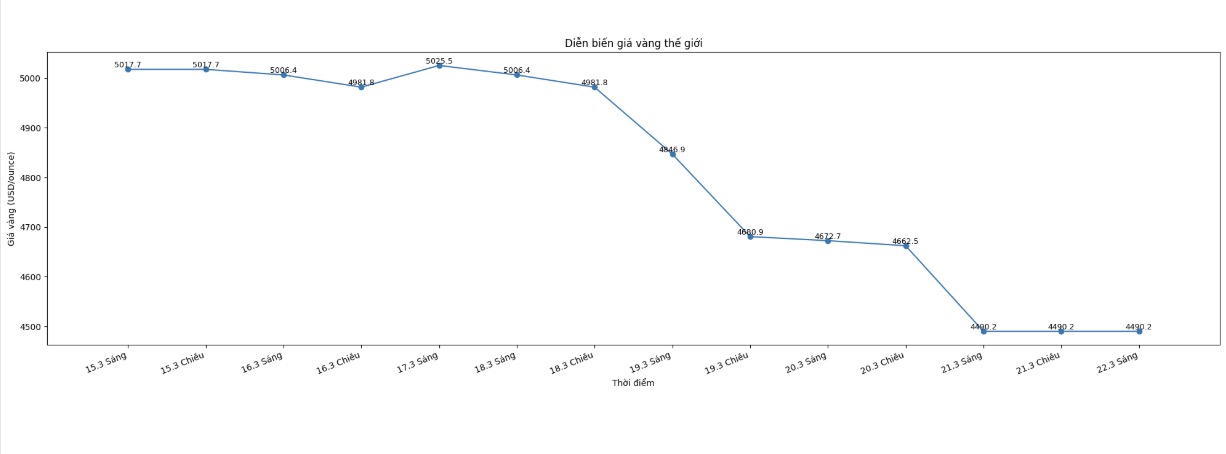
Agreeing with this view, Mr. Marc Chandler - Managing Director of Bannockburn Global Forex said that gold is under pressure in the context of sharp interest rate hikes, volatile stock markets and information about gold sales from the Middle East region.
He said the recent decrease in gold is the strongest in many years. If important support levels are broken, prices may continue to fall deeper in the short term.
Meanwhile, Mr. Alex Kuptsikevich - senior analyst at FxPro warned that gold is heading towards one of the strongest weekly declines in decades, with the main reason coming from the tightening stance of central banks in the face of inflation risks.
According to him, the fact that gold prices broke important technical thresholds such as the 50-day moving average has triggered a stronger sell-off, opening up the possibility that prices continue to adjust to lower areas.
However, experts all agree that the current downward trend is only short-term. In the medium and long term, gold demand still has a basis for recovery when fundamental factors such as loose monetary policy and economic instability return.
In that context, the big question for the market is not whether gold will recover or not, but the timing and level of adjustment before entering a new upward cycle.


