
Silver benefits when USD and yields fall
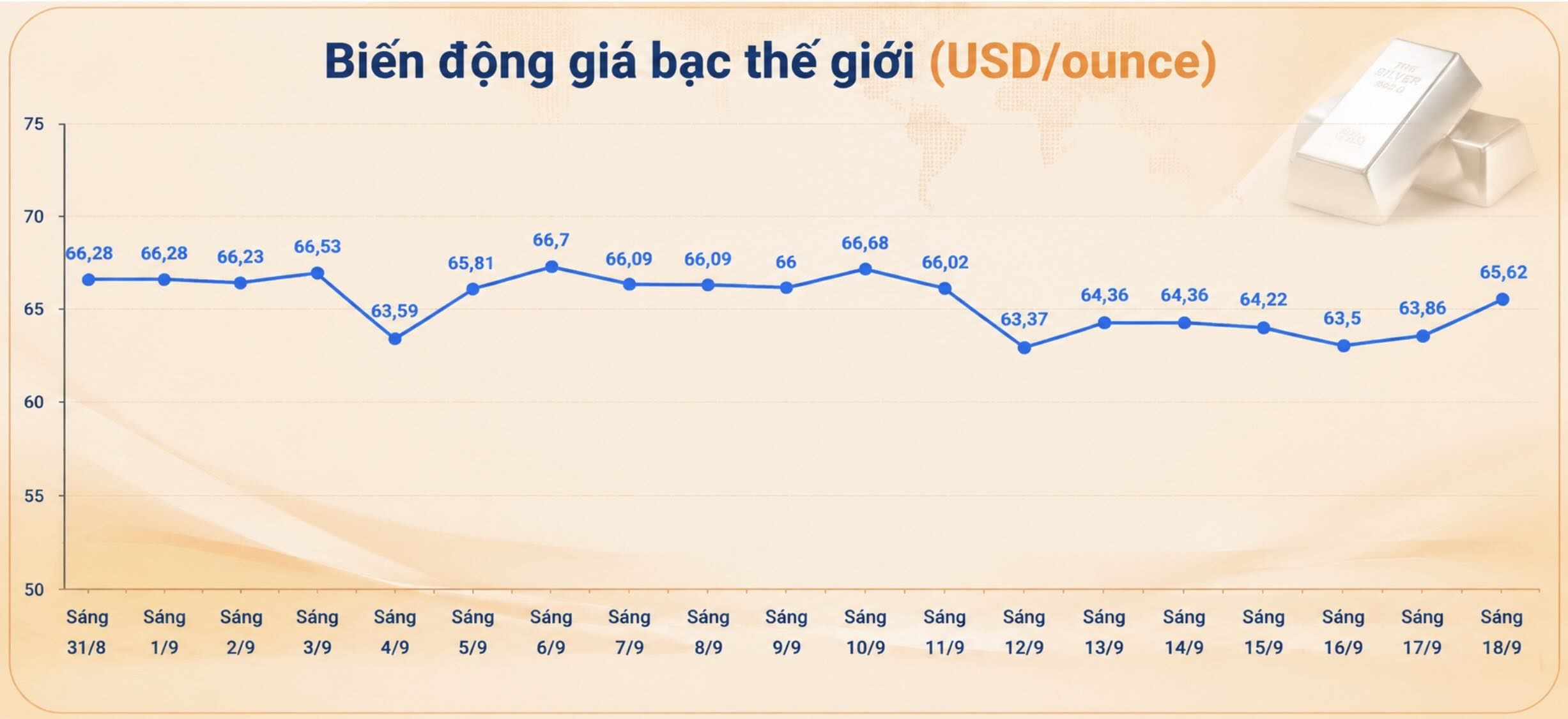
At 8:18 am on September 18 (Vietnam time), world silver prices were listed around 65.62 USD/ounce, up about 0.8% compared to the previous session. This is a remarkable recovery after a period of the precious metal being pressured by high interest rate expectations.
The upward momentum continued after silver at one point increased sharply in the US trading session, thanks to the improvement of supporting factors in the financial market.
Silver prices recovered in the same trend as gold as the market gradually absorbed the impact of the Fed's interest rate hike decision. The weakening USD and falling US Treasury bond yields have reduced the opportunity cost when holding non-performing assets such as silver.
The Fed has raised interest rates by another 25 basis points, bringing the target interest rate range to 3.75%-4%. This move was previously predicted by the market, so the level of negative impact on the precious metal group is not too large.
After the Fed's decision, the yield of 10-year US bonds fell from 5.01% to about 4.93%, while the USD also cooled down after a previous strong increase. These factors created conditions for silver to recover as pressure from the monetary market eased.
In addition to financial factors, silver is also supported by its role as a metal with high industrial applicability. As economic growth expectations and production demand improve, silver often receives more push from demand in areas such as renewable energy, electronics and technology.
Fed policy continues to be a dominant factor
Although silver is recovering, the outlook in the near future is still heavily influenced by the Fed's policy orientation.
The market currently assesses the possibility that the Fed may continue to maintain a tighter stance than expected if inflation does not fall fast enough. A further wave of interest rate hikes this year is still being set as new inflation figures continue to play an important role in the decision of the US monetary regulator.
This Fed interest rate hike is seen as aimed at strengthening confidence in the process of bringing inflation back to the 2% target, while creating more time to assess whether the recent inflation increase is just a temporary fluctuation or a sign of prolonged pressure.
Policy forecast signals also show that many Fed officials still expect to need another interest rate adjustment this year. This could continue to put pressure on silver if the USD strengthens again or bond yields rise.
Conversely, if inflation continues to cool down and the Fed signals to slow down the tightening cycle, silver may benefit from cash flow returning to the safe-haven asset group and precious metals.
Oil prices fall to support market sentiment
Another factor supporting silver is the downward trend of oil prices. WTI oil prices recently retreated to around 101.91 USD/barrel, while Brent oil is at around 104.82 USD/barrel.
The decrease in oil prices helps ease concerns about inflationary pressure, thereby supporting bond yields to fall and creating a more favorable environment for precious metals.
However, geopolitical risks are still factors to be monitored. Developments related to energy supply, especially in important oil transportation areas, may have a reverse impact on inflation expectations and cash flow in the precious metals market.
Technically, silver prices are heading towards the important resistance zone of 65.73 USD/ounce. If this level is surpassed, the market may head towards the next targets at 66.99 USD/ounce and 68.17 USD/ounce.
In the opposite direction, the nearest support zone for silver is at 63.44 USD/ounce. If this zone is lost, the price may retreat to lower support levels around 62.38 USD/ounce and 62.06 USD/ounce.
The current upward momentum shows that silver is benefiting from the adjustment of the USD and bond yields, but the next trend still needs more clear signals from US monetary policy and global inflation developments.
Update on domestic silver prices
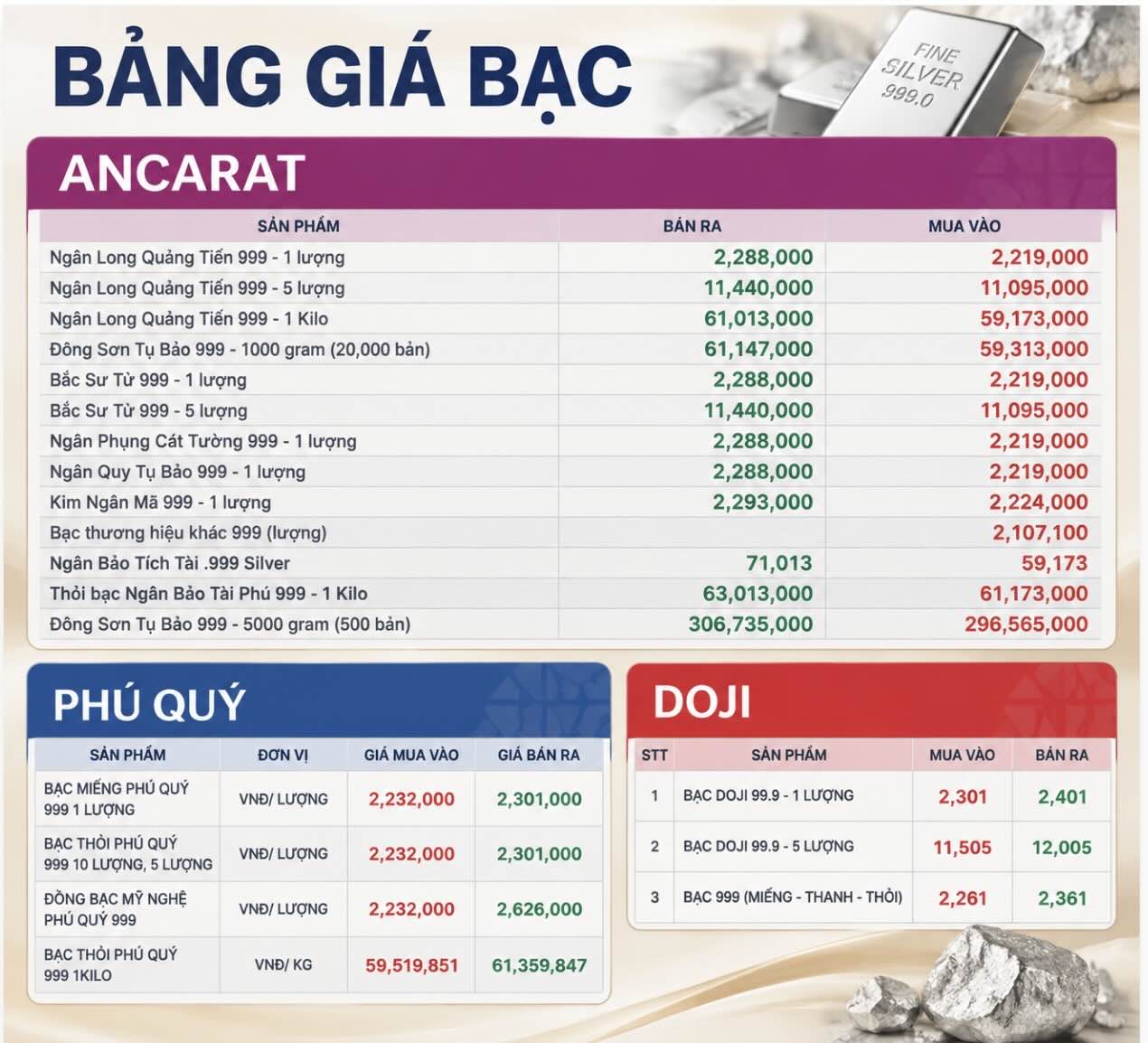
The article only updates the developments of the silver market and factors affecting the price of precious metals, not investment recommendations. Silver prices may fluctuate sharply due to the impact of monetary policy, exchange rates, inflation, industrial demand and geopolitical factors. Investors need to carefully consider risks before making a trading decision.


