
Silver prices fall under pressure from the USD and interest rates
World silver prices are under downward pressure in the latest trading session as the US Federal Reserve (Fed) sends a signal to maintain tight monetary policy to control inflation. This development has caused the USD to appreciate, US bond yields to rise, creating pressure on the group of precious metals, including silver.
The market reacted after the Fed raised interest rates by another 0.25 percentage points, bringing the operating interest rate band to 3.75-4%. Notably, policy signals indicate that the agency is likely to continue to maintain a cautious stance if inflationary pressure has not decreased significantly.
As of 9:15 am on September 17 (Vietnam time), the world silver price was listed at 63.27 USD/ounce, down about 0.59 USD/ounce compared to yesterday morning.
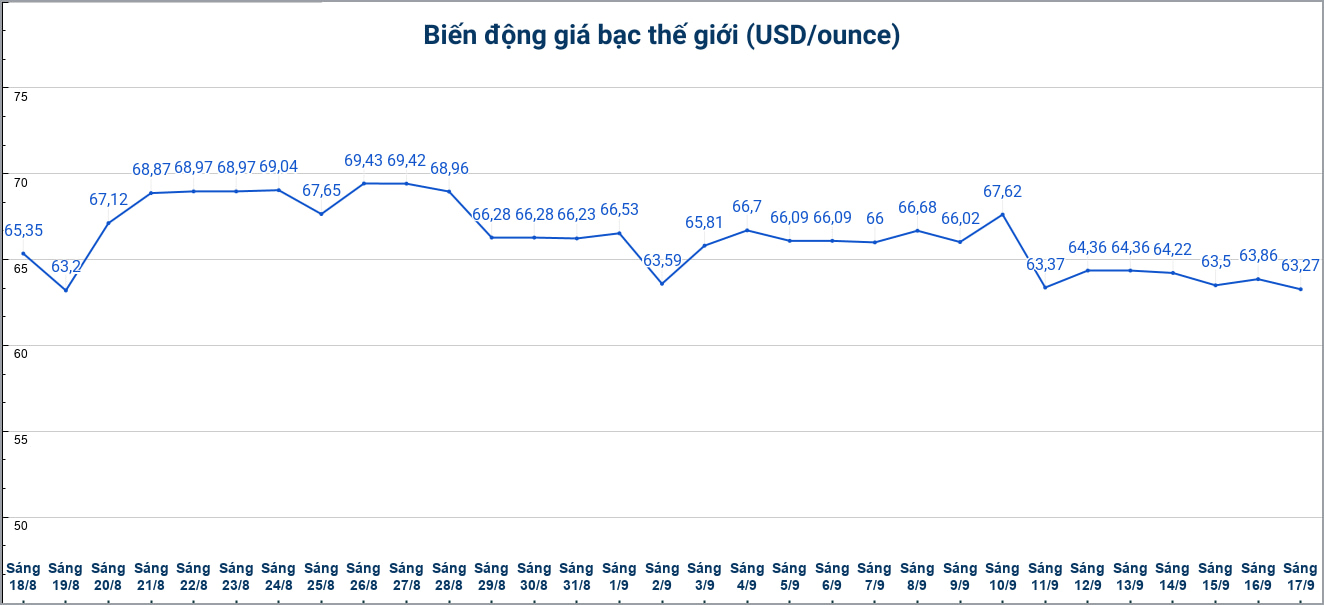
When interest rates remain high, assets that do not generate cash flow such as gold and silver are often disadvantaged due to increased opportunity cost holdings. In addition, a stronger USD makes precious metals more expensive for buyers using other currencies, thereby reducing attractiveness in the international market.
Silver checks important support areas
Not only affected by macroeconomic factors, silver prices are also reacting to important technical zones. After failing to maintain the price range around 64 USD/ounce, silver retreated to test the support zone near 62 USD/ounce.
In the short term, the market is monitoring whether silver prices can maintain this support zone or not. If selling pressure continues to increase, silver may head towards the lower zone around 60 USD/ounce. Conversely, if the USD weakens and bond yields fall, this precious metal may regain its recovery momentum.
The diễn biến of silver has many similarities with gold because both are heavily influenced by monetary policy, the strength of the USD and investors' defensive sentiment. However, silver also has additional supporting factors from industrial demand, especially in fields such as renewable energy, electronics and high-tech manufacturing.
This makes silver prices often fluctuate more strongly than gold in periods when the market changes expectations for economic growth or monetary policy.
Market awaits further signals from the US economy
In addition to deciding interest rates, investors are turning their attention to upcoming economic data, including jobs data, industrial production and the US housing market. This information may affect the assessment of the Fed's ability to continue to maintain high interest rates in the near future.
In addition, oil price movements and geopolitical situation are also factors affecting precious metals. Oil prices fell after supply was supplemented, partly helping to cool down concerns about inflation, but instability in important energy transport sectors still maintains demand for safe-haven assets.
For silver, the outlook in the near future will depend on the balance between two groups of factors: pressure from monetary policy and momentum from industrial demand. In the context that the USD interest rate is still the largest variable, all signals of policy changes in the Fed may continue to create strong fluctuations in the precious metals market.
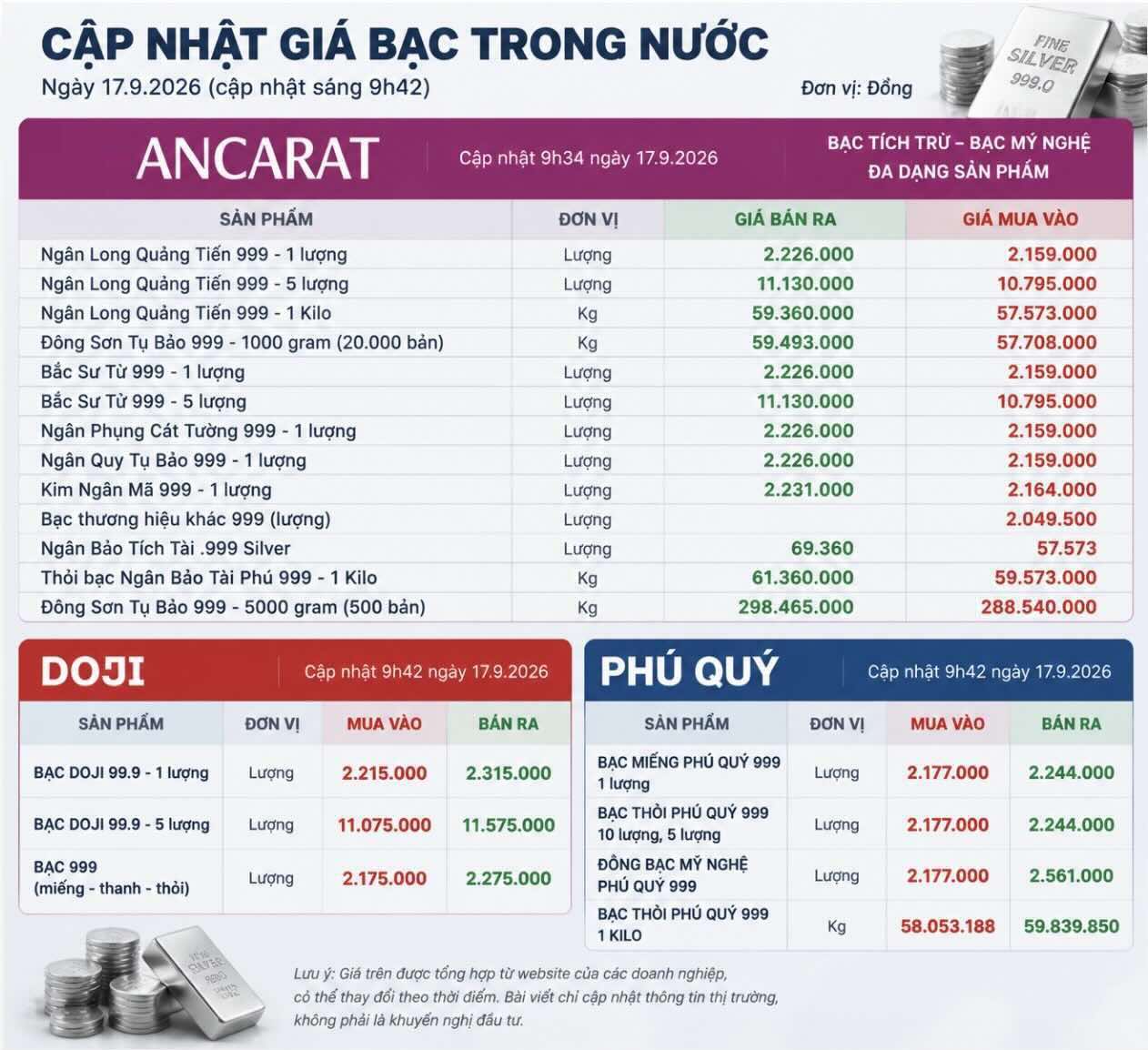
Update on domestic silver prices
The article only updates the developments of the silver market and factors affecting precious metal prices, not investment recommendations.


